



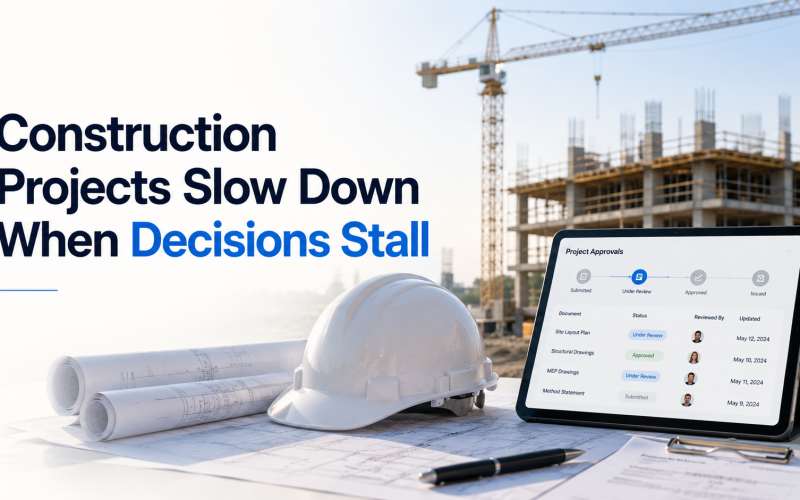


- Construction delays often come from poor coordination, not execution
- Lack of real time visibility creates gaps across teams and timelines
- Systems like Synclo help manage projects through connected workflows
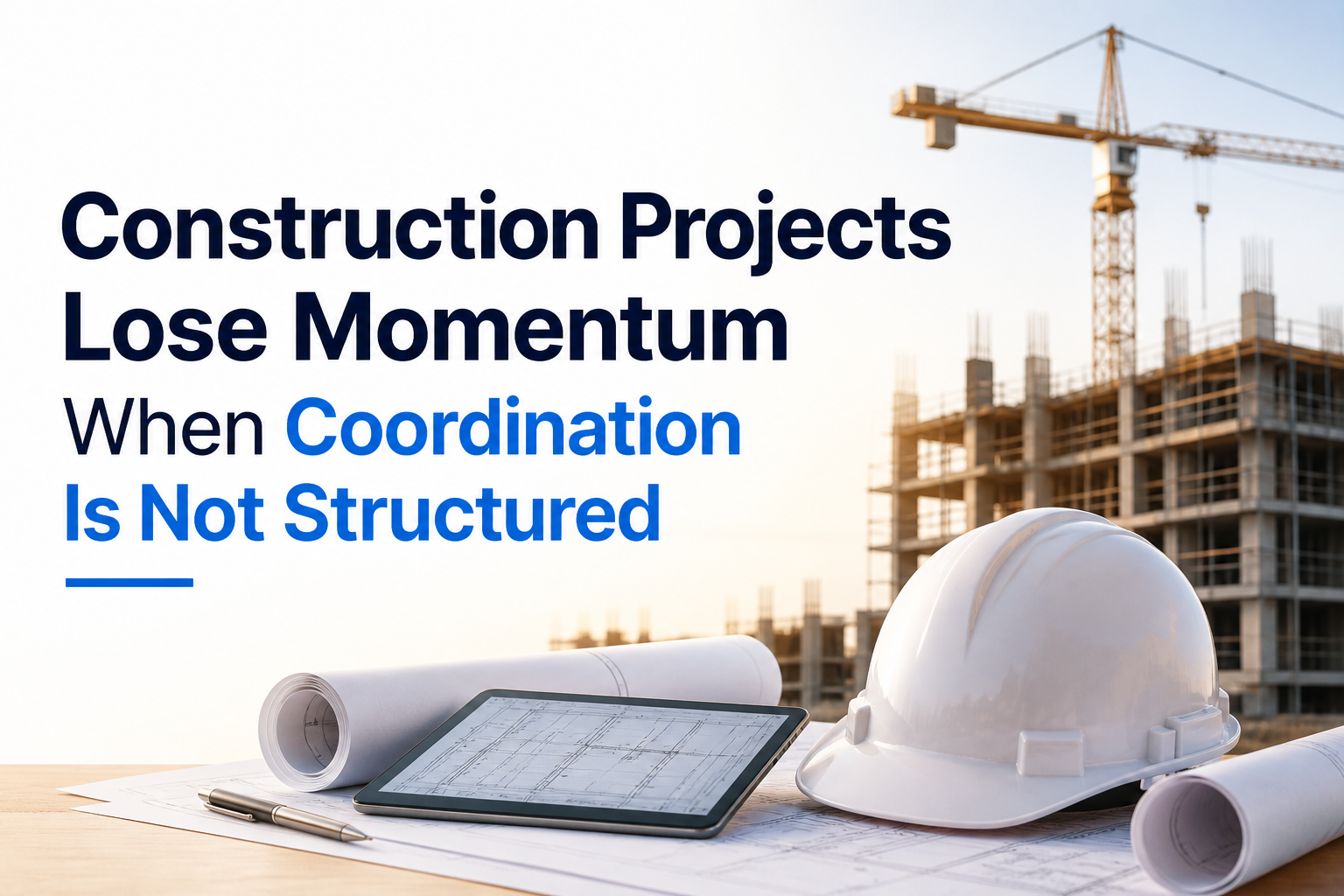
Construction and real estate projects depend on coordination across multiple teams, locations, and timelines. Contractors, engineers, site managers, and suppliers all contribute to the same outcome, yet they often operate with separate systems that do not stay aligned. While work on site moves continuously, the systems that track progress tend to lag behind. This creates a gap between what is happening in real time and what project leaders can actually see. As a result, decisions are often based on outdated information, which leads to delays that compound over time and affect both cost and delivery schedules.
Progress on Site Does Not Always Reflect in Systems
On most construction sites, work progresses faster than updates are recorded. Materials are delivered, tasks are completed, and teams adjust based on real conditions, yet these changes are not always captured immediately in project systems. Managers rely on calls, messages, or reports to understand progress, and by the time that information is consolidated, the situation has already changed. This lack of real time visibility makes planning unreliable and creates uncertainty across teams. It often leads to missed updates, delays in identifying issues, and misalignment between teams working on different phases of the project.
Dependencies Turn Small Delays Into Bigger Problems
Construction projects rely heavily on task sequencing, where each stage depends on the completion of another. When one task is delayed, it creates a ripple effect across the entire project. Without a clear view of dependencies, these delays are not identified early enough, and teams only react when the impact reaches them directly. This reactive approach slows down execution and increases the risk of extended timelines. A connected project management software system helps manage these dependencies by ensuring that updates are visible as they happen, allowing teams to adjust quickly and maintain progress without waiting for manual coordination.
Communication Gaps Affect Execution
Communication in construction is constant, but it is not always structured. Updates are shared through calls, site discussions, or messages, and they are not always recorded against specific tasks or timelines. This creates gaps in information that make it difficult to track decisions and maintain alignment. Over time, this leads to repeated work, confusion, and delays that could have been avoided. When communication is integrated into the workflow, teams can rely on the system to stay aligned instead of depending on follow ups.
Teams benefit when communication is structured because:
- Updates are directly linked to tasks and timelines
- Decisions are recorded and accessible to all stakeholders
- Changes are visible without repeated coordination
Resource Management Depends on Real Time Visibility
Construction projects rely on the timely availability of materials, equipment, and labor. Managing these resources requires accurate information that reflects current conditions. When visibility is limited, teams may face shortages or inefficient allocation. Materials may not arrive when needed, or labor may be assigned without full awareness of workload. This disrupts the flow of work and increases costs. A connected system allows teams to track resource availability alongside project progress, ensuring that planning is based on real conditions rather than assumptions.
Manual Processes Create Bottlenecks
Many construction workflows still depend on manual input for approvals, updates, and reporting. While this approach provides control, it also slows down execution. Tasks cannot move forward until someone takes action, which creates bottlenecks across the project timeline. Automation reduces this dependency by allowing processes to continue based on predefined rules. Teams can approve tasks through structured workflows, update progress automatically, and track milestones without waiting for manual reporting. This improves consistency and keeps projects moving without unnecessary delays.
Scaling Construction Projects Requires a Structured System
As construction companies grow, managing multiple projects becomes more complex. More sites, more teams, and more dependencies increase the need for coordination. Without a structured system, this complexity leads to inefficiencies that affect performance across all projects. A scalable system ensures that workflows remain consistent, data stays accurate, and communication flows across all levels of the organization. Synclo supports this by providing a unified platform where tasks, timelines, and resources are connected, allowing teams to maintain control even as operations expand. When systems are aligned, construction projects become more predictable, teams stay coordinated, and decisions are based on current information rather than delayed reports. This shift does not come from increasing effort, but from removing the gaps that slow everything down.
