





Tina Jones
Introduction: The Shift from Automation to Intelligence
Workflow automation has been a cornerstone of modern technology teams for years. From CI/CD pipelines to task orchestration, automation has enabled organizations to streamline repetitive processes and improve efficiency. However, as systems grow more complex and interconnected, traditional automation approaches are reaching their limits.
Today, artificial intelligence is redefining workflow automation by introducing adaptability, predictive intelligence, and real-time optimization. Instead of simply executing predefined rules, AI-powered systems can analyze data, learn patterns, and make dynamic decisions.
This shift marks the transition from static automation to intelligent workflow orchestration.
The Complexity of Modern Tech Workflows
Modern technology environments are built on distributed systems, microservices architectures, and cloud-based infrastructures. These environments generate vast amounts of data and require constant coordination across development, operations, and business teams.
Challenges include:
- Managing interdependent systems
- Coordinating cross-functional workflows
- Monitoring system performance in real time
- Responding to incidents quickly
Traditional automation struggles to keep up with this level of complexity because it relies on fixed rules rather than adaptive intelligence.
AI-Powered Workflow Automation: A New Paradigm
AI-powered workflow automation introduces intelligence into every stage of execution. Instead of following static workflows, AI systems continuously analyze inputs, identify patterns, and optimize processes in real time.
Key capabilities include:
- Dynamic workflow optimization
- Predictive task prioritization
- Intelligent anomaly detection
- Automated decision-making
This allows organizations to improve execution speed while reducing manual intervention.
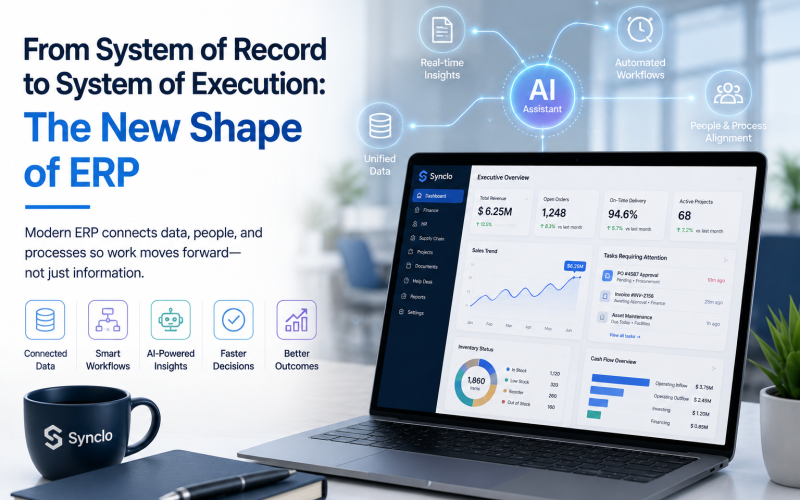
In integrated environments such as Synclo, AI-driven workflows can connect across departments, enabling unified execution across operations, projects, and systems.
Improving Execution Speed Through Intelligent Automation
Execution speed is a critical factor in modern tech environments. Delays in deployments, incident resolution, or task completion can have significant business impact.
AI enhances execution speed by:
- Identifying bottlenecks in workflows
- Automating task prioritization
- Optimizing resource allocation
- Reducing dependency delays
For example, AI systems can detect slow-moving processes and automatically reassign tasks or adjust workflows to maintain momentum.
When connected within platforms like Synclo, workflow data can be aligned with operational metrics, ensuring faster and more coordinated execution.
Reducing Manual Work and Operational Overhead
Manual intervention remains one of the biggest inefficiencies in tech operations. Tasks such as monitoring, reporting, and coordination consume valuable time and resources.
AI-driven automation reduces manual work by:
- Automating repetitive tasks
- Generating real-time reports
- Providing intelligent recommendations
- Handling routine system operations
This allows teams to focus on innovation and strategic initiatives rather than administrative tasks.
Enhancing System Visibility and Observability
Visibility is essential for managing complex systems. Traditional monitoring tools often provide fragmented insights, making it difficult to understand the full picture.
AI enhances system visibility by:
- Aggregating data from multiple sources
- Providing real-time analytics
- Identifying patterns and anomalies
- Delivering actionable insights
In unified ecosystems like Synclo, system visibility extends beyond individual tools, offering a holistic view of workflows, operations, and performance.
Predictive Intelligence and Proactive Operations
One of the most transformative aspects of AI is its ability to predict future outcomes. AI-powered workflow systems can anticipate issues before they occur, enabling proactive management.
Predictive capabilities include:
- Forecasting system failures
- Identifying performance degradation
- Predicting workload spikes
- Recommending preventive actions
This shift from reactive to proactive operations significantly improves reliability and efficiency.
Integration Across Tech Ecosystems
Modern tech environments require seamless integration across multiple systems. AI-powered platforms enable this integration by connecting workflows across development, operations, and business processes.
Platforms like Synclo facilitate this integration by providing a unified environment where workflows can operate cohesively, eliminating silos and improving coordination.
The Future of AI in Workflow Automation
The future of workflow automation lies in intelligent, self-optimizing systems that adapt to changing conditions in real time.
Emerging trends include:
- Autonomous workflow orchestration
- AI-driven DevOps automation
- Real-time operational intelligence
- Adaptive system optimization
These innovations will redefine how tech teams manage workflows and execute operations.
Conclusion: Toward Intelligent Workflow Ecosystems
AI is transforming workflow automation from a static process into an intelligent system that enhances speed, reduces manual effort, and improves visibility. Organizations that adopt AI-driven workflows will be better positioned to handle complexity, scale operations, and deliver faster outcomes.
In connected environments where platforms like Synclo unify workflows and operational data, automation becomes not just efficient—but intelligent, adaptive, and strategically aligned with business objectives.
