





- Educational institutions struggle when learning systems operate separately from daily operations
- Limited visibility into student progress and engagement affects learning outcomes
- Systems like Synclo help connect learning, administration, and communication in one platform
Educational institutions and e-learning organizations are managing far more than course delivery. Schools, universities, and training platforms now handle student engagement, digital learning, assessments, communication, and operational workflows at the same time. As learning environments become more digital and distributed, the challenge is no longer just delivering content. The real challenge is maintaining visibility and coordination across the entire learning process.
Many institutions still rely on separate systems for admissions, learning management, communication, and reporting. While each platform performs its own role, they rarely work together in a connected way. This creates operational gaps that affect both educators and students. Administrators spend time moving between systems, instructors struggle to track engagement clearly, and students experience inconsistent communication across platforms. Over time, these inefficiencies reduce the quality of the learning experience and make it harder to scale educational operations effectively.
Student Engagement Is Difficult to Track Without Connected Systems
In both traditional education and e-learning environments, engagement is one of the strongest indicators of learning success. However, many institutions still rely on incomplete data to understand how students are interacting with content, assessments, and instructors. Attendance may be tracked in one platform while assignment performance exists in another. Communication records may sit outside the learning system entirely.
This fragmented visibility makes it difficult for educators to identify problems early. A student may stop participating long before the system reflects a noticeable decline in performance. By the time instructors recognize the issue, engagement has already dropped significantly.
This often leads to:
- Delayed intervention for struggling students
- Limited visibility into course participation
- Difficulty measuring learning progress consistently
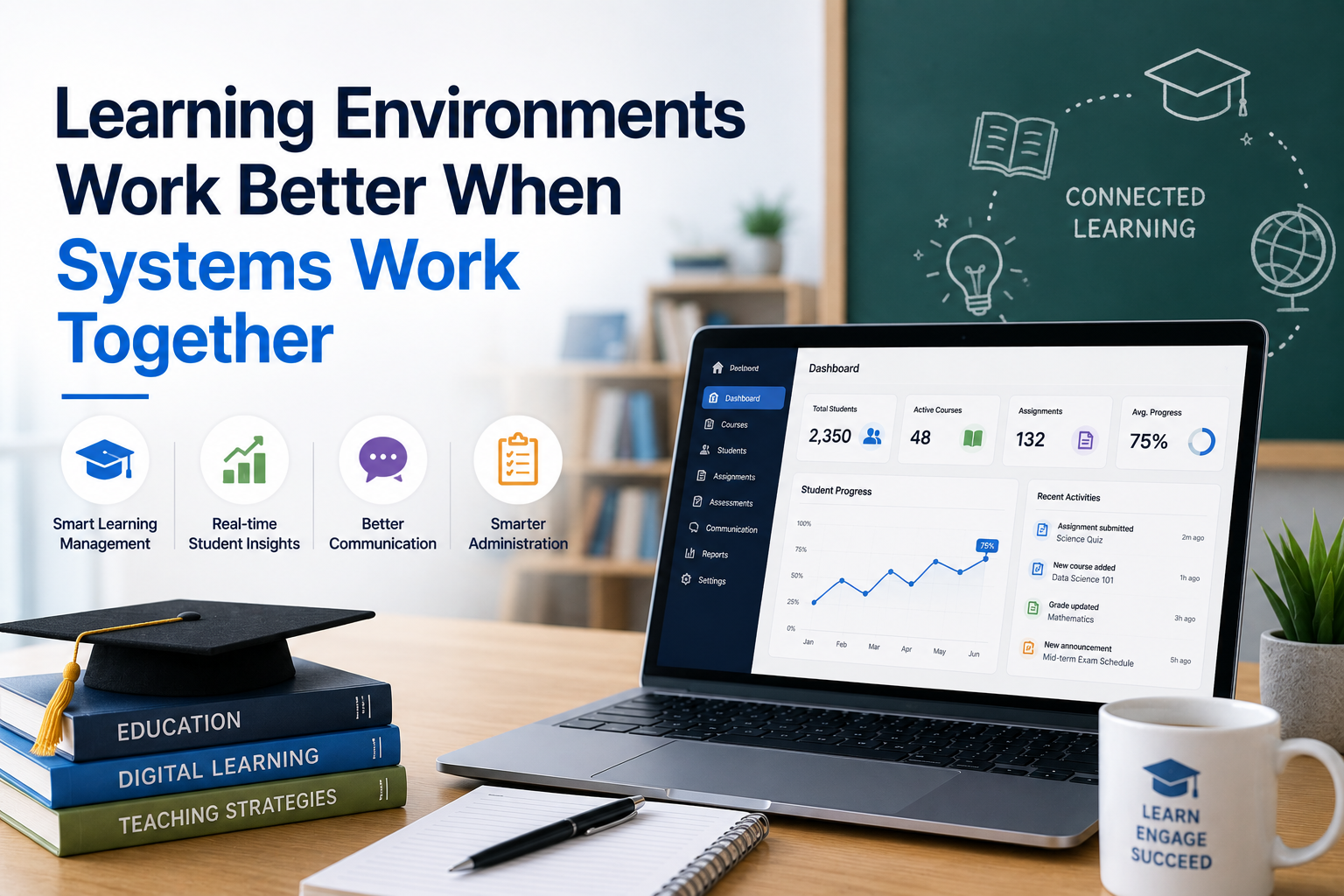
A connected learning management system improves this by bringing engagement, assessments, and communication into one environment. Synclo supports this by connecting learning workflows with administrative operations so educators can view student progress in real time instead of relying on fragmented reports.
Digital Learning Requires More Than Content Delivery
Many organizations approach digital learning as a content distribution problem, focusing mainly on uploading courses and making material accessible online. While accessibility is important, effective learning depends on interaction, structure, and visibility.
Students need consistent communication, clear learning paths, and timely feedback throughout the learning process. Without these elements, even strong course content becomes difficult to engage with over time. This is especially true in remote and hybrid learning environments where instructors cannot rely on physical classroom interaction to identify gaps in understanding or participation.
A connected LMS software system allows institutions to manage not just content but the full learning experience. This includes assessments, student tracking, instructor communication, and progress monitoring within a single platform.
Administrative Workflows Often Slow Down Educational Operations
Educational institutions manage large amounts of operational activity beyond teaching itself. Admissions, attendance, scheduling, assessments, certifications, and communication all require coordination between departments.
When these workflows operate separately, administrators spend significant time manually updating systems and verifying information. This slows down operations and increases the likelihood of errors or delays. Students may experience slow responses, outdated records, or inconsistent communication because systems are not aligned.
Modern educational organizations are moving toward:
- Unified learning and administration platforms
- Centralized student information systems
- Connected communication and assessment workflows
The goal is to ensure that academic operations move through one connected environment instead of multiple disconnected tools. Synclo supports this by linking administrative workflows directly with learning operations, reducing manual coordination and improving visibility across departments.
Real Time Visibility Improves Learning Outcomes
Educational decisions are more effective when instructors and administrators can access real time information. Waiting for end-of-term reports or manually compiled data limits the ability to respond quickly to student needs.
Real time visibility allows institutions to identify participation issues earlier, monitor course progress continuously, and adjust learning strategies based on actual engagement patterns. Instead of reacting after performance declines, educators can intervene while there is still time to improve outcomes.
This becomes especially important in large institutions where managing thousands of students manually is no longer practical. Connected systems provide educators with structured visibility that supports faster and more informed decisions.
Manual Processes Create Unnecessary Delays
Many educational operations still rely heavily on manual processes for grading, reporting, communication, and administrative approvals. While these workflows may function at a smaller scale, they become difficult to manage as institutions grow.
Manual coordination slows down responses and reduces operational efficiency. Staff spend more time processing information instead of focusing on teaching and student support. Even routine administrative tasks begin to consume significant operational time.
Automation helps reduce these delays by allowing workflows to move automatically between stages. Institutions can automate attendance tracking, assignment notifications, progress reporting, and communication workflows, which improves consistency while reducing administrative workload.
Scaling Educational Operations Requires Structured Systems
As educational institutions expand, operational complexity increases quickly. More students, more instructors, and more digital learning requirements place additional pressure on existing systems. Without structure, maintaining consistency across departments becomes difficult.
A scalable education platform ensures that learning operations remain organized as institutions grow. Systems need to support larger student volumes without reducing visibility or slowing down workflows. Synclo supports this by providing a connected operational environment where learning management, communication, and administration function together instead of separately.
When educational systems are connected, learning becomes easier to manage at every level. Educators gain better visibility into student progress, administrators reduce operational delays, and students experience more consistent communication and support. Strong learning outcomes depend not only on course quality but also on how effectively the entire educational environment is managed. Institutions that improve this coordination are able to deliver more structured and engaging learning experiences while maintaining operational efficiency.
