



- Logistics companies generate large amounts of operational data but struggle to turn it into decisions
- Manual planning and reactive operations reduce efficiency across warehouses and deliveries
- AI helps logistics teams improve visibility, forecasting, and operational control
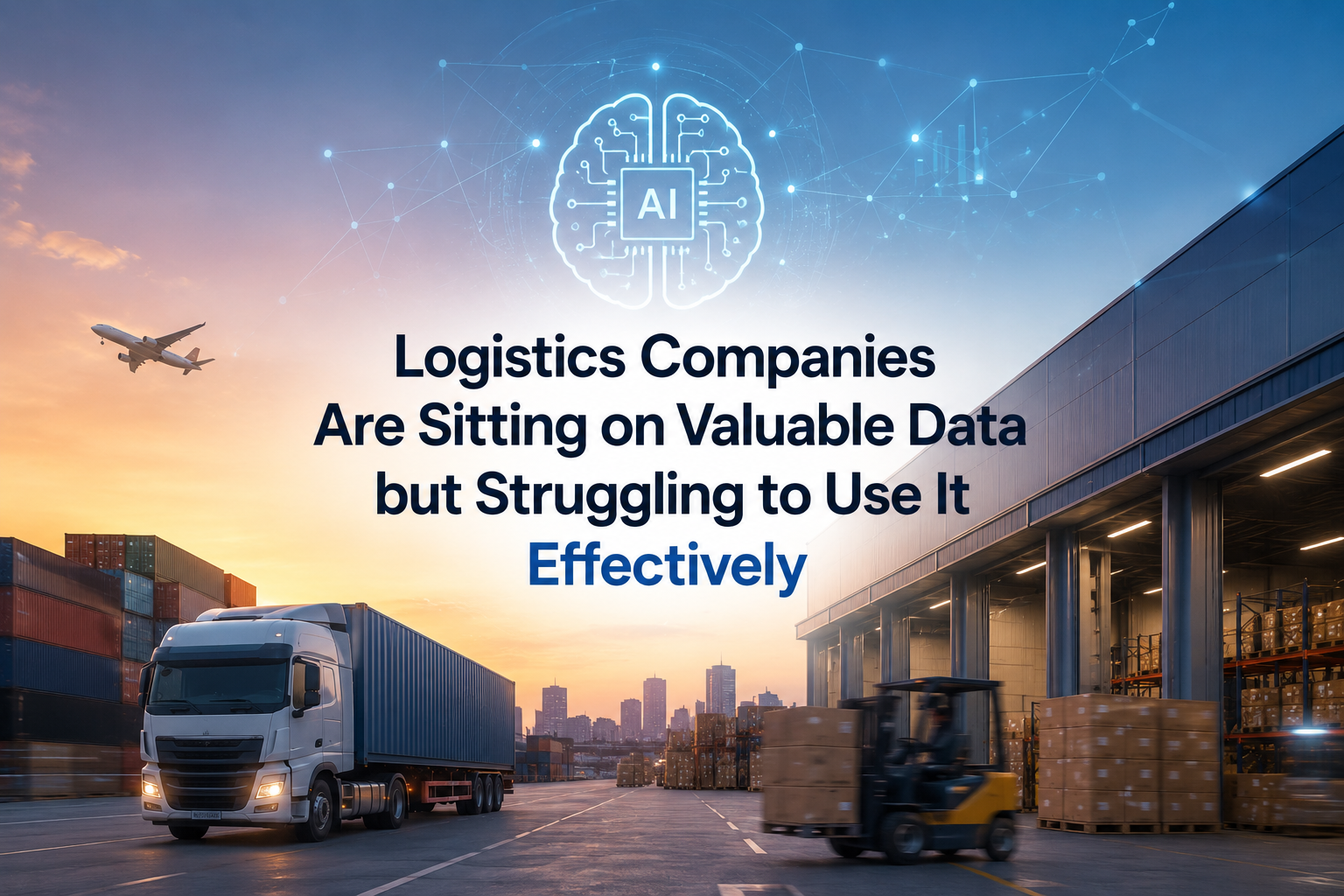
Every shipment, warehouse scan, delivery route, inventory movement, and supplier transaction creates data. Modern logistics companies generate enormous amounts of operational information every day, yet many organizations still struggle to convert that information into useful decisions. Teams collect data continuously, but much of it remains trapped inside reports, spreadsheets, and disconnected systems that are reviewed only after problems have already occurred.
The logistics industry has always depended on timing, visibility, and coordination. Today, however, operational complexity is increasing faster than traditional management methods can handle. Warehouses process more inventory, delivery networks cover larger territories, and customer expectations continue to rise. As a result, organizations are looking toward Artificial Intelligence not as a future technology but as a practical tool for managing day-to-day operations more effectively.
The question is no longer whether logistics companies have enough data. The question is whether they can use that data fast enough to improve decisions while operations are still moving.
Reactive Operations Create Expensive Problems
Many logistics businesses still operate reactively. Delays are addressed after they happen. Inventory shortages are identified when stock levels become critical. Route inefficiencies are discovered after fuel costs increase. Managers spend significant time responding to issues rather than preventing them.
This approach creates operational friction across the organization. Teams become focused on solving immediate problems while larger patterns remain hidden. Valuable operational insights exist within the data, but finding them manually requires time that most teams simply do not have.
This often results in:
- Delivery disruptions that could have been predicted earlier
- Inventory shortages that affect fulfillment schedules
- Increased transportation and warehouse costs
Artificial Intelligence helps shift operations from reactive management toward proactive decision-making by identifying patterns before they become problems.
Forecasting Becomes More Accurate With AI
Forecasting has always been one of the most difficult parts of logistics management. Demand changes constantly, supplier performance varies, and external factors such as weather, seasonal trends, and market conditions affect operations in unpredictable ways.
Traditional forecasting methods rely heavily on historical data and manual analysis. While useful, these methods often struggle to identify complex patterns across large datasets.
AI systems can analyze significantly more information than manual processes and identify relationships that would otherwise remain hidden. This allows logistics organizations to improve demand forecasting, inventory planning, and resource allocation.
A connected AI-powered logistics platform can help businesses anticipate operational requirements more accurately while reducing uncertainty across the supply chain. Synclo supports this by helping organizations connect operational workflows and data into a structured environment that supports intelligent decision-making.
Warehouse Operations Generate Valuable Insights
Warehouses are often viewed primarily as storage and fulfillment facilities, but they are also major sources of operational intelligence. Every inventory movement, stock adjustment, picking activity, and shipment creates information that can help improve efficiency.
Unfortunately, many organizations only use a small portion of this data. Teams focus on reporting current activity rather than analyzing long-term patterns that could improve performance.
AI can help warehouse operations by identifying:
- Inventory trends that indicate future shortages
- Picking and fulfillment inefficiencies
- Product movement patterns that affect storage utilization
- Operational bottlenecks that reduce productivity
These insights allow warehouse managers to make improvements based on actual operational behavior rather than assumptions.
Route Optimization Requires More Than Maps
Delivery planning has traditionally focused on identifying the shortest route between locations. However, modern logistics operations involve many more variables than distance alone.
Traffic conditions, delivery windows, fuel costs, driver availability, customer priorities, and vehicle utilization all influence route performance. Managing these variables manually becomes increasingly difficult as delivery volumes grow.
Modern logistics organizations are investing in:
- AI-assisted route planning
- Predictive delivery management
- Intelligent resource allocation systems
The goal is to improve operational efficiency without increasing administrative complexity. Synclo helps support this by providing connected operational workflows that improve visibility across logistics activities.
AI Helps Teams Make Faster Decisions
One of the biggest benefits of Artificial Intelligence is speed. Logistics managers often need to make decisions quickly, yet traditional reporting methods may require hours or even days to produce actionable insights.
AI can analyze operational activity continuously and provide recommendations while decisions still matter. Instead of reviewing historical reports, managers gain visibility into current conditions and emerging trends.
This improves decision-making across multiple areas, including inventory planning, supplier management, warehouse utilization, workforce allocation, and delivery operations.
Importantly, AI does not replace operational expertise. It helps experienced teams access better information faster, allowing them to focus on strategic decisions rather than manual analysis.
Customer Expectations Continue to Rise
Customers now expect greater transparency throughout the delivery process. They want accurate delivery estimates, real-time updates, and reliable service regardless of shipment volume.
Meeting these expectations requires visibility across the entire logistics network. Without connected systems and intelligent analysis, maintaining this level of service becomes increasingly difficult.
AI helps organizations improve customer experience by supporting:
- More accurate delivery predictions
- Faster response to operational disruptions
- Better visibility into shipment status
- Improved planning across fulfillment workflows
As customer expectations continue to increase, operational intelligence becomes a competitive advantage rather than simply a reporting tool.
The Future of Logistics Depends on Better Decision-Making
The logistics industry is not facing a data shortage. If anything, organizations are generating more information than ever before. The challenge is transforming that information into useful action.
Artificial Intelligence provides a practical way to manage this complexity. By analyzing large volumes of operational data, identifying patterns, and supporting faster decisions, AI helps logistics organizations improve efficiency without increasing operational overhead.
Businesses that successfully combine logistics expertise with intelligent systems gain stronger visibility, better forecasting, and greater operational control. As supply chains continue to become more complex, the ability to make faster and more informed decisions will play an increasingly important role in long-term success.
