


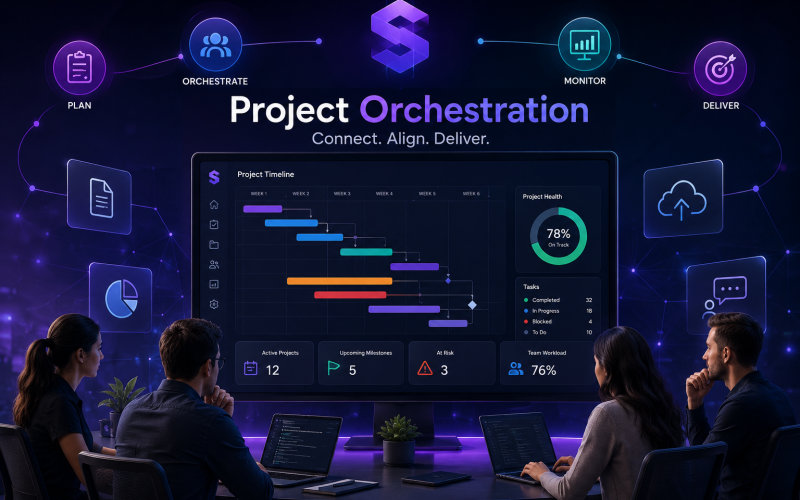



- IT companies struggle when fast-moving teams operate through disconnected workflows
- Poor visibility across projects and communication slows down execution
- Systems like Synclo help technology teams manage operations through connected processes
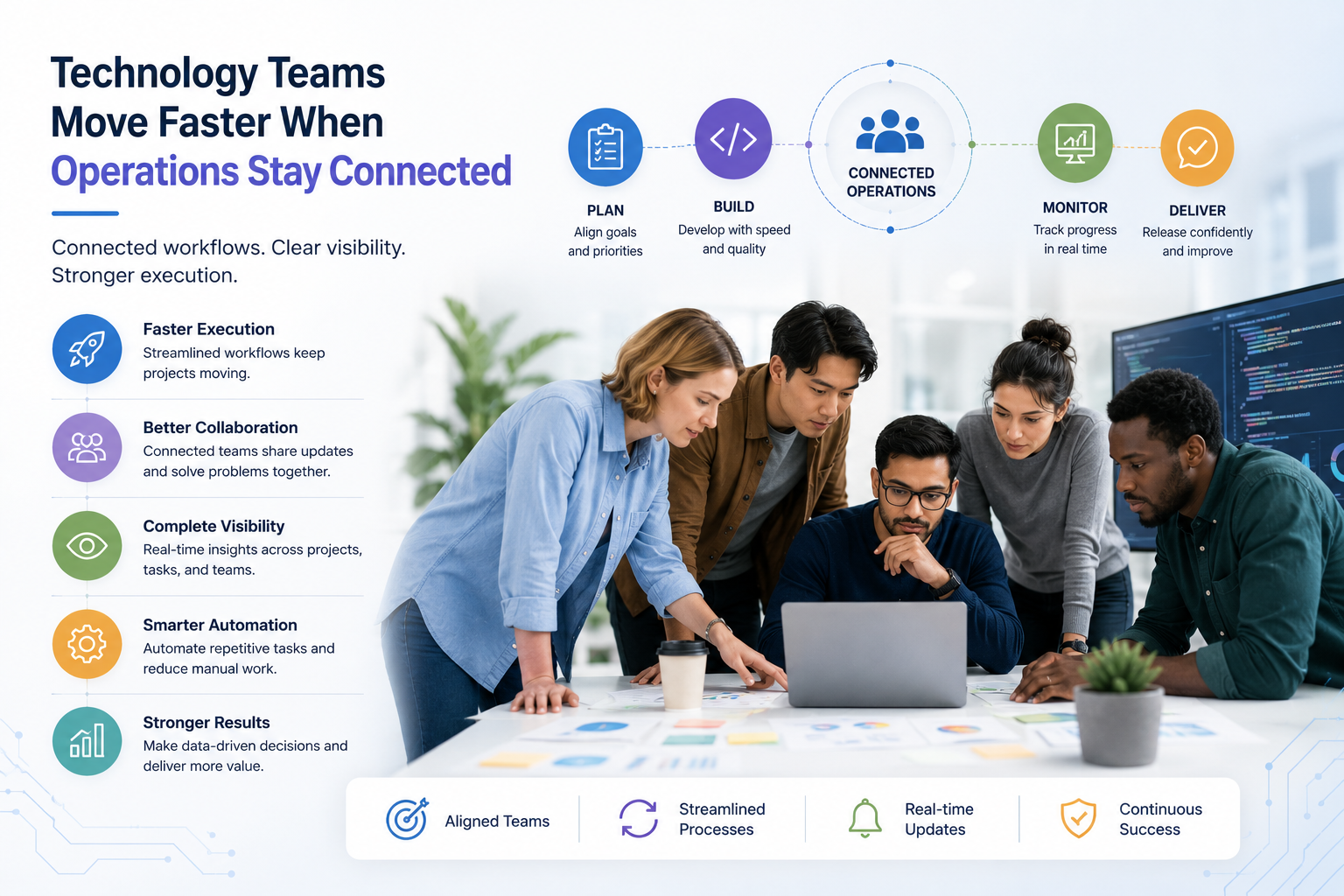
Technology companies move faster than most industries. Teams release updates continuously, manage multiple projects at once, and coordinate across development, operations, support, and client management simultaneously. Speed is expected at every level, yet many organizations still operate with fragmented systems that make coordination harder as the business grows.
The challenge is not technical capability. Most technology companies already use advanced tools across development and operations. The problem begins when those tools do not connect well enough to support the full workflow of the business. Project tracking may exist in one platform, communication in another, support operations somewhere else, and reporting spread across multiple systems. As teams scale, this fragmentation creates delays that affect execution, visibility, and decision making.
Fast Teams Still Lose Time Through Operational Gaps
Technology businesses often focus heavily on product development speed, but operational inefficiencies behind the scenes can slow progress significantly. Teams may complete work quickly, yet delays appear when updates do not move between departments efficiently.
A feature may be ready from a development perspective while operations teams are still waiting for approvals or deployment visibility. Support teams may not have updated information about releases, which affects communication with customers. Leadership may struggle to understand project status clearly because data exists across multiple tools instead of one connected workflow.
This often creates:
- Delays in project coordination between teams
- Limited visibility into operational progress
- Repeated work caused by disconnected communication
A connected project and operations management system helps reduce these gaps by linking workflows, communication, and reporting into one structured environment. Synclo supports this by helping teams coordinate execution without relying on fragmented operational processes.
Communication Becomes Harder as Teams Scale
Technology companies frequently operate with distributed or hybrid teams, which increases the importance of structured communication. However, communication often becomes scattered across chats, meetings, emails, and external tools that are disconnected from operational workflows.
This creates situations where decisions are discussed but not documented clearly, updates are shared without context, and project information becomes difficult to track over time. Teams spend additional effort trying to understand current priorities instead of focusing directly on execution.
A connected operational environment improves communication because updates are tied directly to workflows, projects, and tasks instead of existing separately from them. This allows teams to maintain visibility without relying heavily on follow ups or manual coordination.
Visibility Across Projects Is Difficult to Maintain
Technology companies often manage multiple active initiatives simultaneously, including product development, client work, infrastructure improvements, and support operations. Maintaining visibility across these moving parts becomes difficult when each department relies on separate systems.
Leadership teams need accurate operational insight to make decisions quickly, but fragmented reporting limits clarity. By the time reports are manually compiled, conditions may already have changed.
Modern technology organizations are moving toward:
- Unified operational management systems
- Centralized project and workflow environments
- Connected communication and reporting platforms
The goal is to ensure that operational visibility remains clear as projects and teams expand. Synclo supports this by connecting workflows, reporting, and collaboration into one system where operational information updates continuously.
Manual Coordination Slows Agile Execution
Technology businesses often emphasize agile execution, yet many operational processes still depend on manual coordination. Teams manually update project status, approvals require repeated follow ups, and reporting often relies on separate administrative effort.
These manual processes create bottlenecks that reduce agility over time. While development cycles may move quickly, operational workflows around them often slow things down. Teams spend unnecessary time managing updates instead of solving problems or building products.
Automation improves operational speed by allowing workflows to move automatically between stages. Project updates, approvals, reporting, and notifications can happen without constant manual input, which reduces delays and improves consistency across teams.
Client and Support Operations Need Better Alignment
For many technology companies, product delivery is closely tied to client relationships and support operations. However, support teams often work separately from development workflows, which creates communication gaps between customers and operational teams.
When systems are disconnected, support teams may not have accurate information about product updates, issue resolution, or deployment status. This affects response quality and creates frustration for both teams and customers.
A connected workflow environment improves alignment between operations, support, and development. Teams can access the same information in real time, which improves communication and reduces delays in responding to issues. Synclo supports this by bringing project management, operational workflows, and communication into one structured platform.
Scaling Technology Operations Requires Structured Systems
As technology companies grow, operational complexity increases quickly. More clients, more projects, and more teams create additional pressure on coordination and visibility. Without structure, operational gaps become larger and harder to manage.
A scalable operational system helps technology businesses maintain consistency as they expand. Teams need visibility across all workflows without relying on fragmented tools or manual coordination. Synclo supports this by providing a connected environment where workflows, communication, reporting, and operational management work together instead of separately.
When systems are connected, technology organizations move with more clarity and control. Teams coordinate faster, leadership gains better visibility into operations, and communication becomes easier to manage across departments. Strong execution does not depend only on technical skill. It also depends on how effectively the business supports operational flow behind the scenes. Companies that improve this structure are able to scale faster while maintaining consistency across teams and projects.
