






Manufacturing and supply chains have always been closely linked. What happens on the factory floor directly impacts how products move through the supply chain — and ultimately how they reach the customer.
Today, that relationship is becoming even more critical.
As global demand fluctuates, supply chains become more complex, and customer expectations continue to rise, traditional manufacturing and supply chain systems are struggling to keep up. Delays, inefficiencies, and lack of visibility are no longer acceptable in an environment that demands speed, accuracy, and adaptability.
The future lies in smart manufacturing and connected supply chains — powered by artificial intelligence (AI) and unified systems that bring everything into one cohesive flow.
The Shift Toward Smart Manufacturing
Smart manufacturing goes beyond automation. It is about creating systems that are intelligent, responsive, and interconnected.
Traditional manufacturing systems often operate in silos, with limited communication between production, inventory, and supply chain processes.
Smart manufacturing changes this by:
- Connecting machines, systems, and data
- Enabling real-time monitoring and control
- Using AI to optimize operations
- Improving decision-making through insights
This shift allows manufacturers to move from reactive operations to proactive and predictive management.
Platforms like Synclo are increasingly designed to support this transformation by integrating production workflows, inventory, and operational data into a unified system.
The Importance of Connected Supply Chains
Supply chains are becoming more dynamic and complex.
They involve multiple stakeholders, including suppliers, manufacturers, distributors, and logistics providers. Each stage generates data and depends on accurate, timely information.
Disconnected supply chains lead to:
- Delays in material availability
- Inefficient inventory management
- Poor coordination between stakeholders
- Increased operational costs
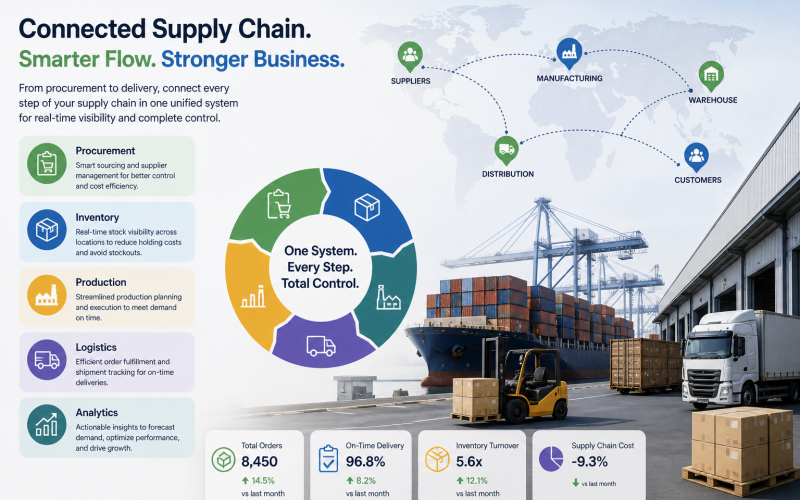
Connected supply chains address these challenges by ensuring that data flows seamlessly across all stages.
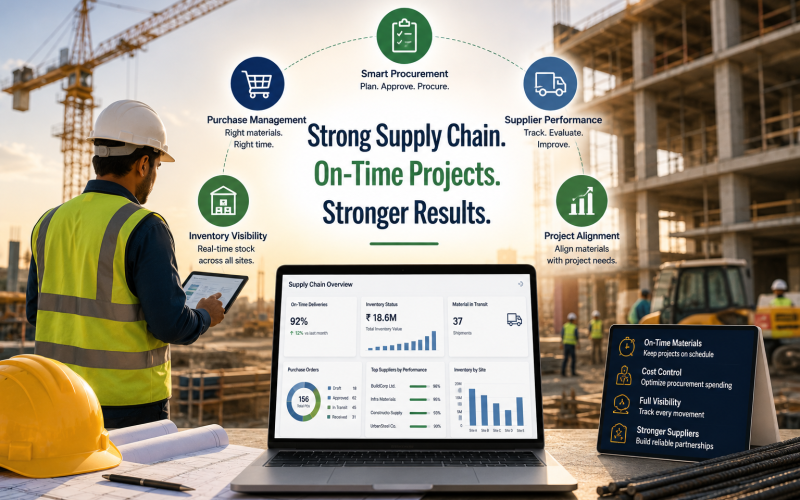
With centralized systems such as Synclo, supply chain activities can be aligned with manufacturing operations, improving coordination and reducing inefficiencies.
Real-Time Visibility Across Operations
Visibility is one of the most critical factors in both manufacturing and supply chains.
Without real-time insights, organizations struggle to respond to disruptions, manage inventory effectively, and maintain production schedules.
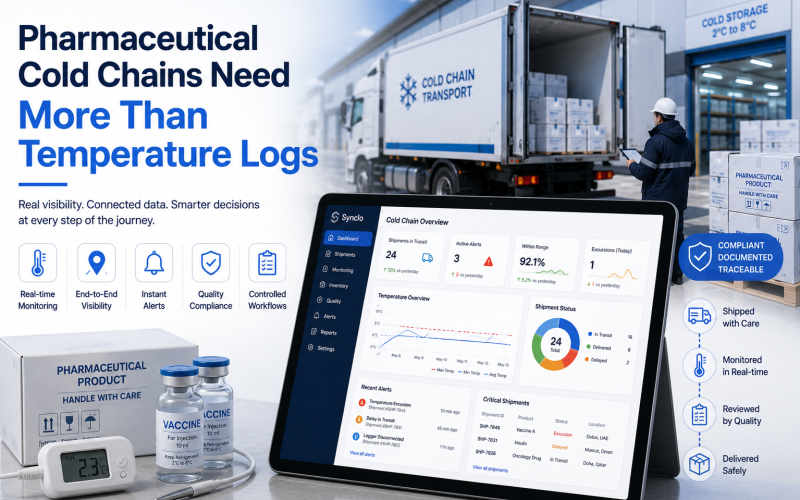
AI-powered systems provide real-time visibility by continuously analyzing data across operations.
This enables organizations to:
- Monitor production and inventory levels
- Track supply chain activities
- Identify bottlenecks early
- Make faster, informed decisions
Platforms like Synclo centralize this data, giving organizations a unified view of their operations and enabling better coordination.
Predictive Insights and Demand Forecasting
One of the key advantages of AI in manufacturing and supply chains is its ability to predict future outcomes.
By analyzing historical data and identifying patterns, AI can:
- Forecast demand more accurately
- Predict supply chain disruptions
- Optimize production schedules
- Improve inventory planning
This allows organizations to align production with demand, reducing waste and improving efficiency.
Systems such as Synclo support this by providing structured data and workflows that enable more accurate forecasting and planning.
Enhancing Operational Efficiency
Efficiency is at the core of both manufacturing and supply chain management.
AI improves efficiency by:
- Automating repetitive tasks
- Reducing manual intervention
- Optimizing workflows
- Improving coordination across teams
This results in faster operations, lower costs, and improved productivity.
Platforms like Synclo integrate these capabilities into a single system, ensuring that all processes are aligned and efficient.
Reducing Downtime and Disruptions
Downtime and disruptions can have significant impacts on manufacturing and supply chain performance.
AI helps reduce these risks by:
- Predicting equipment failures through predictive maintenance
- Identifying potential supply chain disruptions
- Providing early warnings for operational issues
This allows organizations to take preventive action and maintain continuity.
With systems like Synclo, organizations can monitor operations in real time and respond quickly to potential disruptions.
Improving Collaboration Across Stakeholders
Manufacturing and supply chain operations involve multiple teams and stakeholders.
Effective collaboration is essential for smooth operations.
Connected systems improve collaboration by:
- Providing shared access to data
- Aligning workflows across teams
- Reducing communication gaps
- Ensuring consistency in information
Platforms like Synclo support this by creating a unified environment where all stakeholders can work with the same data and processes.
Sustainability and Resource Optimization
Sustainability is becoming an important consideration in manufacturing and supply chains.
AI enables organizations to:
- Optimize resource usage
- Reduce waste
- Improve energy efficiency
- Monitor environmental impact
This helps organizations operate more sustainably while maintaining efficiency.
Challenges in Building Smart and Connected Systems
While the benefits are clear, transitioning to smart manufacturing and connected supply chains comes with challenges:
- Integrating legacy systems
- Ensuring data accuracy and quality
- Managing change within organizations
- Training teams to adopt new technologies
A strategic approach is required to ensure successful implementation.
The Future of Manufacturing and Supply Chains
The future of manufacturing and supply chains is defined by systems that are:
- Connected — integrating all functions into one ecosystem
- Intelligent — powered by AI-driven insights
- Efficient — minimizing delays and inefficiencies
- Scalable — supporting growth without complexity
AI will continue to drive this transformation, enabling organizations to operate more effectively in a rapidly changing environment.
Platforms like Synclo reflect this shift by bringing manufacturing and supply chain operations into one unified system.
Conclusion
The future of manufacturing and supply chains lies in connectivity and intelligence.
Traditional systems are no longer sufficient to meet the demands of modern operations. Organizations must adopt systems that provide real-time visibility, predictive insights, and seamless coordination.
AI is making this possible by transforming how operations are managed and optimized.
Platforms like Synclo support this transformation by providing a structured, connected environment where manufacturing and supply chain processes can work together efficiently.
The result is not just improved efficiency, but a more resilient, adaptable, and future-ready operation.
