


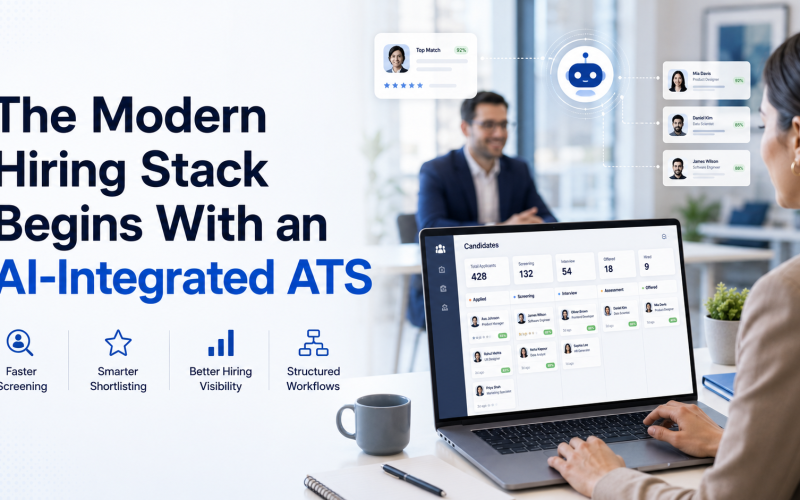
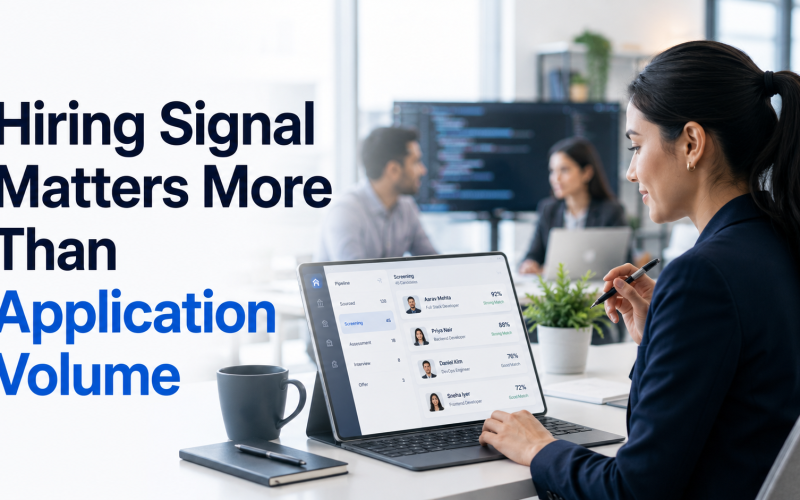




- Healthcare organizations face increasing pressure to hire qualified talent quickly without compromising quality.
- Manual recruitment processes slow decision-making and create visibility gaps across hiring stages.
- Connected recruitment platforms help healthcare providers improve hiring efficiency while maintaining compliance and candidate experience.
Healthcare is ultimately powered by people. Advanced equipment, modern facilities, and innovative treatments are essential, but patient outcomes and organizational performance depend heavily on the professionals delivering care every day. Doctors, nurses, pharmacists, laboratory technicians, therapists, administrative teams, and support staff all play critical roles in maintaining healthcare excellence.
However, attracting and hiring the right talent has become increasingly challenging. Healthcare organizations are facing workforce shortages, growing competition for skilled professionals, increasing compliance requirements, and rising expectations from candidates themselves. At the same time, many hospitals, clinics, and healthcare groups still rely on recruitment processes built around spreadsheets, emails, printed documentation, and disconnected systems.
The result is a hiring process that often struggles to keep pace with operational demands.
Recruitment is no longer simply an administrative activity. It has become a strategic function that directly influences patient care, workforce stability, employee retention, and long-term organizational growth. Healthcare organizations that modernize their hiring processes are better positioned to secure top talent before competitors do.
The Cost of Slow Hiring in Healthcare
Vacant positions create more than staffing challenges. Every unfilled role places additional pressure on existing employees, increases overtime costs, and may affect service delivery.
When recruitment processes move slowly, organizations risk losing qualified candidates to faster-moving employers. Healthcare professionals are often evaluating multiple opportunities simultaneously. Delayed communication, lengthy approvals, and inconsistent interview processes can quickly discourage strong candidates.
This often leads to:
- Longer time-to-fill for critical positions
- Increased workload on existing staff
- Higher recruitment and overtime costs
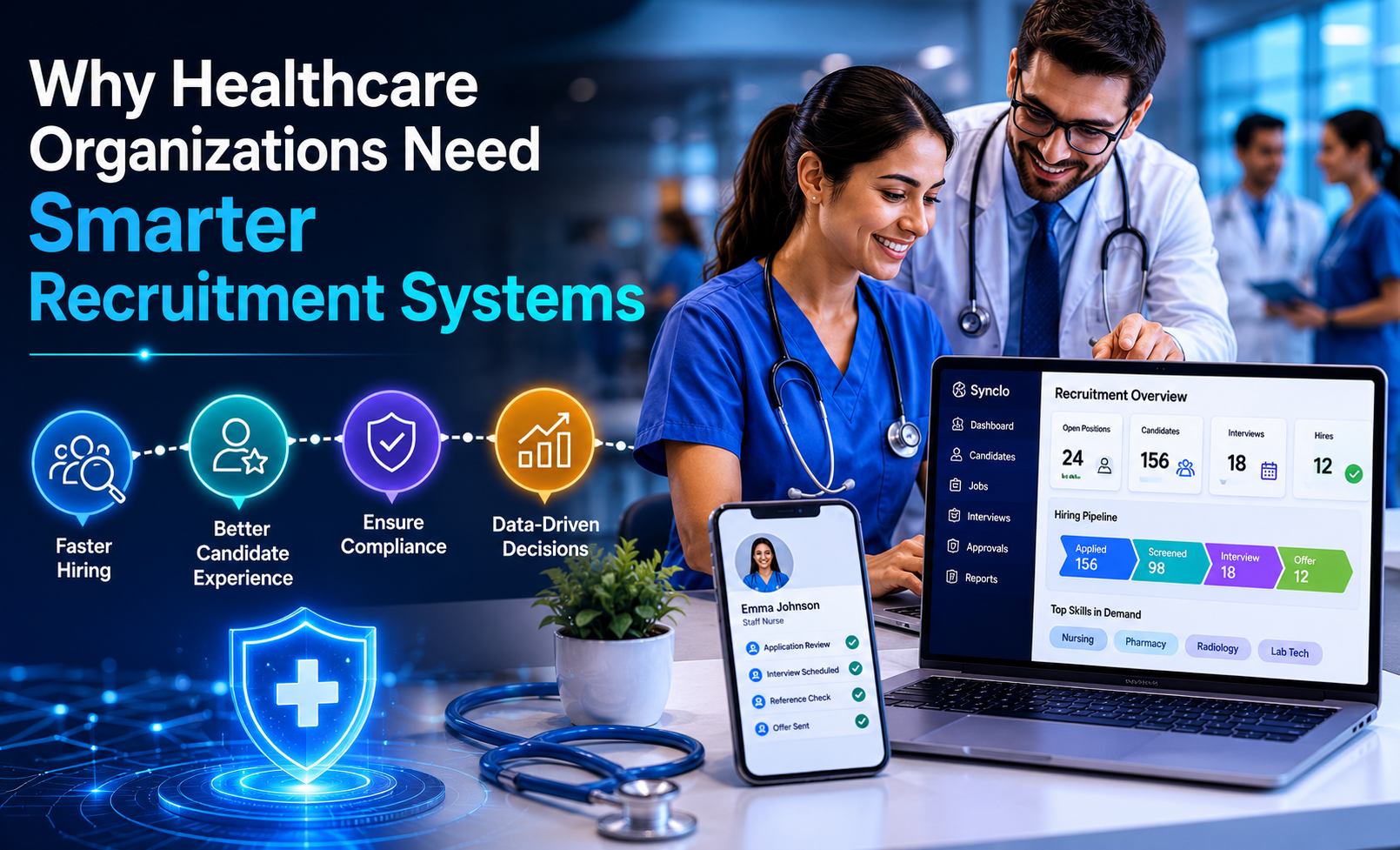
A connected recruitment management system helps organizations streamline hiring workflows while improving visibility into every stage of the recruitment lifecycle. Synclo supports this by connecting requisitions, approvals, candidate management, and hiring decisions within a single platform.
Candidate Experience Has Become a Competitive Advantage
Healthcare organizations compete not only on compensation and benefits but also on the overall candidate experience.
Candidates expect timely communication, clear hiring processes, and transparency throughout their application journey. Unfortunately, disconnected systems often result in delayed responses, repeated requests for information, and inconsistent follow-ups.
A poor recruitment experience can damage employer reputation and reduce acceptance rates among highly qualified professionals.
Modern recruitment platforms improve candidate engagement by ensuring that communication remains structured and timely. Applicants receive updates, hiring teams maintain visibility into progress, and decision-makers can collaborate more effectively.
Strong candidate experiences help healthcare organizations strengthen their employer brand while improving hiring outcomes.
Hiring Decisions Need Better Collaboration
Healthcare recruitment rarely involves a single decision-maker. Department heads, HR teams, clinical leaders, administrators, and executive stakeholders often participate throughout the hiring process.
Without connected systems, collaboration becomes difficult.
Interview feedback may be collected through emails. Approvals may require multiple follow-ups. Hiring managers may struggle to understand where candidates currently stand within the process.
A connected recruitment environment allows stakeholders to work from the same information.
This supports:
- Faster hiring decisions
- Greater transparency across hiring stages
- Improved accountability throughout recruitment workflows
Synclo helps facilitate this collaboration by ensuring that candidate information, interview feedback, and approvals remain accessible through one operational environment.
Compliance and Documentation Matter
Healthcare organizations operate within highly regulated environments. Credential verification, licensing requirements, certifications, and employment documentation all require careful management.
Manual processes increase the likelihood of missing information or inconsistent record-keeping.
Disconnected systems also make it more difficult to demonstrate compliance during audits or reviews.
A structured recruitment platform creates centralized records that support both operational efficiency and regulatory requirements. Documentation remains organized, searchable, and consistently maintained throughout the hiring lifecycle.
This reduces administrative risk while improving confidence in hiring decisions.
Recruitment Data Should Inform Workforce Planning
Many healthcare organizations focus only on filling current vacancies without using recruitment data to improve future planning.
However, hiring activity generates valuable insights.
Organizations can identify which positions experience the longest recruitment cycles, where candidate drop-offs occur, and which sourcing channels deliver stronger results.
Modern healthcare organizations are increasingly investing in:
- Recruitment analytics and reporting
- Centralized talent acquisition platforms
- Workforce planning tools connected to hiring activity
The objective is to transform recruitment from a reactive process into a strategic capability.
Connected systems provide leadership teams with the visibility needed to anticipate workforce needs before shortages begin affecting operations.
Automation Reduces Administrative Burden
Recruitment teams often spend substantial time scheduling interviews, managing documentation, coordinating feedback, updating candidates, and following up on approvals.
These activities are necessary, but they frequently limit the time available for strategic talent acquisition efforts.
Automation helps reduce repetitive administrative work.
Interview scheduling, approval routing, status notifications, and candidate communications can move through predefined workflows, reducing delays and improving consistency.
This allows HR teams to focus more on relationship-building, talent assessment, and long-term workforce development.
Building the Future Healthcare Workforce
Healthcare organizations face increasing pressure to build resilient, capable workforces while maintaining exceptional standards of care.
Achieving this requires more than posting vacancies and reviewing applications. It requires recruitment systems that support speed, collaboration, visibility, and compliance throughout every hiring decision.
Connected recruitment platforms provide the structure necessary to attract, assess, and secure top talent efficiently.
Synclo helps healthcare organizations achieve this by bringing recruitment workflows, approvals, candidate management, and reporting together within one unified environment.
The future of healthcare depends on the people who deliver it. Organizations that invest in smarter recruitment practices today will be better prepared to strengthen patient care, support employees, and adapt confidently to tomorrow’s workforce challenges.
