




- Healthcare HR teams struggle with staffing, compliance, and shift coordination
- Disconnected systems create delays in workforce management
- HRMS platforms like Synclo help manage healthcare teams with structured workflows
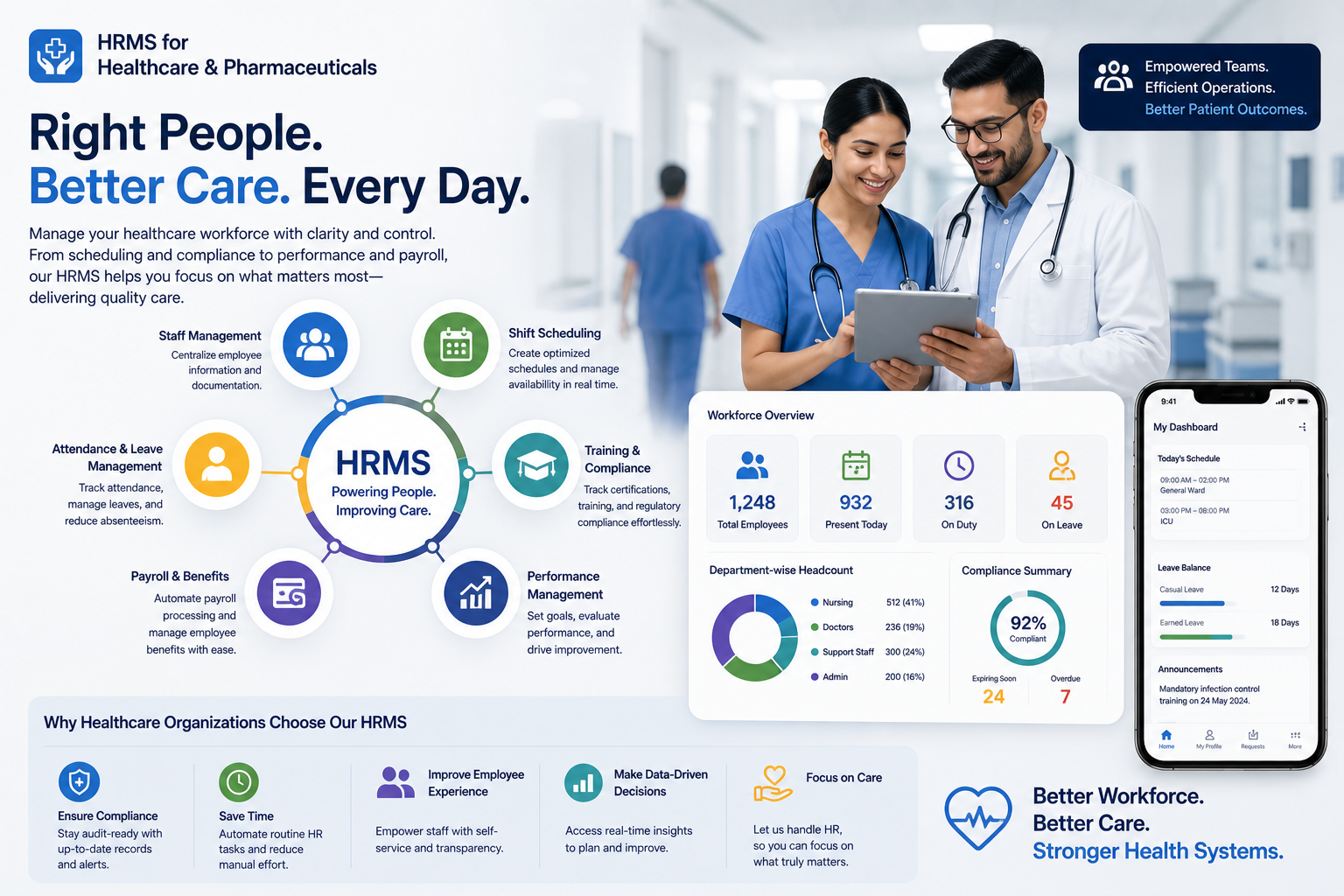
Healthcare organizations rely on people more than any other industry. Doctors, nurses, administrative staff, and support teams all work together under time pressure. Every role depends on coordination, and even small delays can affect patient care. Despite this, many healthcare providers still manage their workforce through separate systems. Staff records may exist in one platform, shift scheduling in another, and compliance tracking somewhere else.
This creates gaps in visibility and slows down decision making. As patient demand increases, these gaps become harder to manage. What starts as a minor delay in staffing or scheduling can quickly affect the entire system.
Staffing Challenges Are Not Just About Hiring
Hospitals and healthcare facilities often face staffing shortages, but the issue is not limited to hiring more people. Managing existing staff efficiently is just as important. Shift planning, availability tracking, and workload distribution require constant updates. When this information is not visible in real time, teams rely on manual coordination. This increases the risk of errors and delays.
In many cases, this leads to:
- Overlapping shifts or understaffed departments
- Delays in assigning staff to critical roles
- Increased workload on available employees
These issues affect both staff performance and patient outcomes.
Compliance Requires Accurate and Updated Records
Healthcare organizations operate under strict regulations. Staff certifications, training records, and compliance requirements must be tracked accurately. When systems are disconnected, maintaining this information becomes difficult. Records may not update on time, and teams may not have a clear view of compliance status. This creates risk. A connected HRMS software system ensures that employee data, certifications, and compliance records are updated in one place. This allows organizations to track requirements without relying on manual checks. Synclo supports this by centralizing workforce data, making compliance easier to manage.
Shift Coordination Depends on Real Time Visibility
Healthcare operations run around the clock. Shift coordination is one of the most critical aspects of workforce management. Without real time visibility, scheduling becomes reactive. Teams adjust shifts based on last minute information, which leads to inefficiencies. A structured system allows HR teams to view availability, assign shifts, and make adjustments instantly. This improves coordination and reduces gaps in coverage. With a connected system, scheduling becomes proactive instead of reactive.
Manual Processes Slow Down Critical Decisions
Many healthcare HR processes still rely on manual input. Requests for leave, shift changes, or approvals are handled through messages or spreadsheets. This slows down response time and creates inconsistencies. In an environment where timing matters, these delays can affect operations directly. Automation improves this by allowing workflows to continue without waiting for manual action.
Teams can:
- Approve requests through defined workflows
- Update staff records automatically
- Track changes as they happen
This reduces delays and improves reliability across the system.
HR Needs to Work With Operations, Not Separately
In healthcare, HR decisions are closely linked to operations. Staffing levels affect patient care, scheduling affects service delivery, and training affects performance. When HR systems operate separately, these connections are lost. Decisions are made without full context, which leads to inefficiencies. A connected system ensures that HR works alongside operations instead of independently. Synclo enables this by linking workforce management with operational workflows, allowing better coordination across the organization.
Scaling Healthcare Teams Requires Structure
As healthcare organizations grow, workforce management becomes more complex. More staff, more departments, and more responsibilities increase the need for coordination. Without a structured system, this complexity leads to delays and confusion. Processes become harder to manage, and consistency becomes difficult to maintain. A scalable HR management system ensures that operations remain organized as the organization expands. It provides a clear framework for managing staff, schedules, and compliance. Synclo supports this by offering a unified platform that adapts to growth without increasing complexity.
What Efficient Workforce Management Looks Like in Healthcare
When HR systems are connected, healthcare organizations operate more smoothly. Staff are assigned efficiently, schedules are clear, and compliance is maintained without delays. Teams spend less time coordinating and more time focusing on patient care. Managers have better visibility into workforce performance, and decisions can be made quickly.
Managing healthcare staff is not just about handling processes. It is about ensuring that the right people are in the right place at the right time. Organizations that improve this coordination are able to deliver better care while maintaining operational efficiency.
