





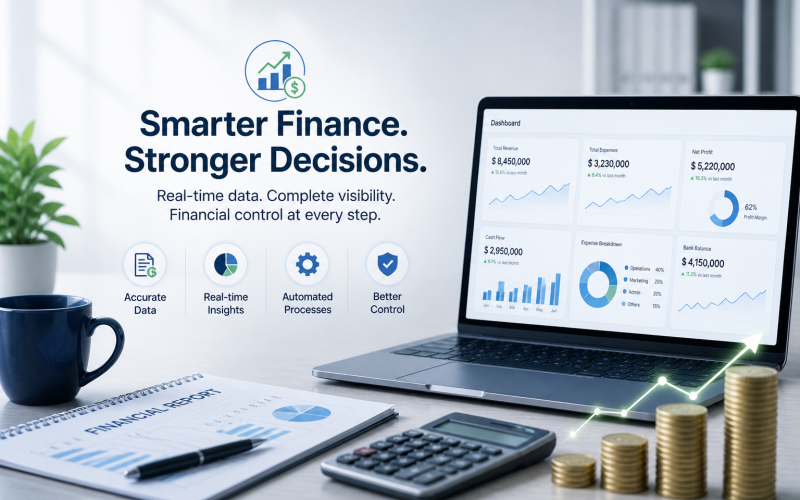
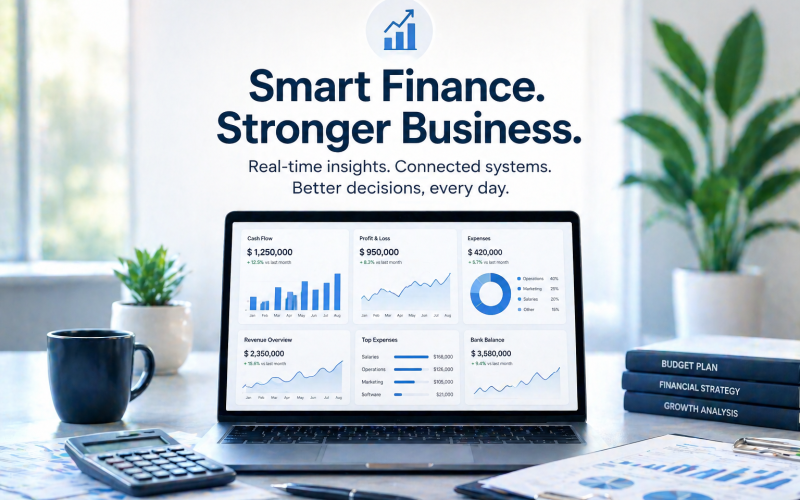


Financial institutions are operating in an environment that is more complex, fast-moving, and data-driven than ever before. From managing transactions and compliance to handling customer relationships and internal operations, the demands on financial systems have increased significantly.
Yet many institutions still rely on fragmented tools and legacy systems that were not designed for today’s level of complexity.
This disconnect is driving a major shift across the industry — a move toward unified systems that bring operations, data, and processes into one connected environment.
The Problem with Fragmented Financial Systems
Traditionally, financial institutions have used multiple systems to manage different functions:
- Core banking or transaction systems
- Accounting and financial reporting tools
- Risk management platforms
- Customer management systems
- Compliance and audit solutions
While each system serves a purpose, they often operate independently, creating silos across the organization.
This fragmentation leads to:
- Inconsistent data across systems
- Time-consuming reconciliation processes
- Limited real-time visibility
- Increased operational risk
- Slower decision-making
Teams spend more time managing systems than focusing on strategic outcomes.
This is one of the key reasons why unified systems are gaining traction.
The Need for Real-Time Visibility
Financial decisions depend heavily on accurate and timely data. However, in fragmented environments, data is often delayed or incomplete.
Unified systems address this challenge by centralizing data into a single source of truth.
This enables:
- Real-time financial reporting
- Instant visibility into transactions
- Faster identification of anomalies
- More informed decision-making
Modern platforms like Synclo are designed to support this level of visibility by bringing financial data and operational processes into one integrated system.
Reducing Operational Complexity
Managing multiple systems increases operational complexity.
Each system requires:
- Maintenance and updates
- User training
- Data synchronization
- Integration management
Over time, this creates inefficiencies and increases the risk of errors.
Unified systems simplify operations by consolidating multiple functions into a single platform.
This reduces:
- System dependencies
- Manual data handling
- Integration challenges
With systems like Synclo, institutions can manage financial workflows, reporting, and operations within one environment, reducing complexity and improving efficiency.
Enhancing Risk Management
Risk management is a critical function in financial institutions. However, fragmented systems make it difficult to monitor risks effectively.
Without a unified view of data, risks may go unnoticed until they escalate.
Unified systems enable better risk management by:
- Providing a holistic view of financial data
- Identifying anomalies in real time
- Supporting predictive risk analysis through AI
- Improving transparency across operations
AI further enhances this by analyzing patterns and detecting potential risks before they become critical issues.
Platforms like Synclo support this by centralizing data and enabling more proactive monitoring of financial activities.
Improving Compliance and Audit Readiness
Regulatory requirements in the financial industry are becoming increasingly stringent.
Institutions must maintain accurate records, ensure transparency, and be prepared for audits at any time.
Fragmented systems make compliance more challenging by:
- Creating gaps in documentation
- Making audit trails harder to track
- Increasing the risk of inconsistencies
Unified systems address these issues by:
- Maintaining centralized records
- Providing clear audit trails
- Automating compliance workflows
- Ensuring consistency across data
Solutions such as Synclo help streamline compliance by keeping all financial processes structured and traceable within a single system.
Driving Efficiency Through Automation
Automation is another key factor driving the adoption of unified systems.
Financial processes often involve repetitive tasks such as:
- Data entry
- Transaction processing
- Reconciliation
- Report generation
AI-powered unified systems can automate these tasks, reducing manual effort and improving accuracy.
This leads to:
- Faster processing times
- Lower operational costs
- Reduced human error
Platforms like Synclo combine automation with structured workflows, enabling institutions to operate more efficiently without adding complexity.
Breaking Down Organizational Silos
In many financial institutions, departments operate in silos.
Finance, operations, compliance, and customer management teams often use separate systems with limited interaction.
This lack of integration leads to:
- Poor communication
- Delayed processes
- Inconsistent data
Unified systems break down these silos by connecting all functions within one platform.
This improves collaboration and ensures that everyone works with the same data.
Systems like Synclo are designed to support cross-functional alignment, making it easier for teams to coordinate and operate effectively.
Supporting Scalability and Growth
As financial institutions grow, their systems must scale with them.
Fragmented systems often struggle to handle increased complexity, leading to bottlenecks and inefficiencies.
Unified systems provide a scalable foundation by:
- Supporting higher transaction volumes
- Adapting to new business requirements
- Maintaining performance as operations expand
With platforms like Synclo, institutions can scale their operations without needing to constantly add or replace systems.
The Role of AI in Unified Systems
Artificial intelligence is playing a crucial role in the evolution of unified systems.
AI enhances these platforms by:
- Automating workflows
- Providing predictive insights
- Detecting anomalies
- Improving decision-making
When combined with unified systems, AI creates a powerful ecosystem where data is not only centralized but also intelligently analyzed.
This enables financial institutions to operate more proactively and strategically.
Challenges in Transitioning to Unified Systems
While the benefits are clear, transitioning to unified systems is not without challenges.
Institutions must consider:
- Data migration from legacy systems
- Integration with existing infrastructure
- Change management and user adoption
- Ensuring data security and compliance
A structured approach is essential to ensure a smooth transition.
However, the long-term benefits often outweigh the initial challenges.
The Future of Financial Systems
The shift toward unified systems is not just a trend — it is becoming a necessity.
As financial institutions continue to evolve, systems must become:
- More connected
- More intelligent
- More adaptable
- More scalable
Unified platforms will play a central role in enabling this transformation.
Solutions like Synclo reflect this direction by bringing financial operations, data, and workflows into one cohesive environment, supporting a more efficient and future-ready approach.
Conclusion
Financial institutions are moving toward unified systems because the traditional approach is no longer sustainable.
Fragmented tools, delayed data, and operational inefficiencies create risks that modern organizations cannot afford.
Unified systems provide a way forward by simplifying operations, improving visibility, enhancing risk management, and supporting growth.
With the integration of AI, these systems become even more powerful, enabling smarter decision-making and more proactive management.
Platforms like Synclo are part of this transformation, helping institutions move toward a more connected and efficient future.
The future of finance is unified, intelligent, and built for scale.
