


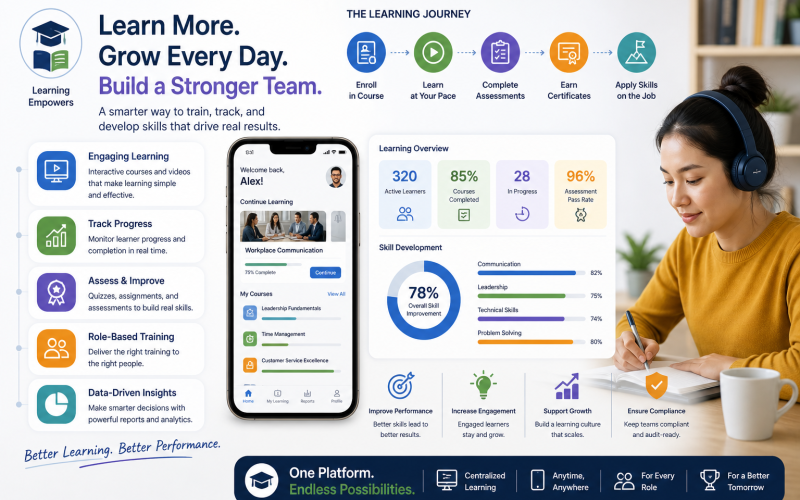



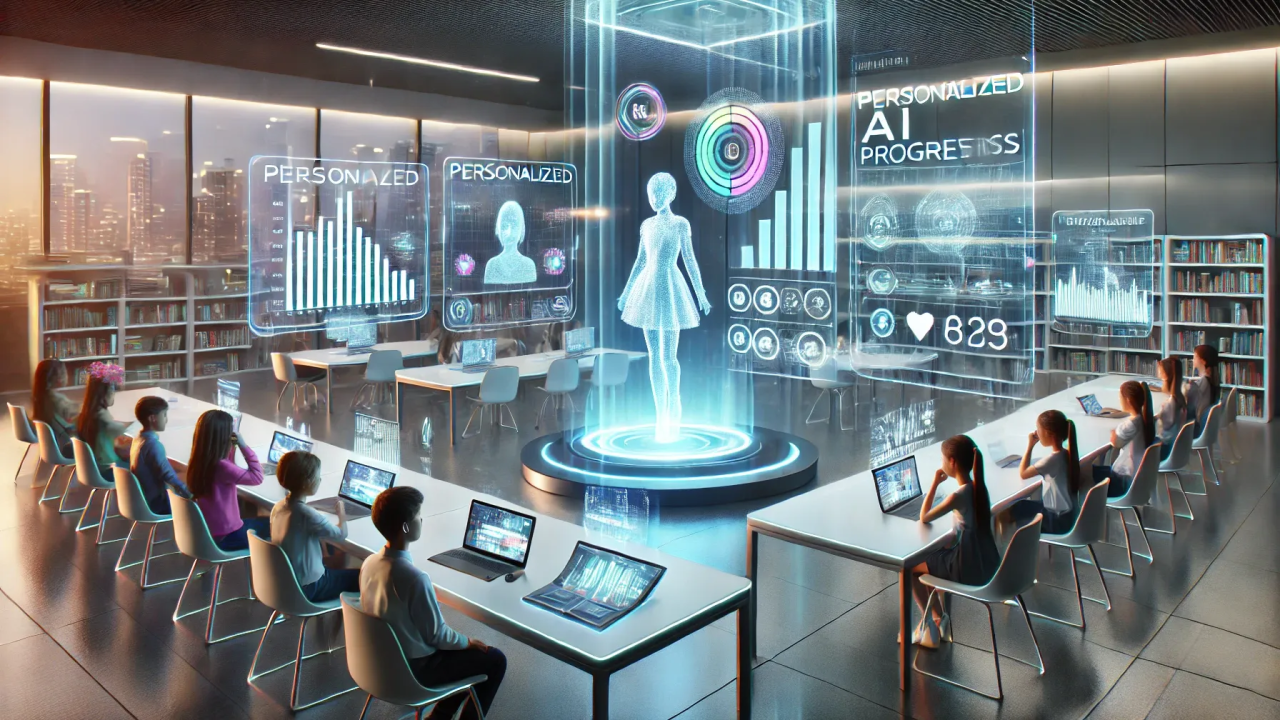
Learning Management Systems (LMS) have become a foundational part of modern education. What started as simple platforms for hosting course materials and tracking attendance has evolved into complex systems that support teaching, learning, and administration at scale.
But as education continues to change, so must the systems that support it.
The future of LMS is not just about managing learning — it is about enabling it in smarter, more connected, and more personalized ways. With the rise of artificial intelligence, data-driven insights, and flexible learning models, LMS platforms are entering a new phase of transformation.
From Content Delivery to Learning Experience
Traditional LMS platforms were primarily designed to deliver content. Upload materials, assign courses, track completion — that was the core functionality.
While effective for basic needs, this approach has limitations. It focuses on content distribution rather than learning outcomes.
The future of LMS is shifting toward learning experience platforms.
Instead of simply providing access to content, modern systems are designed to:
- Guide learners through structured journeys
- Adapt content based on performance
- Encourage engagement and interaction
- Provide real-time feedback
AI plays a key role in this transformation by making learning systems more responsive and intelligent.
Platforms like Synclo are part of this shift, focusing not just on managing courses, but on creating connected learning environments that adapt to how users interact with content.
Personalization as the New Standard
One of the most important changes in LMS evolution is the move toward personalization.
In traditional systems, every learner follows the same path. In modern systems, learning becomes dynamic.
AI enables LMS platforms to:
- Recommend courses based on individual goals
- Adjust difficulty levels automatically
- Identify knowledge gaps
- Suggest relevant content in real time
This creates a more engaging and effective learning experience.
For organizations and institutions, this also means better outcomes. Learners progress faster, retain more information, and stay more engaged.
Systems like Synclo support this by enabling structured yet flexible learning paths that adapt without adding complexity to the system.
Integration Across Systems and Workflows
One of the biggest challenges with traditional LMS platforms is isolation.
They often exist as standalone systems, disconnected from:
- HR systems
- Performance management tools
- Operational workflows
- Communication platforms
This fragmentation limits their effectiveness.
The future of LMS lies in integration.
Learning systems will no longer operate separately. Instead, they will become part of a broader ecosystem where learning connects directly with work.
For example:
- Employee training linked with performance tracking
- Learning paths aligned with career progression
- Real-time insights connected with operational data
Platforms like Synclo are designed with this integration in mind, allowing learning to exist within a unified environment rather than as a separate function.
Continuous Learning and Upskilling
Education is no longer a one-time phase. It is a continuous process.
The rapid pace of technological change requires individuals and organizations to constantly update their skills.
LMS platforms are evolving to support continuous learning by:
- Offering on-demand content
- Supporting microlearning formats
- Tracking long-term learning progress
- Aligning learning with career development
AI enhances this by recommending learning paths based on changing needs.
In modern systems like Synclo, learning is not confined to structured courses alone. It becomes part of daily workflows, enabling users to learn while they work.
Data-Driven Learning Insights
One of the most powerful capabilities of modern LMS platforms is the ability to generate and analyze data.
Every interaction — course completion, time spent, assessment results — provides valuable insights.
AI allows LMS platforms to transform this data into actionable intelligence, such as:
- Identifying learners who need support
- Predicting performance outcomes
- Improving course design
- Measuring learning effectiveness
This shift enables institutions and organizations to move from reactive to proactive learning strategies.
Platforms like Synclo leverage centralized data to provide clear visibility into learning progress and performance, making decision-making more informed and effective.
Automation and Reduced Administrative Burden
Managing learning programs involves significant administrative effort.
From enrollment and scheduling to tracking progress and generating reports, these tasks can become overwhelming.
AI-driven LMS platforms reduce this burden through automation.
They can:
- Automatically enroll users in relevant courses
- Track progress without manual input
- Generate reports instantly
- Send reminders and notifications
This allows educators and administrators to focus on improving learning experiences rather than managing processes.
Synclo supports this approach by streamlining workflows and reducing the need for manual intervention, making learning management more efficient.
Accessibility and Inclusivity
The future of LMS is also about making education accessible to everyone.
AI helps achieve this by enabling:
- Multilingual content delivery
- Voice-based learning
- Adaptive interfaces
- Personalized content recommendations
This ensures that learners from different backgrounds, abilities, and regions can access education more effectively.
As LMS platforms evolve, accessibility will become a core feature rather than an afterthought.
The Role of AI in Shaping the Future
Artificial intelligence is not just an add-on feature — it is becoming central to how LMS platforms operate.
AI enables:
- Intelligent content recommendations
- Adaptive learning paths
- Predictive analytics
- Automated feedback
It transforms LMS platforms from static systems into dynamic learning environments.
The combination of AI and LMS creates systems that are not only efficient but also intelligent, capable of evolving alongside learners.
Challenges Ahead
While the future of LMS is promising, there are challenges to consider:
- Ensuring data privacy and security
- Avoiding over-reliance on automation
- Maintaining human interaction in learning
- Addressing bias in AI-driven systems
Institutions must balance technology with human-centered learning approaches.
The goal is to enhance education, not replace its human elements.
Conclusion
The future of Learning Management Systems is not about managing courses — it is about enabling better learning experiences.
As AI continues to reshape education, LMS platforms will become more:
- Personalized
- Connected
- Intelligent
- Scalable
Learning will move beyond classrooms and into everyday life, becoming continuous, accessible, and aligned with real-world needs.
Platforms like Synclo reflect this shift by bringing learning into a unified ecosystem where it connects with people, processes, and data.
The next generation of LMS is already here.
And it is transforming how the world learns.
