




- Employee training fails when it is not connected to daily work
- Most systems track completion but not real skill development
- Platforms like Synclo help turn training into continuous improvement
Most organizations invest heavily in training. Employees go through onboarding, attend sessions, and complete assigned courses. On the surface, everything looks structured. However, many teams still struggle with skill gaps that affect performance. The problem is not the lack of training. It is the lack of connection between training and real work.
Employees often complete modules without applying what they learn. Knowledge stays within the training environment and does not carry into daily tasks. Over time, training becomes routine instead of impactful. As a result, organizations continue to invest in learning programs without seeing consistent improvement.
Completion Does Not Mean Capability
Many learning management systems focus on tracking course completion. While this provides a basic measure of progress, it does not reflect actual skill development. An employee may complete a course, yet still struggle with the same task. Without reinforcement, most of the information is forgotten. This creates a gap between learning and performance.
Common signs of this include:
- Employees repeating similar training without clear improvement
- Skills not improving despite high completion rates
- Managers relying on observation instead of data to assess progress
To improve outcomes, training needs to focus on capability, not just completion.
Learning Must Connect With Daily Tasks
Training is most effective when it is linked directly to work. Employees need to see how what they learn applies to their roles. When training remains separate, engagement drops. Employees treat it as an additional task rather than a useful resource.
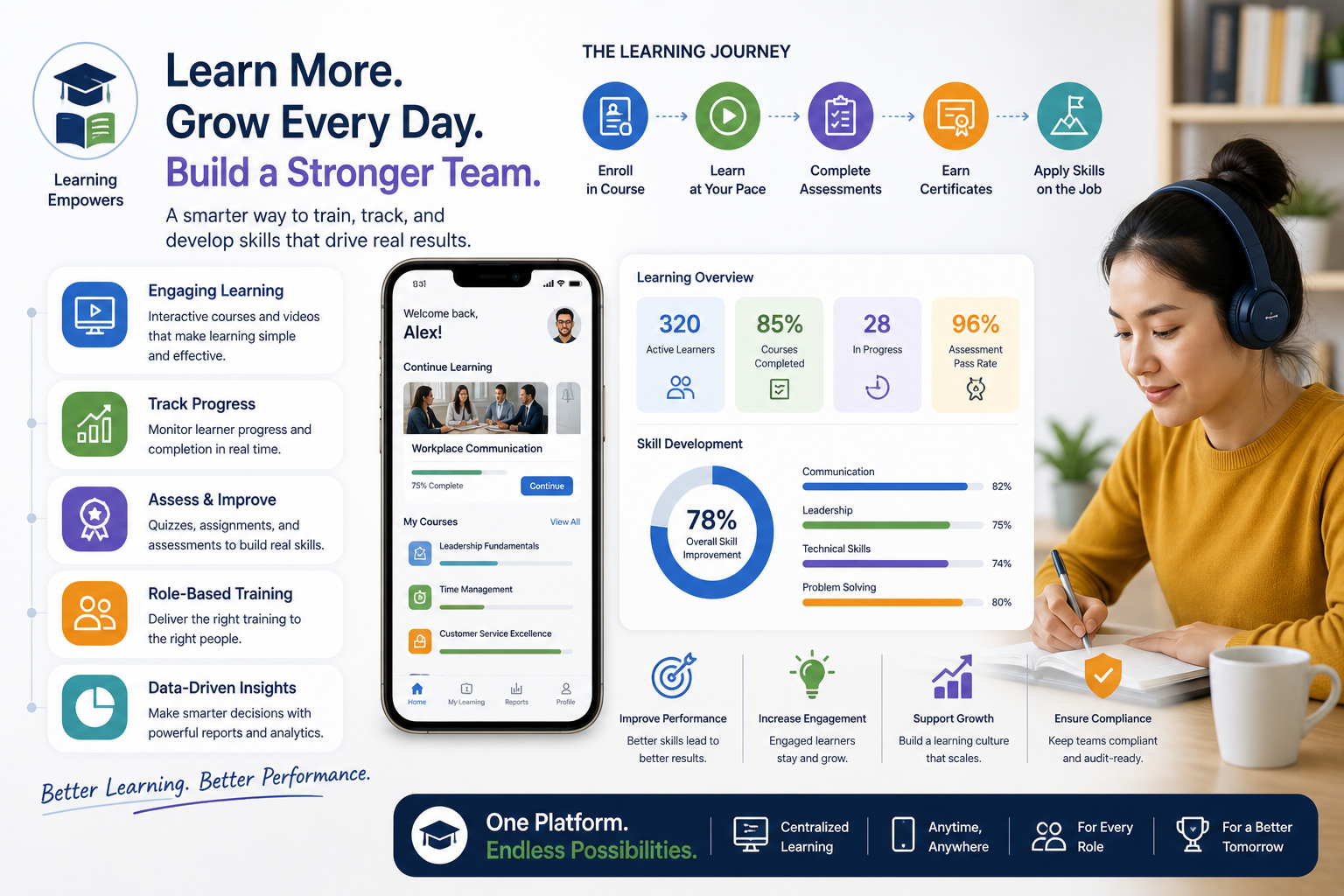
A connected LMS software setup ensures that learning becomes part of the workflow. Instead of isolated sessions, training supports real tasks. Synclo supports this by linking learning activities with operational processes, allowing employees to apply skills as they work.
Structured Learning Drives Consistency
Without structure, training becomes inconsistent. Different teams may follow different approaches. Some employees may progress quickly, while others fall behind. A structured system ensures that learning paths are clear and consistent across the organization.
Teams can:
- Assign role based training paths
- Track progress across departments
- Ensure that all employees follow the same standards
This improves alignment and reduces variation in performance.
Fragmented Systems Limit Learning Impact
Many organizations use separate tools for courses, assessments, and performance tracking. While each tool works independently, they rarely connect. This creates gaps in visibility. Managers cannot easily track how training affects performance. Employees have to switch between systems. Data becomes difficult to manage.
To reduce this friction, organizations are moving toward:
- All in one learning management systems
- Centralized employee training platforms
- Integrated business systems
The goal is to bring learning and performance into the same environment. Synclo enables this by combining training with operational workflows.
Continuous Learning Requires Ongoing Access
Training should not be limited to specific sessions. Employees need access to learning resources as they work. When learning is continuous, employees can improve skills over time instead of relying on one time training.
This approach allows teams to adapt to new tools, processes, and responsibilities without disruption. With a connected system, learning becomes part of daily operations rather than a separate activity.
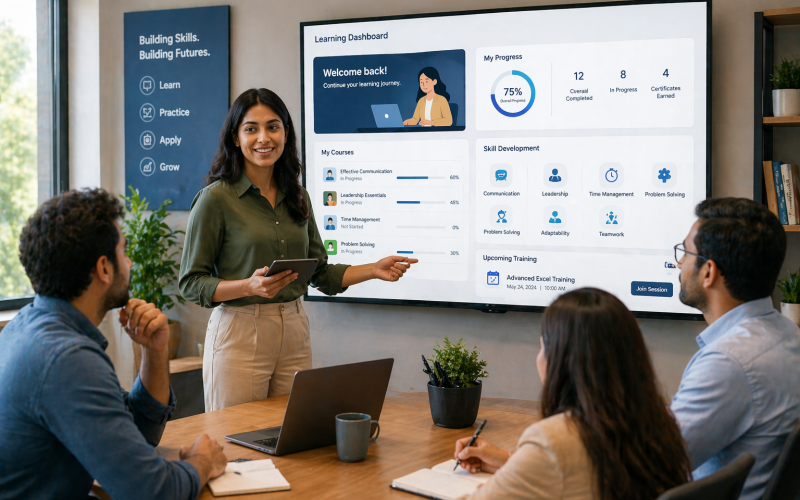
Visibility Helps Track Real Progress
Organizations often struggle to measure training effectiveness. Completion rates do not provide enough insight into actual progress. Real visibility requires tracking how skills improve over time and how they affect performance.
A connected employee training software system allows teams to:
- Monitor skill development across roles
- Identify gaps in training programs
- Adjust learning paths based on real data
Synclo supports this by linking training data with performance metrics, providing a clearer view of progress.
Scaling Training Without Losing Control
As organizations grow, training needs expand. More employees, more roles, and more requirements increase complexity. Without a structured system, training becomes difficult to manage. Content may become outdated, and progress tracking may lose accuracy.
A scalable LMS system ensures that training remains consistent as the organization expands. It provides a framework for managing learning across all levels. Synclo supports this by offering a system that adapts to growth while maintaining control over training processes.
What Effective Training Looks Like
When training systems are connected, the impact becomes clear. Employees engage with learning because it is relevant. Skills improve over time because they are applied consistently.
Managers can track progress with data instead of assumptions. Training becomes part of the workflow instead of an isolated activity. Organizations that move in this direction see more consistent improvement, not just higher completion rates.
