




- Financial institutions struggle with fragmented systems and delayed reporting
- Compliance and data accuracy become harder without real time visibility
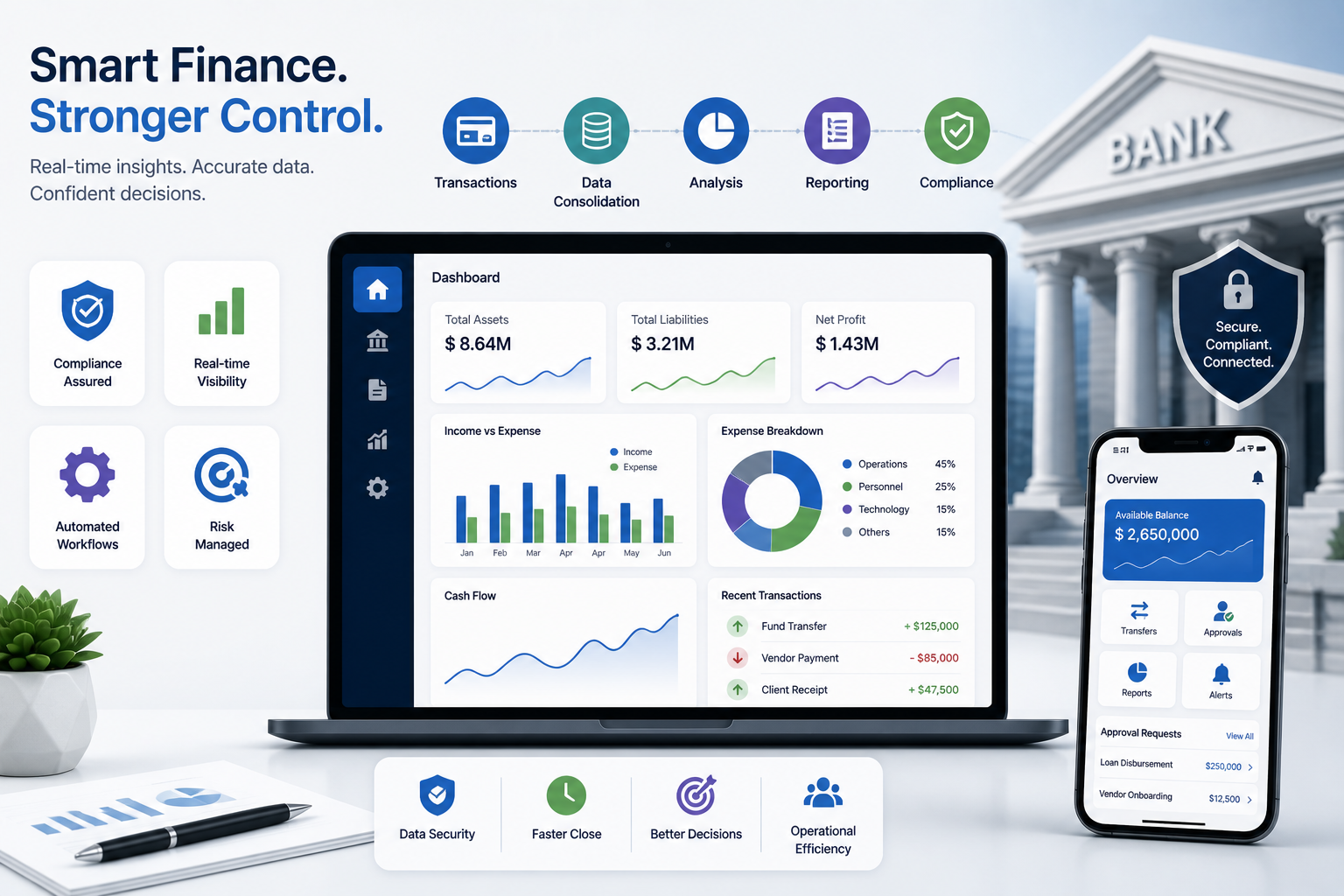
- Platforms like Synclo help unify financial operations into one controlled system
Banks and financial institutions operate in an environment where timing and accuracy are critical. Every transaction, report, and approval carries risk if it is delayed or incorrect. Despite this, many organizations still rely on systems that do not update in real time or connect across departments. The issue is not the lack of data. Financial institutions generate large volumes of information every second. The problem lies in how that data is managed and accessed. When systems are fragmented, teams spend time gathering information instead of acting on it.
As a result, decisions are often based on outdated data. This creates a gap between what is happening in the system and what teams can actually see. Over time, this gap affects reporting accuracy, compliance, and operational efficiency.
Data Is Available but Not Always Aligned
In most banking environments, data flows through multiple systems. Transactions are recorded in one platform, customer data is stored in another, and reporting tools operate separately. While each system performs its function, they rarely align perfectly. This misalignment creates delays. Teams often need to verify numbers across systems before taking action. Even small inconsistencies can slow down processes that require precision.
This often results in:
- Reports that do not reflect real time financial activity
- Delays in identifying discrepancies or risks
- Extra effort spent validating data before decisions
When financial data is not aligned, control becomes difficult to maintain.
Compliance Depends on Consistent and Accurate Records
Compliance is a central requirement in finance and banking. Regulations demand accurate reporting, clear audit trails, and timely updates. When systems are disconnected, maintaining this level of control becomes challenging. Manual processes increase the risk of errors. Delayed updates make it harder to track changes. Missing information can create compliance gaps that expose the organization to risk.
A connected financial management system ensures that all records are updated consistently. This provides a reliable source of truth for audits and reporting. Synclo supports this by centralizing financial data and maintaining consistency across all workflows.
Real Time Visibility Improves Decision Making
Financial decisions often need to be made quickly. Whether it is approving a transaction, assessing risk, or adjusting forecasts, timing plays a key role. Without real time visibility, teams rely on reports that reflect past activity. This limits their ability to respond to current conditions. A connected system allows teams to monitor financial activity as it happens. This improves accuracy and supports faster decisions. With real time access, organizations can identify risks earlier, adjust strategies quickly, and maintain better control over operations.
Manual Processes Slow Down Financial Operations
Many financial workflows still depend on manual steps. Approvals, reconciliations, and reporting often require human intervention at multiple stages. While this approach provides control, it also introduces delays. Manual work slows down processes and increases the risk of inconsistencies. It also makes it difficult to scale operations as transaction volumes grow. Automation improves efficiency by allowing workflows to continue without constant input.
Teams can:
- Process transactions through defined approval workflows
- Update records automatically as activity occurs
- Generate reports without manual compilation
This reduces delays and improves accuracy across financial operations.
Disconnected Systems Increase Operational Risk
In banking, even small gaps in data or communication can create significant risk. When systems are not connected, it becomes harder to track the full lifecycle of transactions and decisions. Teams may not have visibility into upstream or downstream processes. This creates blind spots that affect risk management and reporting.
Organizations are moving toward:
- Integrated financial systems
- Centralized data platforms
- Connected enterprise workflows
The goal is to ensure that all financial processes operate within a single, consistent system. Synclo enables this by linking financial operations with other business functions, reducing gaps and improving control.
Scaling Financial Operations Requires Structure
As financial institutions grow, operations become more complex. More customers, more transactions, and more regulatory requirements increase the need for coordination. Without a structured system, this complexity leads to inefficiencies. Processes become harder to manage, and consistency becomes difficult to maintain. A scalable finance system provides a framework for handling growth without losing control. It ensures that workflows remain consistent and data remains accurate across all levels. Synclo supports this by offering a unified platform that adapts to increasing scale while maintaining clarity and control.
What Strong Financial Systems Look Like
When financial systems are connected, operations become more predictable. Data is accurate, updates happen in real time, and teams can act without delay. Decisions are based on current information, not past reports. Compliance is easier to manage because records are consistent. Risk is reduced because visibility improves.
Financial performance does not depend only on data. It depends on how quickly and accurately that data can be used. Organizations that improve this flow are able to operate with greater confidence and maintain stronger control over their systems.
