






- Retail sales teams struggle with scattered customer data and inconsistent follow ups
- Disconnected systems make it hard to track customer journeys and conversions
- Platforms like Synclo help manage sales, customers, and engagement in one system
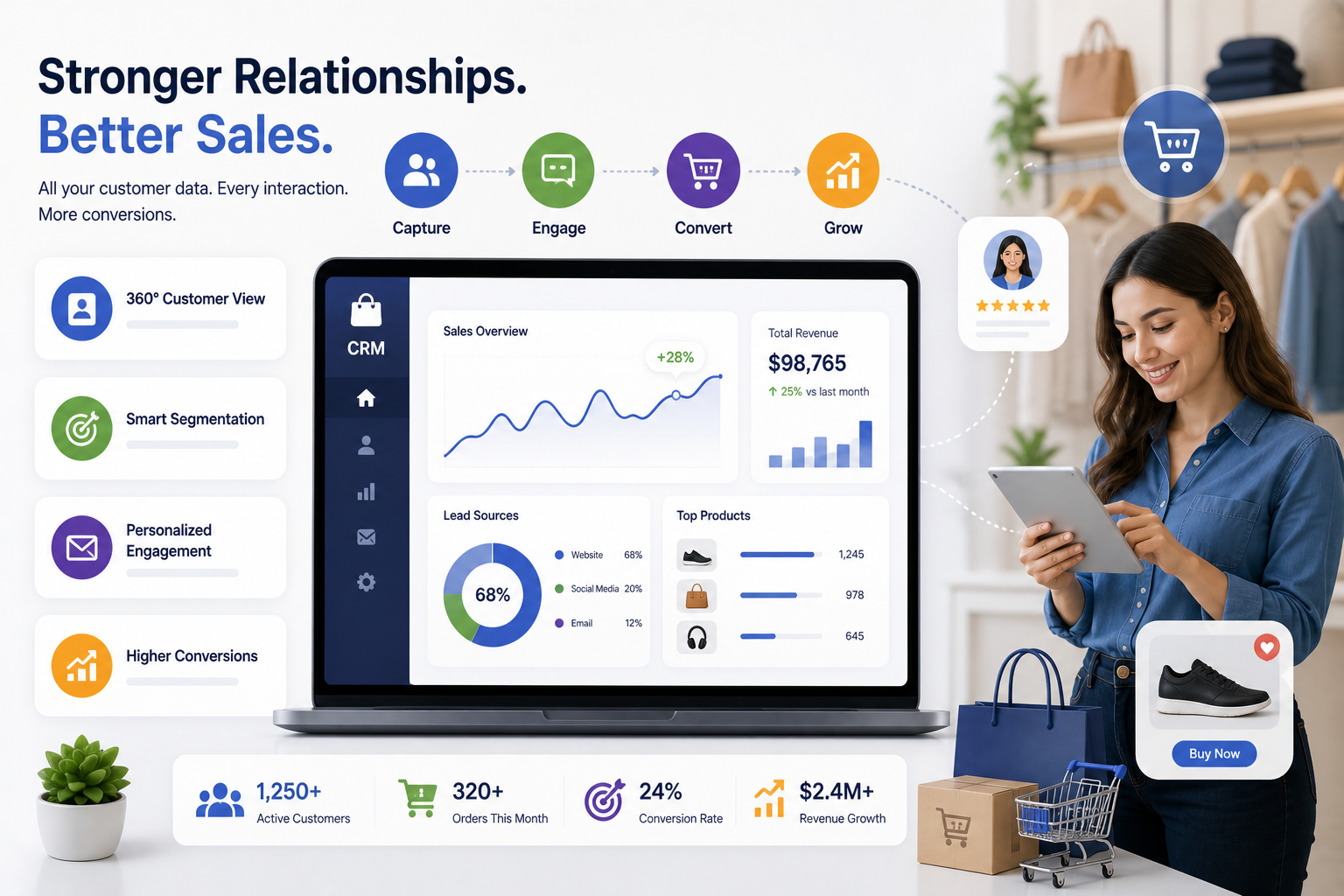
Retail and e-commerce businesses operate in a fast-moving environment where customer attention is limited and competition is constant. Every interaction matters, from the first visit to the final purchase. However, many businesses struggle to maintain consistency across this journey because their systems are not connected. Customer data often exists in multiple places. Online activity is tracked on one platform, in-store purchases are recorded in another, and communication happens through separate tools. This creates gaps in understanding customer behavior. As a result, sales teams work with partial information. They respond to customers without full context, which affects both engagement and conversion rates.
Customer Journeys Are Complex but Visibility Is Limited
Retail customers move across channels. They browse online, visit stores, compare products, and interact through different touchpoints before making a decision. Tracking this journey requires a clear and connected view of data. In many cases, this visibility is missing. Teams may know how many customers visited a site or store, but they do not always know how those visits connect to actual purchases. Customer preferences, past interactions, and behavior patterns are not always available in one place.
This often leads to:
- Missed opportunities to follow up with interested customers
- Inconsistent communication across channels
- Limited ability to personalize the sales approach
Without visibility, it becomes difficult to guide customers toward a purchase.
Sales Teams Need Real Time Customer Insights
Retail decisions depend on timing. A delayed response or a missed follow up can result in a lost sale. To act quickly, sales teams need access to real time customer data. A connected sales CRM software system provides this by bringing all customer interactions into one view. Teams can see browsing history, purchase behavior, and communication records without switching between tools. Synclo supports this by centralizing customer data, allowing sales teams to respond with accuracy and speed.
Follow Ups Define Conversion Rates
In retail and e-commerce, most customers do not purchase immediately. They explore options, compare products, and return later. Follow ups play a key role in converting interest into sales. However, follow ups are often inconsistent when managed manually. Some customers receive timely responses, while others are missed completely. A structured system ensures that follow ups are part of the workflow. Instead of relying on memory or manual tracking, teams can manage communication systematically.
This allows businesses to:
- Respond to customer interest at the right time
- Maintain consistent communication across channels
- Improve conversion rates without increasing effort
Consistency in follow up leads to better results over time.
Disconnected Tools Create Sales Friction
Retail businesses often rely on multiple tools for managing sales, inventory, and customer communication. While each tool serves a purpose, they rarely connect effectively. This creates friction in the sales process. Teams switch between systems, data is duplicated, and updates are delayed. This slows down decision making and reduces efficiency.
Organizations are moving toward:
- All in one CRM systems
- Integrated retail management platforms
- Centralized business software
The goal is to manage sales and customer data in a single environment. Synclo enables this by connecting sales workflows with other business operations.
Personalization Depends on Data Accuracy
Customers expect personalized experiences. They respond better to recommendations, offers, and communication that match their preferences. Personalization depends on accurate data. When customer data is incomplete or outdated, personalization becomes ineffective. Messages may not be relevant, and opportunities may be missed. A connected customer relationship management system ensures that data is updated in real time. This allows businesses to tailor their approach based on actual behavior. Synclo supports this by maintaining accurate and consistent customer data across all touchpoints.
Scaling Retail Sales Requires Structured Systems
As retail businesses grow, managing customer interactions becomes more complex. More customers, more channels, and more transactions increase the need for coordination. Without a structured system, this complexity leads to inconsistency. Some customers receive a strong experience, while others do not.
A scalable CRM system ensures that sales processes remain consistent as the business expands. It provides a framework for managing data, communication, and workflows across all channels. Synclo supports this by offering a unified platform that adapts to growth without losing control.
What a Connected Retail Sales Process Looks Like
When systems are connected, retail sales become easier to manage. Customer data is available in one place, follow ups happen on time, and communication remains consistent across channels. Teams can focus on engaging customers instead of managing systems. Decisions are based on complete information, and sales processes move without delays. Retail success is not just about attracting customers. It is about managing their journey effectively from start to finish. Businesses that improve this connection are able to increase conversions and build stronger customer relationships.
