


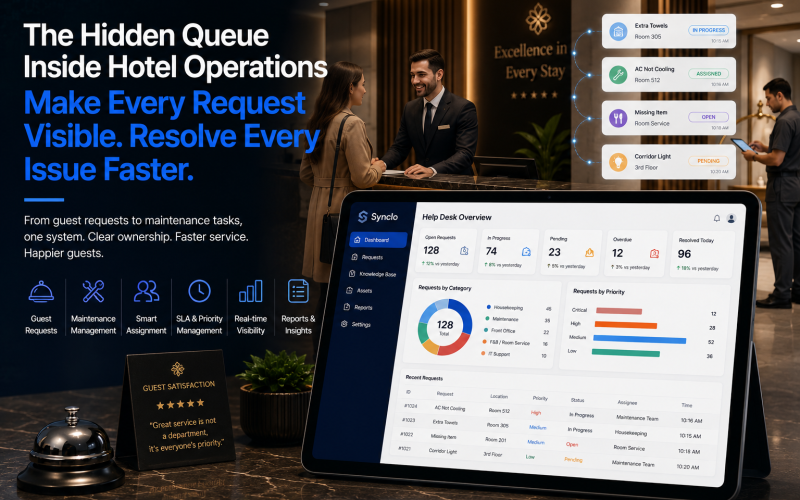
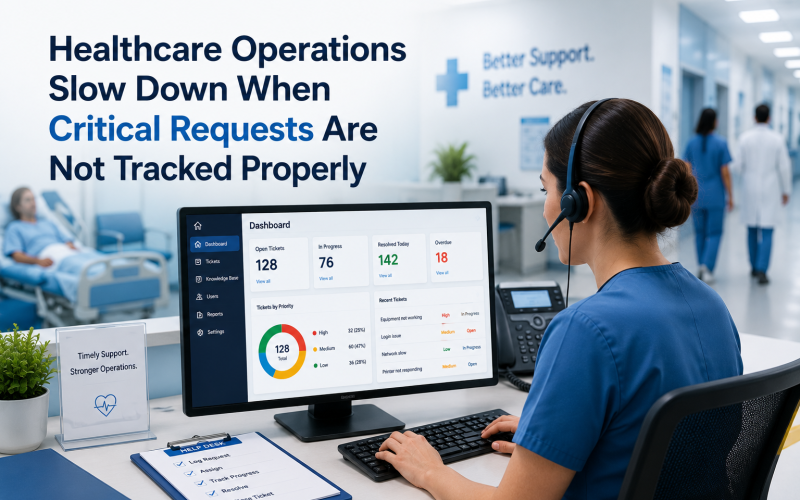




- Hospitality service slows down when guest requests are not tracked properly
- Lack of visibility causes delays in response and poor guest experience
- Systems like Synclo help manage service requests through structured workflows
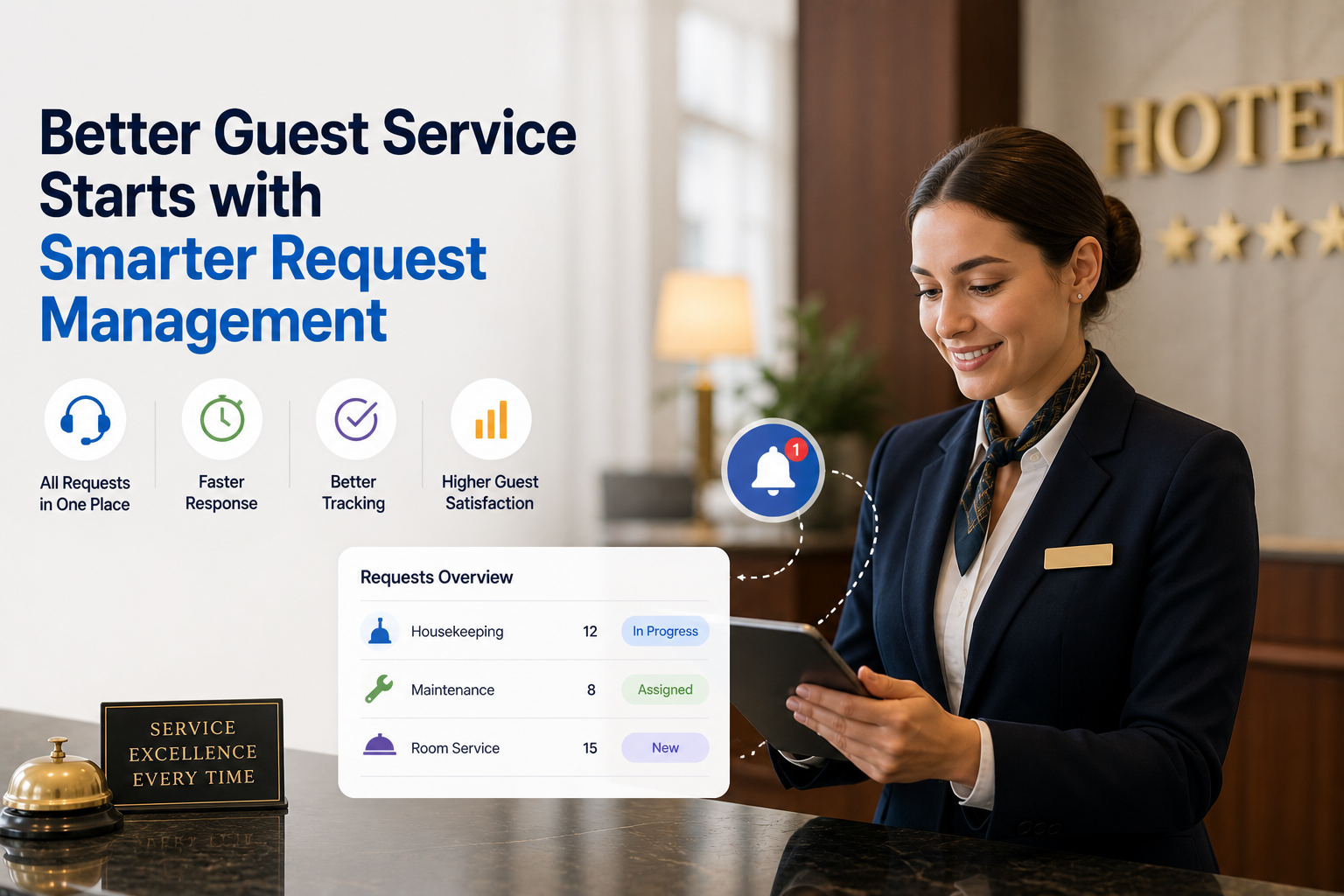
Hospitality is built on responsiveness. Guests expect quick service, clear communication, and a smooth experience from the moment they check in. Whether it is room service, housekeeping, or maintenance, every request carries an expectation of speed and consistency. However, many hospitality businesses struggle to meet these expectations because service operations are not structured properly.
In most cases, the issue is not the number of requests but how those requests are handled. Teams rely on calls, messages, or verbal communication to manage tasks, which creates gaps in tracking and accountability. A request may be received, but it is not always recorded, assigned, or followed up in a structured way. Over time, this leads to delays that directly affect guest satisfaction.
Requests Are Received but Not Always Tracked
Service requests come from multiple channels. Guests may call the front desk, speak to staff directly, or use digital platforms to raise requests. While these requests are acknowledged, they are not always tracked in a centralized system. This creates uncertainty. Staff may assume that a request has been handled, while in reality it is still pending. Managers may not have visibility into how many requests are active or how long they have been open.
This often leads to:
- Requests being delayed because they are not assigned properly
- Tasks being repeated due to lack of updates
- Guests needing to follow up multiple times for the same issue
Without structured tracking, service becomes inconsistent.
Speed Depends on How Requests Are Assigned
The speed of service depends on how quickly a request reaches the right person. When assignment is handled manually, delays are unavoidable. Staff may not be aware of new requests, or tasks may sit unassigned until someone reviews them. In a fast-paced environment like hospitality, even small delays can affect the guest experience. A late response to a simple request can create frustration that impacts overall satisfaction. A structured help desk software system improves this by routing requests automatically based on category, priority, or staff availability. Synclo supports this by ensuring that every request is assigned without delay, allowing teams to respond faster and more consistently.
Visibility Improves Service Quality
Without visibility, it is difficult to manage service quality. Teams may know that requests are coming in, but they do not always know their status, priority, or progress. A connected system provides a clear view of all service requests in real time. Managers can track response times, identify delays, and ensure that tasks are completed as expected. This level of visibility helps maintain consistency across all service areas. When teams have access to accurate information, they can prioritize tasks more effectively and avoid unnecessary delays.
Communication Needs to Be Part of the Workflow
Communication is a key part of hospitality service, but when it happens outside the system, it creates gaps. Updates shared through calls or messages are not always recorded, which makes it difficult to track progress.This lack of structured communication leads to confusion. Staff may not be aware of updates, and guests may receive inconsistent responses. When communication is tied directly to service requests, it becomes easier to manage.
Teams can:
- Record all updates within the request itself
- Maintain a clear history of actions taken
- Ensure that all staff have access to the same information
This improves coordination and reduces the need for repeated follow ups.
Manual Processes Slow Down Response Time
Many hospitality operations still depend on manual processes for handling requests. Staff review requests individually, assign tasks manually, and update status based on memory or informal communication. This approach slows down response time and creates inconsistencies. Tasks may not move forward until someone takes action, which creates unnecessary delays.
Automation helps reduce this dependency. With structured workflows, requests can be assigned, updated, and escalated automatically based on predefined rules. This ensures that service continues without interruption and improves overall efficiency.
Scaling Service Operations Requires Structure
As hospitality businesses grow, service demand increases. More guests mean more requests, which increases the need for coordination. Without a structured system, this growth leads to delays and inconsistent service. Staff may struggle to keep up with demand, and maintaining quality becomes more difficult. A scalable help desk system ensures that service operations remain efficient as volume increases. It provides a framework for managing requests, tracking performance, and maintaining consistency across all locations. Synclo supports this by offering a unified platform that adapts to increased demand while maintaining control over workflows.
What Efficient Guest Service Looks Like
When service systems are connected, the difference is clear. Requests are tracked from start to finish, assignments happen without delay, and updates are visible in real time. Staff spend less time managing requests and more time resolving them. Managers have a clear view of performance and can address issues quickly. Guests receive faster responses and a more consistent experience. Hospitality success depends on how well service operations are managed behind the scenes. Businesses that improve this structure are able to deliver better guest experiences without increasing effort.
