


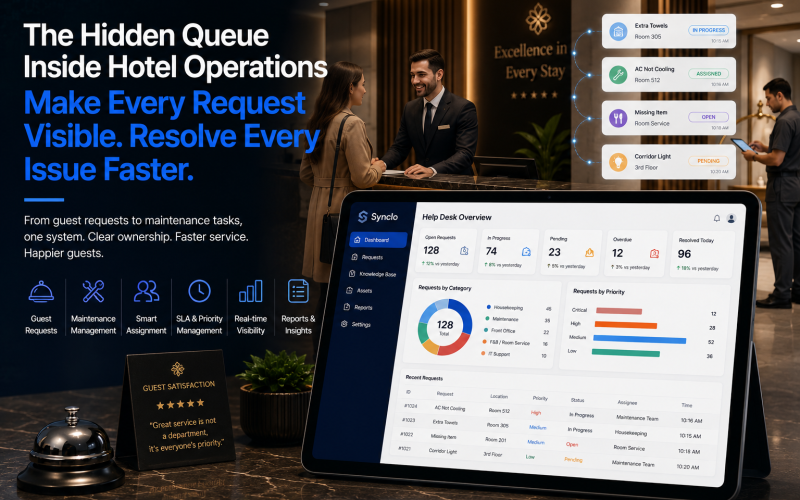





- Support teams slow down due to poor ticket visibility and manual coordination
- Delays often come from internal processes, not workload
- Systems like Synclo help manage support requests through structured workflows
Customer support is expected to be fast, clear, and reliable. Whether it is internal service requests or external customer issues, teams are under constant pressure to respond quickly. However, as request volume increases, many support teams struggle to maintain consistency. The problem is not always the number of tickets. It is how those tickets are managed.
In many organizations, support still depends on fragmented systems. Requests come through email, chat, or forms, but they are not always tracked in a unified way. Teams spend time identifying, assigning, and following up instead of resolving issues. As demand grows, this lack of structure leads to delays that affect both response time and service quality.
Tickets Exist but Progress Is Not Always Clear
A ticketing system may be in place, yet that does not guarantee visibility. Teams often know how many tickets exist, but not where they stand or what needs immediate attention. Without clear tracking, tickets can remain open longer than expected. Some may be overlooked, while others may be handled multiple times due to lack of coordination.
This often leads to:
- Tickets staying unresolved due to unclear ownership
- Delays in response because priorities are not visible
- Repeated work when updates are not shared across the team
Visibility is not just about tracking tickets. It is about understanding their status in real time.
Assignment Determines Speed
How tickets are assigned plays a major role in how quickly they are resolved. When assignment depends on manual effort, delays are unavoidable. A team member may not know a new ticket has arrived. A request may sit unassigned until someone reviews it. High priority issues may not reach the right person in time.
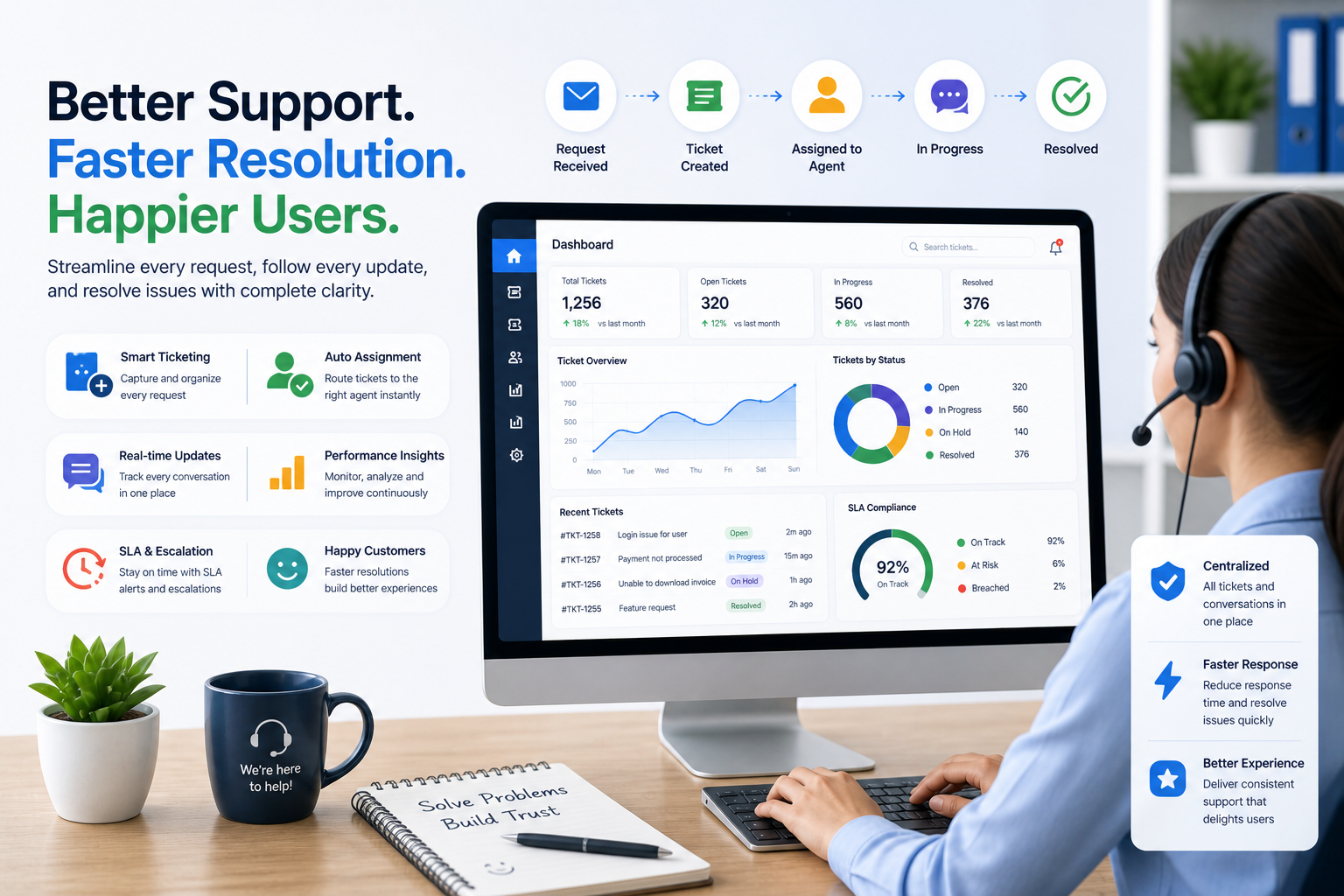
A structured help desk software system solves this by automating assignment based on defined rules. Tickets can be routed by category, priority, or workload, ensuring that each request reaches the right person without delay. Synclo supports this by enabling automated assignment and workflow based routing, reducing dependency on manual coordination.
Communication Gaps Slow Down Resolution
Support teams rely heavily on communication. However, when communication happens outside the system, it creates gaps. Updates may be shared through messages or emails that are not linked to the ticket. This makes it difficult to track progress and maintain consistency. As a result, teams spend time searching for information instead of resolving issues. To improve this, communication needs to be tied directly to the ticket.
Teams can:
- Track all interactions within the ticket itself
- Maintain a clear history of updates and actions
- Ensure that all stakeholders have access to the same information
This reduces confusion and speeds up resolution.
Manual Processes Limit Support Efficiency
Many support workflows still rely on manual steps. Tickets are reviewed one by one, assignments are handled manually, and status updates depend on individual input. This slows down response time and creates inconsistency across the team. Automation improves this by allowing tickets to move through predefined workflows.
With structured processes, teams can:
- Automatically assign tickets based on rules
- Update status as actions are completed
- Trigger escalations when delays occur
This ensures that tickets continue to move forward without waiting for manual input.
Prioritization Requires Real Time Insight
Not all tickets are equal. Some require immediate attention, while others can wait. Without clear prioritization, teams may focus on the wrong tasks. Real time insight helps teams understand which tickets need urgent action and which can be scheduled later. A connected ticketing system software provides this visibility by highlighting priority levels and tracking response times. Synclo supports this by offering real time tracking and prioritization features, helping teams focus on what matters most.
Scaling Support Without Losing Control
As organizations grow, support volume increases. More users, more requests, and more complexity put pressure on existing systems. Without a structured approach, this leads to delays and inconsistent service.
A scalable help desk system ensures that workflows remain efficient as volume grows. It provides a clear framework for managing tickets, assignments, and communication. Synclo supports this by offering a unified system that adapts to increased demand without adding complexity.
What Efficient Support Looks Like
When support systems are properly structured, the difference is clear. Tickets are assigned without delay, updates are visible in real time, and teams can focus on resolving issues instead of managing them. Response times improve, service quality becomes consistent, and users have a better experience.
Support does not slow down because of workload. It slows down because of gaps in the system. Organizations that remove these gaps are able to handle more requests without losing control.
