







- Healthcare service quality suffers when support requests are managed through emails, calls, and disconnected systems
- Delayed issue resolution affects staff productivity, compliance, and patient experience
- Platforms like Synclo help healthcare organizations manage support operations through structured ticketing workflows
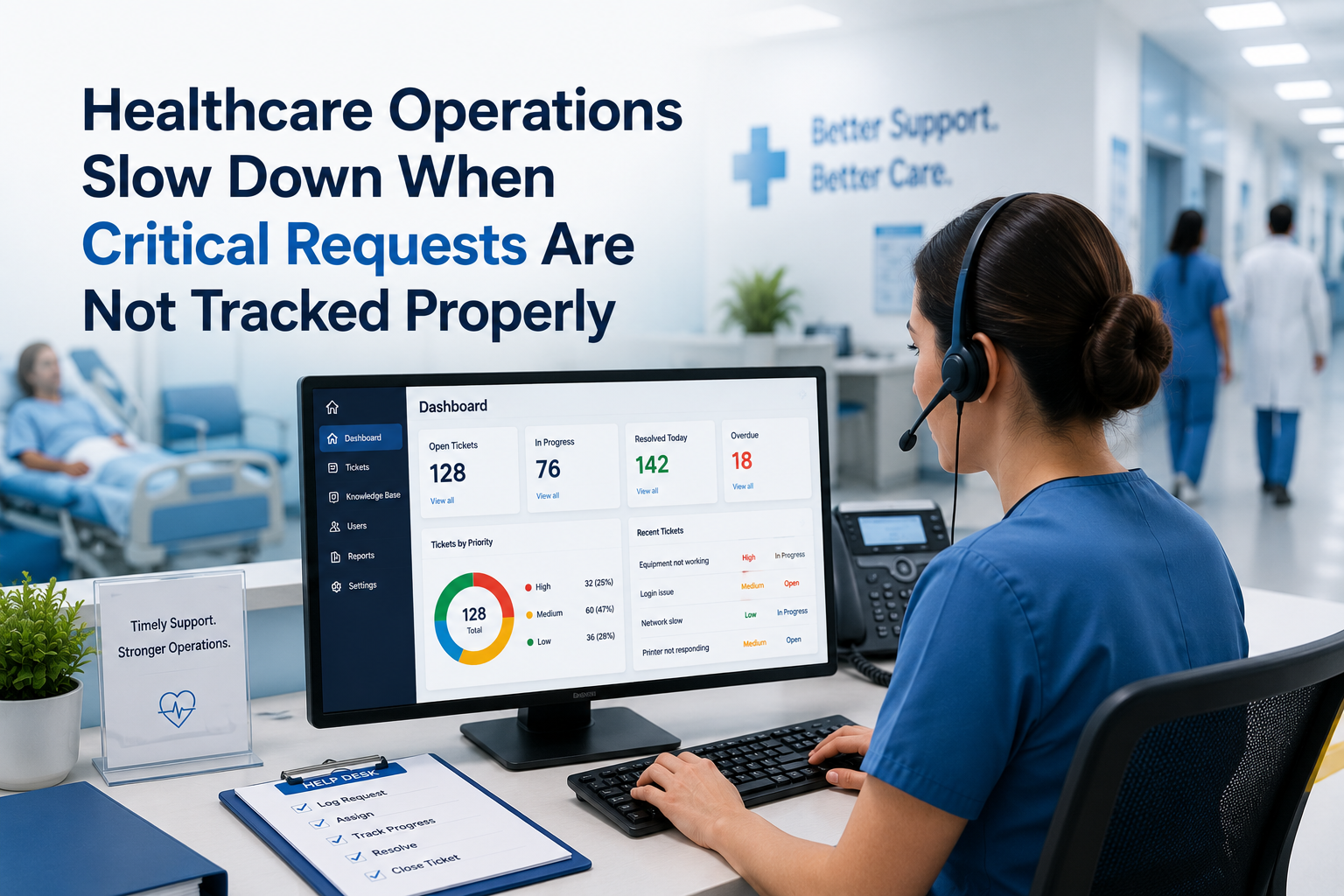
Healthcare organizations depend on speed, accuracy, and coordination. Every department, from clinical teams and nursing staff to administration, facilities, IT, and pharmacy operations, relies on timely support to keep services running smoothly. However, many healthcare providers still manage operational requests through emails, phone calls, WhatsApp groups, and manual follow-ups that make it difficult to track issues from start to resolution.
The challenge is not the number of requests being raised. Hospitals, clinics, diagnostic centers, and pharmaceutical organizations generate hundreds of service requests every day. Equipment maintenance, IT support, facility issues, administrative approvals, and operational concerns all require attention. The real challenge is maintaining visibility across these requests while ensuring nothing gets delayed or forgotten.
When support processes are unstructured, teams spend more time chasing updates than solving problems. Small issues become larger operational disruptions simply because there is no clear system to manage accountability and response times.
Critical Issues Need Immediate Visibility
Healthcare environments operate under constant pressure. A delayed IT issue can affect patient registration. A maintenance problem can impact equipment availability. A facility-related issue can disrupt clinical operations.
When requests are submitted through disconnected communication channels, visibility becomes limited. Managers often struggle to understand which issues are still open, who is responsible, and how long requests have remained unresolved.
This often leads to:
- Delays in resolving operational issues
- Limited accountability across support teams
- Difficulty prioritizing critical requests
A connected help desk system helps healthcare organizations centralize requests, assign ownership, and track resolution progress through one structured workflow. Synclo supports this by helping organizations manage service requests in a controlled and transparent environment.
Healthcare Teams Cannot Depend on Informal Communication
Many healthcare organizations still rely heavily on calls, emails, and messaging applications to manage internal support requests. While these channels are useful for communication, they are not effective systems for tracking operational issues.
A request may be acknowledged but never assigned. Another issue may be resolved without proper documentation. Important information can become buried within conversations, making follow-up difficult.
A structured ticket management platform ensures that every request receives a unique record, ownership assignment, priority level, and status update. Teams gain visibility into the entire lifecycle of each issue instead of relying on memory and manual follow-ups.
Response Time Directly Impacts Operations
Support teams often manage multiple requests simultaneously. Without prioritization, critical issues can become mixed with routine tasks, creating delays where response speed matters most.
Healthcare organizations need systems that allow support teams to identify urgency quickly and allocate resources effectively.
Modern healthcare providers are investing in:
- Centralized ticket management systems
- Automated request routing workflows
- Real-time service tracking platforms
The goal is to improve responsiveness without increasing administrative complexity. Synclo helps achieve this by connecting support operations through structured workflows that prioritize visibility and accountability.
Compliance Requires Better Documentation
Healthcare organizations operate within highly regulated environments. Documentation is essential for audits, compliance reviews, operational reporting, and quality assurance initiatives.
When support requests are managed through informal communication channels, maintaining accurate records becomes difficult. Teams may struggle to demonstrate how issues were handled, when actions were taken, or whether service standards were met.
A connected service desk platform creates a complete history of every request, including assignments, updates, actions, and resolution details. This improves operational transparency while supporting compliance requirements.
IT and Facilities Teams Need Better Coordination
Many healthcare support issues involve multiple departments. An equipment issue may require facilities involvement while also affecting clinical operations. An IT problem may impact patient scheduling, billing, or communications.
Without connected workflows, these teams often operate independently, creating delays in issue resolution. Updates move between departments manually, and accountability becomes difficult to maintain.
A unified help desk environment improves coordination by allowing departments to work from the same request record while maintaining visibility into progress and responsibilities.
Manual Tracking Creates Operational Risk
Spreadsheets, email folders, and shared documents may appear manageable initially, but they become difficult to maintain as support volume increases.
Manual tracking creates risks because:
- Requests can be overlooked
- Updates may not be documented consistently
- Reporting requires significant administrative effort
- Managers lack real-time operational visibility
Automation helps reduce these risks by ensuring requests move through structured workflows, notifications are generated automatically, and reporting remains continuously updated.
Better Support Processes Improve Patient Experience
Patients rarely see the internal systems that support healthcare operations, but they experience the results every day. Faster issue resolution improves staff productivity, equipment availability, service quality, and operational consistency.
When support teams work through structured systems, healthcare organizations operate more efficiently. Staff spend less time chasing updates, managers gain clearer visibility into performance, and issues are resolved before they create larger disruptions.
A scalable healthcare help desk platform allows organizations to manage growing support volumes while maintaining service quality. Synclo helps healthcare providers achieve this by connecting requests, teams, workflows, and reporting into one operational environment.
Strong healthcare operations depend on more than medical expertise. They depend on how effectively organizations support the people, systems, and processes that deliver care every day. Businesses that improve support visibility create stronger foundations for operational excellence, compliance, and patient satisfaction.
