





- Aviation businesses are moving away from disconnected tools toward unified operational platforms
- Real-time visibility and connected workflows help teams respond faster to changing conditions
- Smart systems allow aviation organizations to scale while maintaining operational control
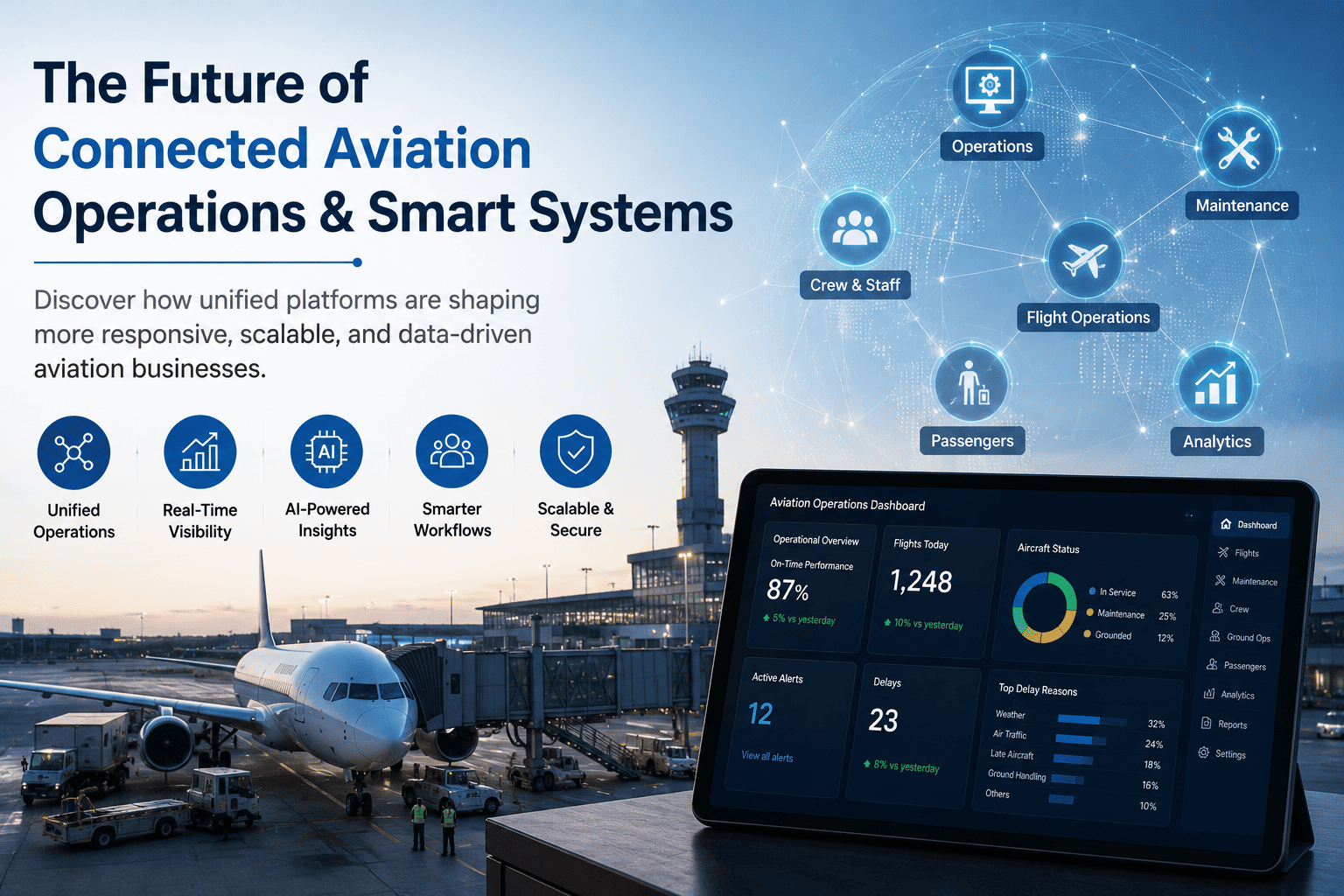
The aviation industry is entering a new phase of digital transformation. For decades, airlines, airports, cargo operators, and aviation service providers have relied on separate systems to manage different parts of their operations. Scheduling, maintenance, crew management, passenger services, reporting, and operational planning often existed in their own environments, creating gaps between teams and slowing decision-making.
As aviation operations become more complex, these disconnected approaches are becoming harder to sustain. Passenger expectations continue to rise, operational demands are increasing, and organizations are managing larger volumes of data than ever before. To remain efficient, aviation businesses need systems that provide a complete operational view instead of isolated updates from individual departments.
This shift is driving the adoption of connected aviation platforms. Rather than treating operations as separate functions, modern aviation organizations are bringing workflows, data, communication, and reporting together into unified environments. The result is greater visibility, faster response times, and stronger operational control.
Aviation Is Moving Toward One Connected Operational Environment
Aviation businesses generate information from every part of the operation. Flight schedules, maintenance activity, crew assignments, passenger movement, cargo handling, gate management, and operational performance all produce valuable data.
The challenge has traditionally been that this information exists across multiple systems. Teams often spend time gathering updates instead of acting on them. Decision-makers may receive information, but not always in a format that provides a complete picture of what is happening across the business.
Connected platforms solve this challenge by bringing information into a single operational environment. Teams gain access to shared data, common workflows, and real-time visibility that supports faster coordination across departments.
This creates benefits such as:
- Improved visibility across operational activities
- Faster communication between teams
- Better coordination during disruptions
A unified platform such as Synclo helps aviation organizations connect operational processes so teams can work from the same information instead of relying on fragmented updates.
Real-Time Visibility Is Becoming a Competitive Advantage
Traditional reporting often focuses on what happened earlier in the day, during the previous shift, or at the end of a reporting cycle. While historical reporting remains important, modern aviation businesses increasingly require visibility into what is happening right now.
Real-time operational awareness allows managers to identify issues earlier, allocate resources more effectively, and make decisions before disruptions spread throughout the operation.
Whether the challenge involves aircraft availability, crew scheduling, gate assignments, passenger flow, or maintenance activity, connected systems provide the visibility required to respond quickly.
Organizations that can see operational changes as they happen gain a significant advantage over those that depend on delayed reporting and manual updates.
Smart Systems Support Better Decision-Making
The future of aviation is not simply about collecting more data. It is about using data more effectively.
Smart systems help organizations transform operational information into practical insights. Instead of searching through reports or manually consolidating updates, teams gain access to information that supports immediate action.
Modern aviation businesses are investing in:
- Connected operational platforms
- Intelligent workflow management
- AI-assisted decision support systems
These technologies help teams identify trends, anticipate challenges, and improve planning without increasing operational complexity.
The objective is not to replace human expertise. Aviation will always depend on experienced professionals making critical decisions. Smart systems simply ensure those decisions are supported by better information.
Scalability Depends on Operational Connectivity
As aviation businesses grow, complexity increases. More passengers, more flights, more destinations, more service partners, and more operational requirements create additional pressure on coordination.
Disconnected systems often become bottlenecks during growth because every new process creates additional communication points between teams. Over time, managing these connections manually becomes increasingly difficult.
Connected operational platforms provide a scalable foundation by allowing organizations to expand without losing visibility into daily activities. Teams can maintain consistency across locations, departments, and workflows while reducing the administrative effort required to coordinate operations.
This is particularly important for aviation businesses managing multiple airports, regional operations, cargo networks, or expanding service portfolios.
Automation Is Reducing Operational Friction
Many aviation workflows still depend on manual approvals, repeated data entry, and informal communication. While these processes may seem manageable individually, they create delays when multiplied across thousands of operational activities.
Automation helps reduce friction by allowing workflows to move automatically between stages. Notifications, approvals, updates, and operational alerts can be delivered without requiring constant manual intervention.
This creates several advantages:
- Faster operational response times
- Reduced administrative workload
- Improved consistency across workflows
When automation is combined with connected systems, organizations gain the ability to move information quickly across the entire operation.
Passenger Experience Benefits From Connected Operations
Passengers may never see the technology behind aviation operations, but they experience the results directly. Faster communication, better service coordination, improved schedule reliability, and quicker responses during disruptions all contribute to a stronger customer experience.
Connected platforms improve internal coordination, which helps organizations provide more accurate information and better service to travelers.
As passenger expectations continue to evolve, operational connectivity becomes increasingly important not only for efficiency but also for customer satisfaction and long-term loyalty.
The Future Belongs to Connected Aviation Businesses
The future of aviation will be shaped by organizations that can connect people, processes, and information into a single operational ecosystem. Businesses that continue relying on fragmented systems will face growing challenges as operational complexity increases.
Connected platforms provide the visibility, scalability, and agility required to manage modern aviation environments. By bringing workflows, communication, reporting, and operational data together, organizations gain stronger control over performance while creating a foundation for future growth.
Synclo supports this vision by helping aviation businesses build connected operational environments where teams can coordinate more effectively, respond faster to change, and scale with confidence.
The future of aviation is not simply digital. It is connected. Organizations that embrace unified systems today will be better positioned to operate efficiently, adapt quickly, and deliver stronger results as the industry continues to evolve.
