




- Logistics operations slow down when inventory, delivery, and warehouse systems are disconnected
- Delays increase when teams cannot track movement in real time
- Systems like Synclo help logistics companies manage operations through connected workflows
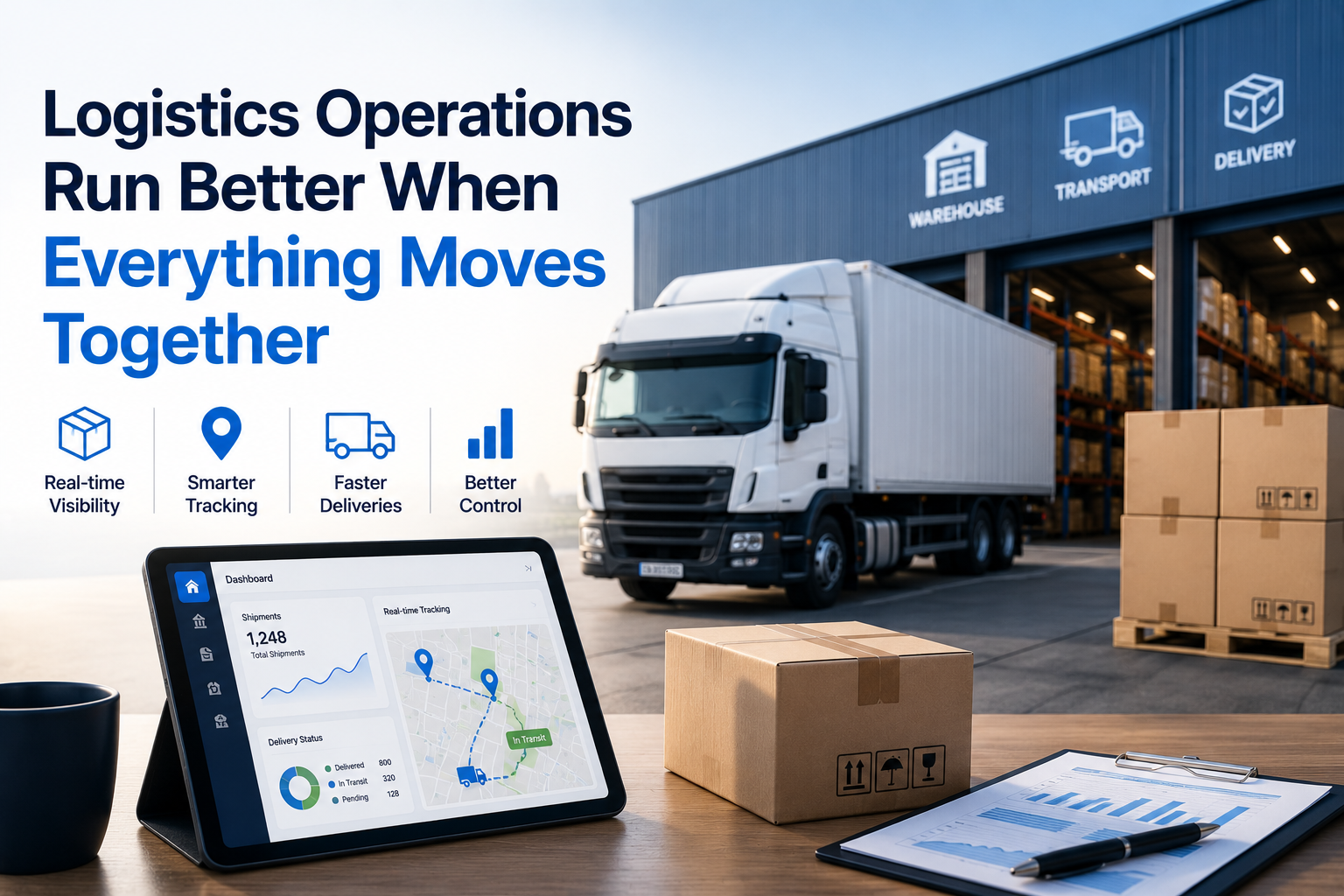
Logistics and distribution businesses operate under constant pressure to move faster while maintaining accuracy across deliveries, inventory, and warehouse operations. Customers expect shorter delivery windows, businesses expect real time visibility, and operations teams are expected to coordinate everything without delays. However, many logistics companies still rely on disconnected systems that slow down decision making and reduce operational control.
The issue is rarely transportation itself. Most delays begin before products even leave the warehouse. Inventory systems, delivery tracking, procurement workflows, and warehouse operations often function independently, which creates gaps in visibility across the supply chain. Teams spend time verifying information instead of acting on it, and by the time updates move through the system, operations have already changed. This disconnect makes planning unreliable and creates inefficiencies that grow larger as delivery volume increases.
Real Time Visibility Has Become a Requirement, Not an Advantage
Logistics operations depend heavily on timing. Warehouse teams need accurate inventory levels, dispatch teams need visibility into delivery schedules, and managers need to understand where delays are happening before they affect customers. Without real time visibility, operations become reactive instead of controlled.
Many logistics businesses still rely on reports or manual updates to understand movement across warehouses and delivery routes. This creates delays in communication and limits the ability to respond quickly. A shipment may already be delayed before the issue becomes visible to operations teams. Inventory levels may appear correct in the system while actual stock availability tells a different story.
This often leads to:
- Delays caused by inaccurate inventory visibility
- Delivery schedules changing without operational alignment
- Warehouse teams working with outdated information
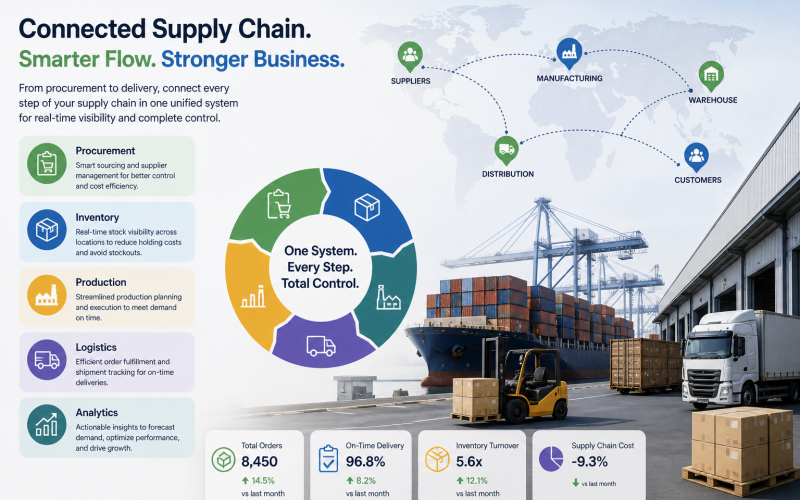
A connected supply chain management software system helps solve this by ensuring that operational data updates continuously across all stages of the workflow. Synclo supports this by connecting warehouse operations, inventory tracking, and delivery management into one unified system.
Warehouse Coordination Breaks Without Connected Data
Warehouses are at the center of logistics operations, yet many warehouse teams still work with fragmented systems that do not communicate effectively with procurement or delivery workflows. Inventory may be updated in one system while dispatch teams rely on another. This creates delays that spread across the operation.
When warehouse visibility is limited, planning becomes inconsistent. Teams may over allocate inventory, delay shipments, or spend additional time verifying stock before dispatch. These inefficiencies reduce operational speed and increase costs.
A connected inventory management system improves warehouse coordination by ensuring that all teams work from the same real time data. This allows operations managers to make decisions with confidence instead of relying on assumptions or delayed reports.
Route Planning Depends on Accurate Operational Information
Delivery performance depends on more than transportation routes. It depends on how accurately operational data reflects real conditions. Dispatch teams need visibility into inventory readiness, warehouse processing, traffic conditions, and delivery schedules at the same time.
Without connected systems, route planning becomes difficult to optimize. Delays at one stage are not always reflected immediately across the workflow, which affects delivery timelines and customer expectations.
Modern logistics businesses are moving toward systems that allow operations to function through one connected environment instead of separate platforms. This includes:
- Unified logistics and warehouse systems
- Centralized inventory and dispatch management
- Connected workflow automation across operations
The goal is to reduce operational friction and improve coordination between warehouses, drivers, and distribution teams. Synclo supports this by connecting operational data across every stage of logistics management.
Manual Processes Slow Down Distribution Operations
Many logistics operations still rely on manual coordination for updates, approvals, and reporting. Teams update shipment statuses manually, inventory adjustments require direct input, and communication often happens outside the system.
This approach creates delays that increase as operations scale. Staff spend more time managing updates instead of managing movement. Even small inefficiencies become expensive when multiplied across hundreds or thousands of shipments.
Automation improves logistics performance by allowing workflows to continue without waiting for manual action. Teams can automatically update shipment status, track warehouse activity in real time, and generate operational reports instantly instead of compiling them manually. This improves consistency and allows operations teams to focus on solving problems instead of processing information.
Scaling Logistics Operations Requires Structured Systems
As logistics companies grow, operational complexity increases rapidly. More warehouses, more delivery routes, and more inventory movement create additional pressure on coordination. Without a structured system, this complexity leads to delays that become difficult to control.
A scalable logistics platform ensures that operations remain organized as the business expands. Teams need systems that maintain visibility across every location while keeping workflows consistent. Synclo supports this by offering a unified operational environment where logistics, warehouse management, and inventory tracking work together instead of separately.
When logistics systems are connected, operations become more predictable. Warehouse teams can process shipments faster, managers can identify delays earlier, and customers receive more accurate delivery timelines. The result is not just faster movement but better operational control across the entire supply chain. Businesses that improve this coordination are able to scale more efficiently while maintaining service quality and operational consistency.
