





- Construction projects face delays when materials, suppliers, and inventory are managed separately
- Poor visibility into procurement and stock movement increases costs and disrupts timelines
- Platforms like Synclo help construction businesses manage supply chains through connected workflows
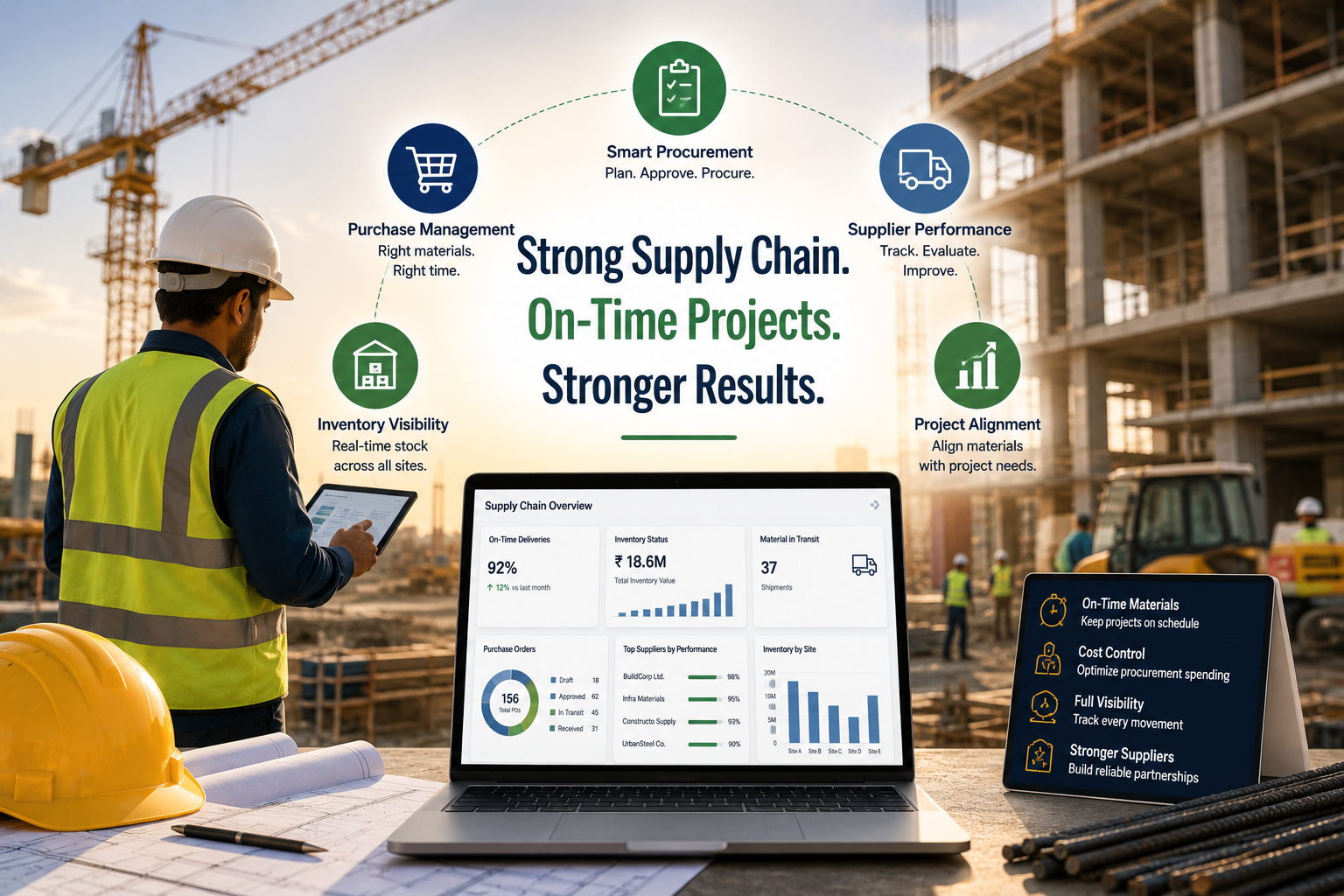
Construction projects are often judged by their completion dates, but behind every successful timeline is a supply chain that works reliably from start to finish. Materials must arrive on time, suppliers must remain coordinated, inventory must be available when needed, and procurement teams must maintain visibility across every stage of the project. When any part of this process breaks down, delays begin to spread throughout the entire operation.
Many construction companies focus heavily on project execution while treating supply chain management as a separate function. However, procurement, inventory, logistics, and supplier coordination directly influence project performance. A delay in material delivery can stop work across multiple teams, increase labor costs, and affect contractual commitments. As projects become larger and more complex, managing these moving parts through disconnected systems becomes increasingly difficult.
The challenge is not simply ordering materials. The challenge is maintaining complete visibility into material movement, supplier performance, inventory availability, and procurement activity across multiple sites at the same time. Without that visibility, project teams often make decisions based on assumptions instead of real operational data.
Procurement Delays Often Start Long Before Materials Are Needed
One of the most common causes of construction delays is late procurement planning. Materials may be requested too late, approval processes may move slowly, or supplier communication may lack structure. In many organizations, procurement teams work separately from project teams, which creates gaps in planning and forecasting.
When procurement data is not connected to project timelines, teams struggle to anticipate future requirements accurately. By the time shortages become visible, project schedules have already been affected.
This often leads to:
- Delays in material availability on site
- Emergency purchases at higher costs
- Reduced visibility into supplier commitments
A connected supply chain management system helps construction businesses align procurement planning directly with project requirements. Synclo supports this by connecting purchasing workflows, supplier management, and project operations into one structured environment.
Inventory Visibility Is Critical Across Multiple Sites
Construction businesses often manage inventory across warehouses, project locations, and supplier networks simultaneously. Maintaining accurate visibility becomes difficult when inventory records are updated manually or stored in separate systems.
Project managers may assume materials are available based on outdated records, only to discover shortages when work is ready to begin. Similarly, excess inventory may sit unused at one site while another location experiences shortages. Both situations increase costs and reduce operational efficiency.
A connected inventory management platform provides real-time visibility into stock levels, material movement, and usage patterns. This allows businesses to allocate resources more effectively and avoid unnecessary procurement expenses.
Supplier Relationships Need Better Performance Tracking
Construction companies often depend on dozens or even hundreds of suppliers throughout a project lifecycle. While supplier relationships are critical, many organizations still evaluate supplier performance informally rather than through measurable data.
Without structured tracking, it becomes difficult to identify which suppliers consistently deliver on time, which vendors create delays, and where procurement risks are increasing. Over time, these blind spots affect project planning and operational reliability.
Modern construction businesses are investing in:
- Centralized supplier management systems
- Connected procurement and inventory workflows
- Real-time supplier performance tracking
The goal is to improve decision-making by creating visibility into every stage of the supplier relationship. Synclo helps achieve this by providing a connected environment where supplier activity, purchasing, and inventory operations remain aligned.
Material Costs Are Easier to Control With Connected Data
Construction margins are heavily influenced by material costs. Even small fluctuations in procurement spending can have a significant impact on project profitability. However, many organizations struggle to track material costs accurately because procurement, inventory, and financial systems operate separately.
When data is fragmented, cost analysis becomes reactive instead of proactive. Teams often identify budget overruns after they have already occurred rather than preventing them earlier.
A connected supply chain platform allows procurement and finance teams to work with the same operational data. This improves forecasting accuracy and provides greater visibility into purchasing decisions that affect project profitability.
Manual Processes Create Bottlenecks Across the Supply Chain
Many construction supply chains still depend on manual approvals, spreadsheets, emails, and phone calls to coordinate procurement activity. While these methods may seem manageable for smaller projects, they become inefficient as operations scale.
Manual workflows slow down purchasing decisions, increase the risk of errors, and make it difficult to maintain accurate records. Teams spend valuable time following up on approvals, verifying inventory levels, and tracking supplier communication instead of focusing on strategic planning.
Automation helps eliminate these bottlenecks by allowing procurement requests, approvals, inventory updates, and supplier communication to move through structured workflows. This improves efficiency while reducing delays caused by manual coordination.
Scaling Construction Operations Requires a Connected Supply Chain
As construction companies take on larger projects and expand into new locations, supply chain complexity increases rapidly. More suppliers, more inventory, more procurement activity, and more project sites create additional pressure on operational visibility. Without structured systems, maintaining control becomes increasingly difficult.
A scalable construction supply chain platform allows organizations to manage growth without sacrificing visibility or operational efficiency. Teams need systems that support procurement, inventory, supplier management, logistics, and project coordination through one connected environment. Synclo supports this by providing a unified platform where supply chain operations work together instead of operating separately.
When supply chain systems are connected, construction businesses gain stronger control over project execution. Materials arrive when needed, procurement decisions become more informed, and project teams can plan with greater confidence. Successful construction projects depend on more than skilled labor and strong project management. They also depend on how effectively materials, suppliers, and inventory move through the organization. Companies that improve supply chain visibility are better positioned to deliver projects on time, control costs, and scale operations successfully.
