


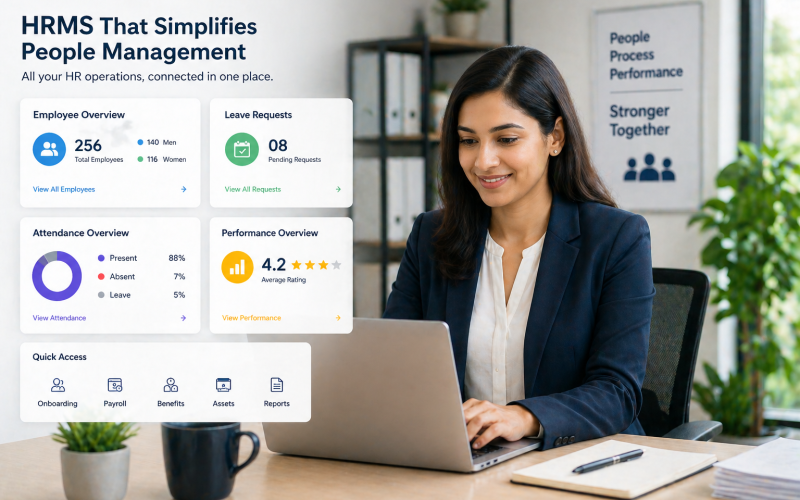

- Static job titles rarely show the full technical capability available across a manufacturing workforce.
- Skills-based planning helps manufacturers identify shortages, assign qualified people, and prepare employees for changing roles.
- A connected HRMS keeps skills, certifications, training, performance, and workforce records current in one system.
Manufacturing workforce planning has traditionally started with job titles and headcount. A plant needs a certain number of operators, technicians, supervisors, engineers, quality inspectors, and maintenance employees. HR checks whether those positions are filled, operations reviews shift coverage, and recruitment begins when a vacancy appears.
That model is becoming less useful because the work inside each role is changing faster than the title. Automation, connected machinery, advanced quality systems, AI, data analysis, and cybersecurity requirements are adding new responsibilities across factory operations. Two employees may hold the same title while having very different levels of technical knowledge, equipment experience, and readiness for future work.
The World Economic Forum expects 39% of workers’ current skills to change or become outdated between 2025 and 2030. It also reports that 63% of employers see skills gaps as a major barrier to business transformation, while 85% plan to prioritize workforce upskilling.
For manufacturers, this means workforce planning can no longer focus only on how many people are employed. Businesses need a current view of what those people can do, where capabilities are missing, and how quickly employees can move into new responsibilities.
The Job Description Is Becoming an Incomplete Workforce Record
Job descriptions provide structure, but they rarely capture the full capability of an employee. A maintenance technician may understand programmable logic controllers, predictive maintenance, electrical systems, and several machine models. Another technician with the same title may have strong mechanical experience but require training before working with automated equipment.
A production supervisor may also have skills in quality management, workforce scheduling, ERP reporting, safety procedures, or continuous improvement. However, these capabilities often remain in personal files, spreadsheets, certificates, or the manager’s memory.
As a result, the organization knows each employee’s position but not always their operational value. This becomes a problem when managers need to cover an absence, start a new production line, assign a technical project, or prepare a successor for a specialist role.
A skills-based model adds another layer to the employee record. It documents verified capabilities alongside the formal position, creating a clearer view of the workforce.
Headcount Planning Is Giving Way to Capability Planning
Traditional workforce planning asks how many employees are required. Skills-based workforce planning begins with the work that must be completed and the capabilities required to complete it safely and correctly.
This model examines:
- The tasks expected across each production area
- The technical skills and certifications required
- The number of qualified employees currently available
- The capability gaps that could affect output or safety
- The training needed before new equipment or processes are introduced
For example, a manufacturer may have enough maintenance employees on paper but still lack people who can diagnose a specific robotic system. Hiring another general technician may not solve that problem. The business must either recruit for the missing capability or prepare an existing employee through focused training.
This distinction helps leaders separate general labor shortages from specific skill shortages. It also produces a more useful workforce plan because each action is linked to an operational requirement.
Manufacturing Feels the Skills Shift Earlier
Manufacturing businesses are already competing for people with experience in automation, digital systems, advanced maintenance, quality control, cybersecurity, and data management. At the same time, experienced workers are retiring, taking years of practical knowledge with them. Recent industry reporting continues to identify skilled labor shortages and changing technical requirements as major constraints on manufacturing growth.
Technology is also changing which capabilities matter. The World Economic Forum identifies AI, big data, networks, cybersecurity, and technological literacy among the fastest-growing areas of demand. Meanwhile, resource management, operations, quality control, and programming are expected to separate growing roles from declining ones.
Therefore, manufacturers cannot solve every workforce issue through external hiring. In many markets, the exact combination of skills may be difficult to find. Businesses need to understand their current workforce better, retain experienced employees, transfer knowledge, and develop people for changing roles.
A Live Skills Inventory Replaces the Annual Spreadsheet
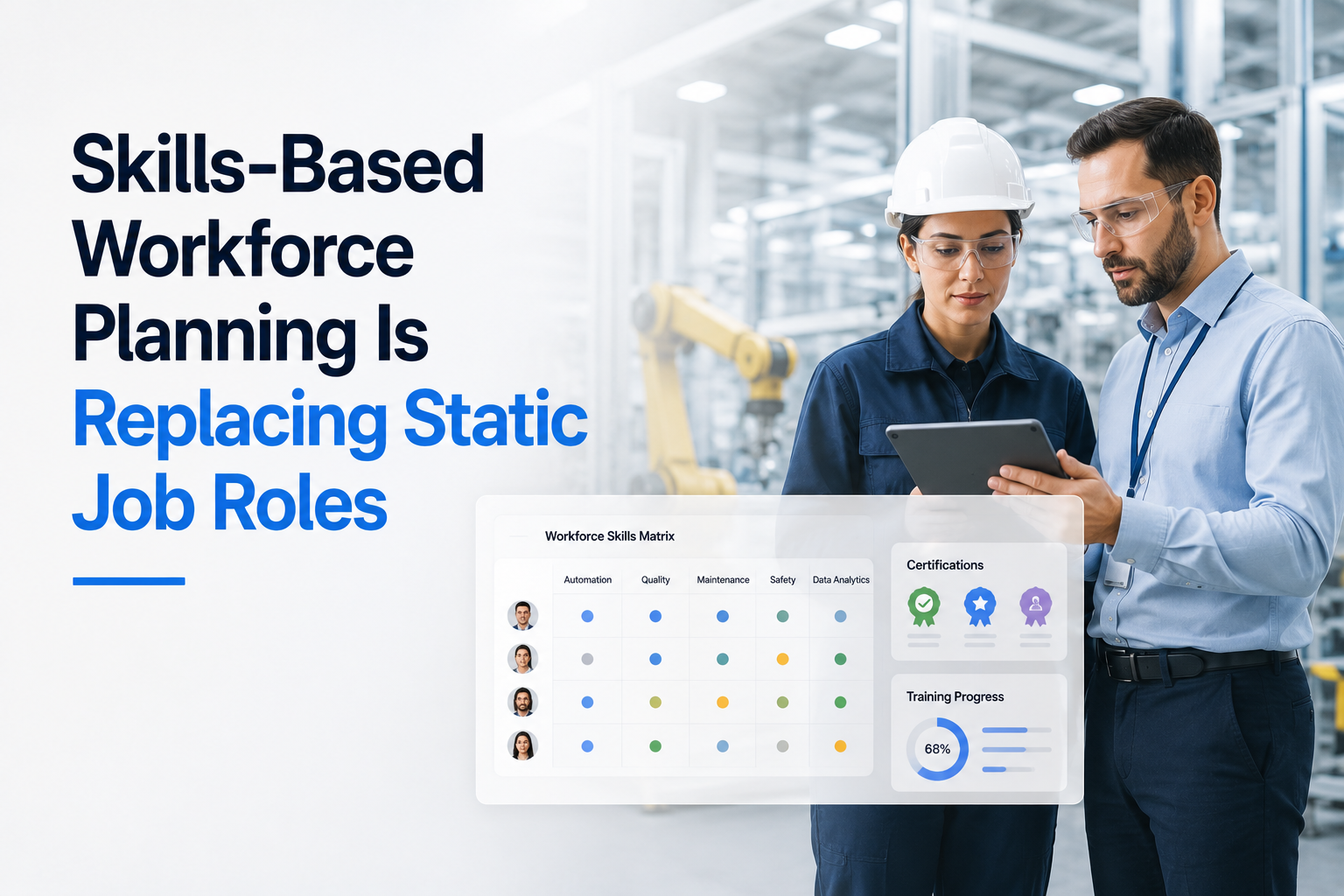
Many organizations maintain a skills matrix, but the file is often updated only before an audit, performance review, or training cycle. Once completed, it quickly becomes outdated.
A live skills inventory works differently. It updates as employees complete training, pass assessments, renew certifications, work on projects, or gain experience with equipment. Managers can review current workforce capability without rebuilding the information manually.
A useful skills record may include:
- Technical and operational skills
- Equipment and machine experience
- Certifications and expiration dates
- Assessment results and proficiency levels
- Completed courses and development plans
- Project experience and temporary assignments
- Manager validation and supporting evidence
However, self-reported skills should not automatically be treated as verified capability. The system needs clear levels, evidence requirements, assessment methods, and manager review. Otherwise, the business replaces one unreliable spreadsheet with a larger unreliable database.
Scheduling Becomes More Precise
Shift scheduling usually focuses on availability, working hours, attendance, and labor rules. Skills-based planning adds qualification to that process.
A team may have enough employees scheduled for a production line, but not enough people certified to perform a specific inspection or operate a certain machine. Without skills visibility, managers may discover the gap after the shift begins.
A connected workforce system can flag the shortage during planning. It can show which employees are qualified, who is available, and who could become ready after completing a required course or assessment.
Managers should still make the final assignment. The system provides better information, but operational judgment remains important. Experience, workload, safety, team balance, and employee development all affect the decision.
Internal Mobility Becomes a Practical Workforce Strategy
Internal mobility is often discussed as a career benefit, but in manufacturing it can also protect operational continuity.
An operator may already have several capabilities required for a quality role. A maintenance employee may be close to meeting the requirements for an automation position. A production supervisor may have enough project experience to move into operations planning.
Without structured skills data, these opportunities remain difficult to see. Managers usually consider employees they already know, while other qualified people stay hidden elsewhere in the organization.
A skills-based HRMS can compare current capability with the requirements of another role. It can identify the existing strengths, the missing skills, and the training needed before a move becomes realistic.
This makes career development more specific. Instead of telling an employee to gain more experience, the organization can define a clear path with courses, practical assignments, assessments, and certification targets.
Recruitment Becomes Narrower and More Accurate
Skills visibility also improves recruitment. When organizations do not understand their internal capability, they often create broad job descriptions and search for candidates who appear to cover every possible requirement.
A skills-based plan identifies the exact shortage. The business may discover that it does not need another general engineer. It needs someone experienced in industrial networking, robotic maintenance, production data analysis, or a specific quality standard.
This creates clearer job requirements and more focused candidate screening. It can also prevent unnecessary hiring when an internal employee is already close to meeting the requirement.
Recruitment then becomes part of workforce planning rather than a separate reaction to vacancies.
Learning Becomes Connected to Operational Demand
Training programs often begin with a course catalogue. Skills-based development begins with a capability gap.
If a business plans to introduce new equipment, the system can identify which employees require training before implementation. If a certification is close to expiring, the employee and manager can receive an early notification. When several teams show the same assessment weakness, the organization can create a focused learning program.
The World Economic Forum estimates that 59 out of every 100 workers will need training by 2030. Employers expect some employees to develop within their current roles, while others will need preparation for different positions.
Connecting HRMS and LMS data makes this process easier to manage. Skills requirements can trigger learning assignments, and completed training can update the employee’s development record after the required validation.
Skills Data Requires Clear Governance
A skills-based model becomes useful only when employees and managers trust the data. Therefore, the organization needs clear rules for how capabilities are defined, assessed, updated, and used.
The system should distinguish between awareness, basic ability, independent performance, and expert capability. Certifications should include issue and expiration dates. Employees should be able to review their records and request corrections. Managers should validate important operational skills through evidence or assessment.
Organizations should also avoid using skills data as an unexplained scoring system. Employees need to understand how the information affects training, assignments, promotion, and internal opportunities. Transparent rules create better records and reduce the risk of unfair decisions.
How Synclo Supports Skills-Based Workforce Planning
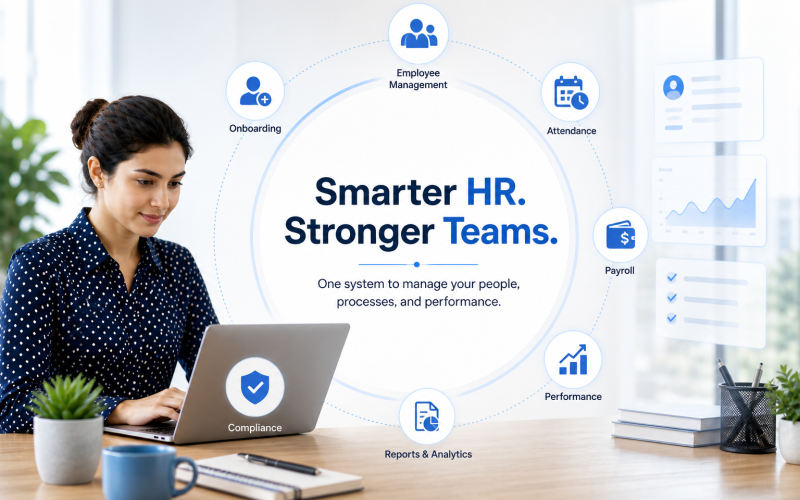
Synclo HRMS connects employee records, organizational roles, attendance, performance, training, documents, and workforce reporting within one platform. This gives businesses a stronger base for maintaining current skills and certification records.
Managers can review employee capability alongside availability, performance, learning progress, and role requirements. Meanwhile, connected LMS workflows can support training assignments, assessments, certification tracking, and development plans.
Synclo can also connect workforce data with recruitment and operational planning. Therefore, leaders can determine whether a capability should be developed internally, sourced through recruitment, or covered through a temporary assignment.
The purpose is not to remove job titles. Titles still support reporting, compensation, responsibility, and organizational structure. Skills data adds the operational detail that titles cannot provide alone.
The Factory Workforce Is Becoming More Fluid
Modern manufacturing roles will continue to change as equipment, software, production methods, and customer requirements develop. Static job descriptions will remain useful, but they cannot serve as the complete workforce plan.
Skills-based planning gives manufacturers a clearer view of current capability and future readiness. It helps businesses prepare for new technology, use internal talent more effectively, target recruitment, and connect learning with real operational needs.
Manufacturers that understand their workforce at the capability level can respond to change without rebuilding teams every time a role evolves. The result is not simply better HR administration. It is a workforce that can move with the operation.
