




- Retail schedules become unreliable when they are built from fixed templates rather than current demand, employee availability, and store activity.
- Constant last-minute changes increase overtime, understaffing, employee frustration, and inconsistent customer service.
- Synclo HRMS connects scheduling, attendance, leave, skills, and workforce data so managers can respond without rebuilding every roster manually.
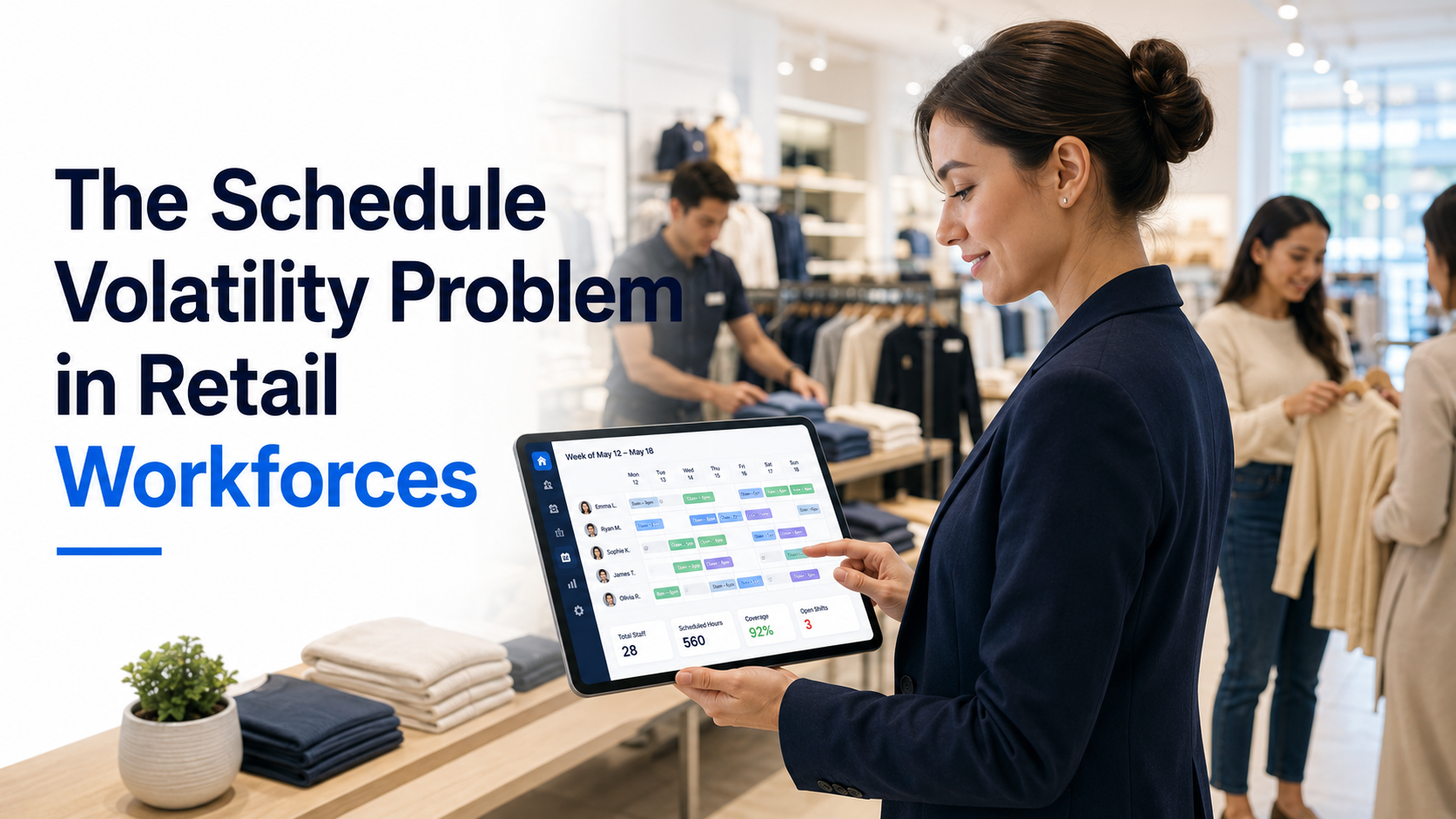
Retail schedules rarely remain stable for long. Customer traffic changes, employees call out, deliveries arrive late, promotions create unexpected demand, and online orders increase the workload inside stores and warehouses. A roster that appeared balanced when it was published can become unsuitable within hours.
Most retailers respond by adjusting shifts manually. Managers call employees, send messages, update spreadsheets, move people between departments, and approve overtime to protect service levels. This may solve the immediate problem, but it creates a wider pattern of schedule volatility.
Schedule volatility is the repeated difference between the workforce plan and the work that actually needs to be completed. It appears through last-minute changes, unfilled shifts, unpredictable hours, excess overtime, and frequent movement between roles or locations.
The problem affects both operations and employees. Stores struggle to maintain coverage, while workers find it difficult to plan their lives around schedules that keep changing. A more responsive workforce system must help retailers adapt to demand without making uncertainty the normal employee experience.
Fixed Schedules Cannot Represent Variable Retail Demand
Many retail schedules begin with a template. Managers copy the previous week, adjust approved leave, add expected busy periods, and publish the roster.
This approach is efficient when demand remains predictable. However, modern retail activity is influenced by several changing factors:
- Store traffic
- Online and click-and-collect orders
- Product deliveries
- Promotional campaigns
- Seasonal demand
- Returns volume
- Local events
- Weather conditions
- Staff availability
- Inventory movement
A schedule based only on historical patterns may miss what is happening now.
For example, an e-commerce promotion may increase picking and packing activity without increasing in-store footfall. A large delivery may create work for warehouse and merchandising teams. A local event may produce a brief but significant traffic increase.
Retailers need schedules that reflect the work expected across each operational area, not only the number of customers likely to enter the store.
Understaffing and Overstaffing Often Exist at the Same Time
A retail location may have enough employees overall and still lack coverage where it matters.
Several employees may be scheduled during a quiet morning, while checkout queues and online fulfillment become overloaded later in the day. One department may have extra capacity while another cannot complete customer requests. A warehouse may have enough people present but too few trained to operate specific equipment or complete specialist tasks.
This means headcount alone does not explain workforce readiness.
Managers need visibility into:
- Where employees are assigned
- Which skills are required
- Which tasks are increasing
- Which workers are available to move
- How schedule changes affect overtime
- Whether service-critical roles remain covered
A connected HRMS can show the workforce plan alongside attendance, availability, leave, skills, and current assignments. Managers can then adjust coverage using operational context rather than counting only the number of people on site.
Last-Minute Changes Create Hidden Administrative Work
Schedule changes create work long before the employee begins the shift.
A manager must identify the coverage gap, review who is available, confirm labor limits, contact employees, wait for responses, update the roster, and notify affected supervisors. If the first employee declines, the process begins again.
The same change may also affect payroll, attendance, transport, security access, or task assignments.
When managers coordinate these steps through messages and spreadsheets, the schedule becomes difficult to trust. One version may show the original shift, another contains the update, and payroll receives a different record after the work is complete.
A structured scheduling workflow should keep the request, response, approval, and final roster together. Employees can accept or decline available shifts, while managers maintain control over the assignment.
This reduces repeated communication and creates one current schedule for the organization.
Predictability Is Part of the Employee Experience
Retail employees need flexibility, but flexibility should not mean constant uncertainty.
A worker may be willing to accept additional hours or exchange shifts. However, repeated last-minute changes make it difficult to manage transport, education, childcare, medical appointments, and personal commitments.
Unpredictable scheduling can also weaken trust. Employees may believe that hours are distributed unfairly or that availability information is being ignored. Managers may appear inconsistent even when they are responding to genuine operational pressure.
Retailers can improve predictability by defining:
- How far in advance schedules are normally published
- How employees submit availability
- How shift changes are offered
- How open shifts are assigned
- When overtime requires approval
- How cancellations or reductions are communicated
- Which changes employees may decline
Clear rules give employees more control while allowing managers to respond when conditions change.
Employee Self-Service Should Reduce Friction
Employee self-service can make retail scheduling more flexible when it is designed around actual workforce needs.
Employees should be able to review upcoming shifts, submit availability, request leave, offer a shift for exchange, and respond to open-shift opportunities without relying on informal messages.
However, self-service should not create uncontrolled scheduling.
A shift exchange may affect skills coverage, labor cost, working-hour limits, or department requirements. The system should check these conditions before the change becomes final.
A structured process may work as follows:
- An employee requests a shift exchange.
- Eligible colleagues receive the opportunity.
- Another employee accepts it.
- The system checks availability, skills, and working-hour rules.
- The manager reviews the change when required.
- The official roster updates automatically.
This gives employees flexibility without creating another disconnected scheduling channel.
Attendance Data Should Improve Planning
Attendance systems are often used mainly to identify lateness and absence. The same data can also help retailers improve workforce planning.
Repeated late arrivals may indicate transport issues linked to a specific shift time. Frequent absences in one department may reflect workload, management, or scheduling problems. A location may depend heavily on overtime because planned staffing levels do not match actual demand.
Managers should be able to review patterns rather than only individual incidents.
Useful workforce analysis may include:
- Absence by shift and location
- Unfilled shifts
- Overtime by department
- Schedule changes after publication
- Employees repeatedly asked to extend shifts
- Demand periods with weak coverage
- Time between shift offer and acceptance
These patterns help HR and operations determine whether the issue comes from employee behavior, scheduling design, staffing levels, or another operational condition.
Attendance should support planning, not function only as a disciplinary record.
Skills Need to Be Part of Scheduling
Retail roles are becoming more varied. Employees may support checkout, customer service, online fulfillment, inventory, returns, visual merchandising, or warehouse operations. Some responsibilities require specific training, authorization, or experience.
A schedule that ignores these differences can appear complete while leaving the location operationally exposed.
For example, a store may have enough people present but only one employee who can process a particular return, operate warehouse equipment, or supervise a regulated product category.
Skills-based scheduling allows managers to see whether each shift contains the required capability mix. It can also identify employees who are close to becoming eligible for additional responsibilities after completing training.
This connects workforce scheduling with learning and development. Training becomes a way to increase scheduling resilience rather than an isolated HR activity.
Automation Should Recommend Rather Than Control Every Shift
Workforce scheduling tools can analyze demand, availability, skills, labor budgets, attendance, and working-hour rules. They can then recommend a schedule or identify a likely coverage problem.
This can save time, but retail scheduling still requires managerial judgment.
A system may not understand that a new employee needs support from an experienced colleague. It may recommend moving a worker whose current department is already under pressure. It may produce a mathematically efficient roster that creates an unreasonable employee experience.
Automation should therefore help managers compare options rather than remove their authority.
A useful scheduling recommendation should explain:
- Why additional coverage is needed
- Which employees are eligible
- How the change affects labor cost
- Whether overtime is created
- Which skills remain covered
- What employee availability has been provided
Managers can then approve, modify, or reject the recommendation with a clear view of the trade-offs.
How Synclo HRMS Supports Responsive Retail Scheduling
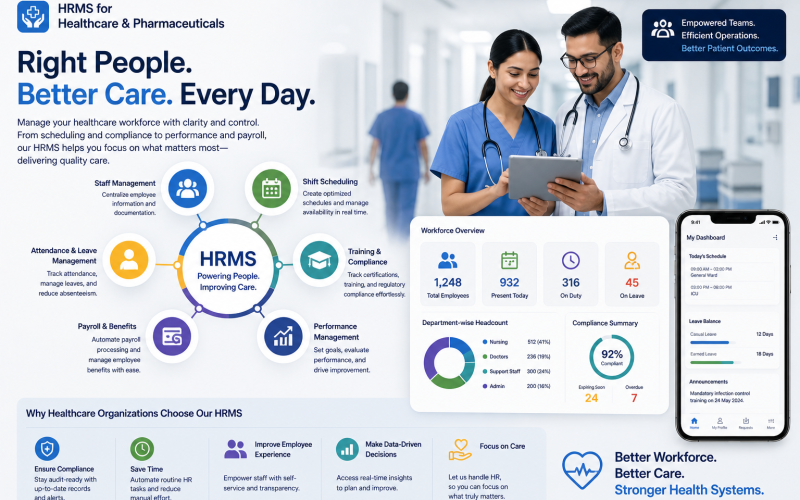
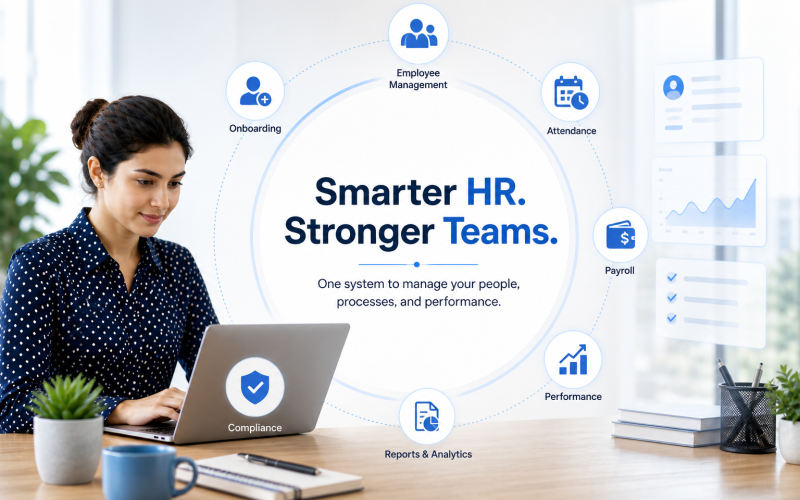
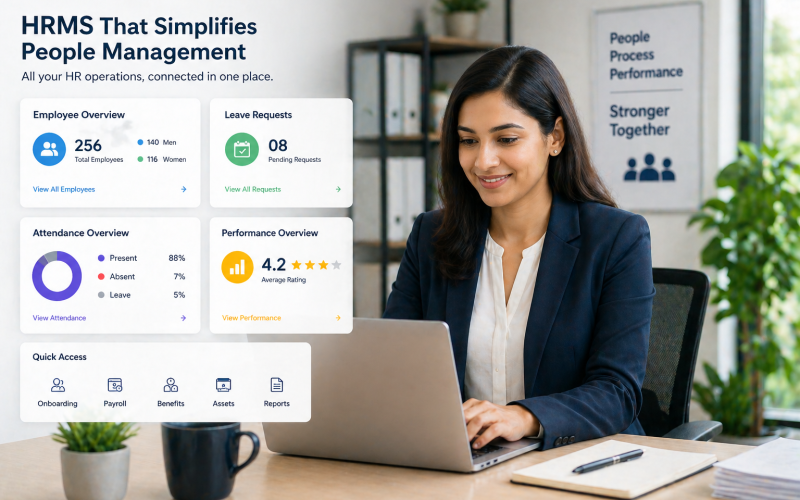
Synclo HRMS connects employee records, scheduling, attendance, leave, skills, documents, performance, and workforce reporting in one platform.
Managers can build schedules using current employee availability and review how changes affect attendance, overtime, and role coverage. Employees can access schedules, submit requests, and respond to shift opportunities through structured self-service workflows.
Because workforce data remains connected, schedule changes can update the official attendance and payroll records without repeated manual entry. Managers also gain visibility into recurring absences, unfilled shifts, overtime patterns, and departments experiencing frequent changes.
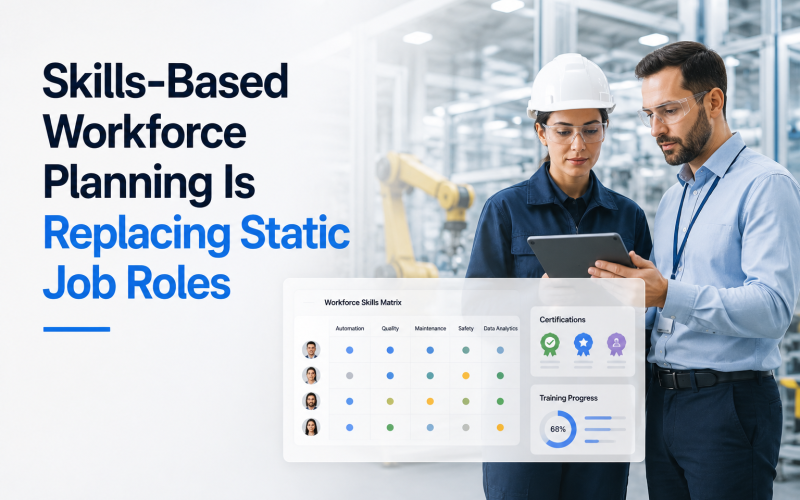
Synclo LMS can support skills-based scheduling by showing completed training and certifications alongside employee records. This helps managers assign people based on both availability and capability.
The goal is not to eliminate every schedule change. Retail operations will always need to respond to unexpected conditions. The goal is to manage those changes through one reliable workforce process.
Stable Operations Need Flexible but Predictable Scheduling
Retailers cannot create a perfect schedule and expect it to survive every operational change. Demand moves too quickly, and employees are not interchangeable units.
The stronger approach combines demand awareness, employee availability, skills data, self-service, and managerial judgment. Teams can adapt when conditions change without turning every adjustment into a manual emergency.
Schedule flexibility should help the business respond. Schedule predictability should help employees plan. These objectives do not need to conflict when the workforce system gives both sides clearer information and structured choices.
Retail businesses that reduce unnecessary schedule volatility gain more than better workforce administration. They improve attendance, service consistency, labor control, and trust between managers and employees.
