




- AI adoption is increasing, but most businesses still struggle to use it effectively
- The real problem is not the technology, but how it fits into daily operations
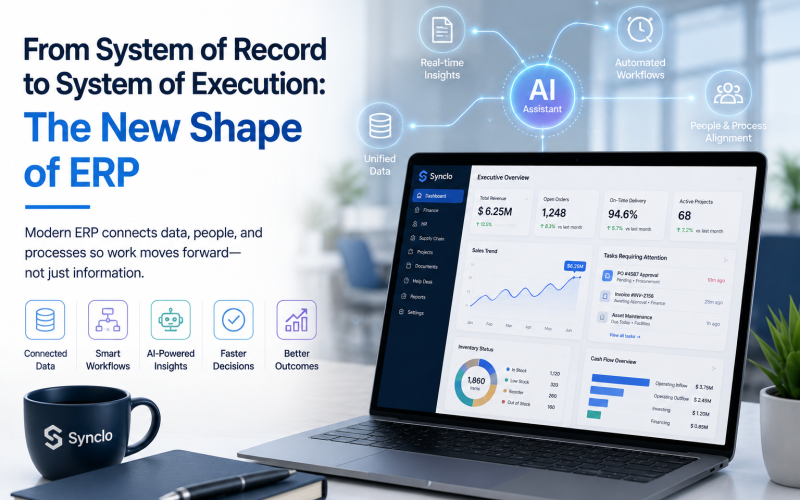
- Systems like Synclo make AI practical by connecting it directly to business workflows
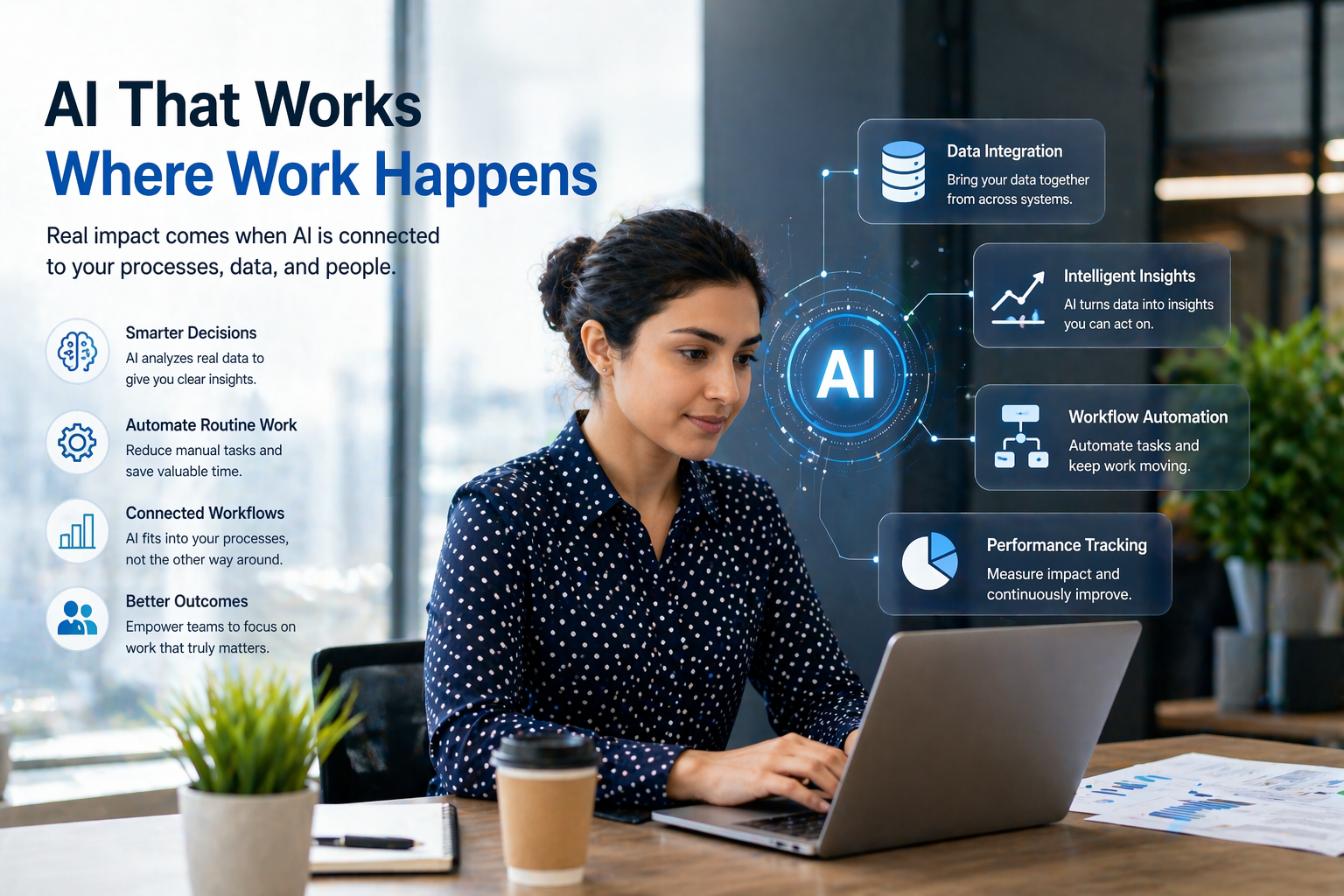
Artificial intelligence is already part of everyday business tools. Teams use it for writing, analysis, customer support, and automation. Yet most organizations are not seeing a clear shift in how they operate. Access is not the issue. Application is where things break down.
Many companies introduce AI tools without changing their workflows. As a result, AI becomes an extra step instead of part of the system. Employees test it, use it occasionally, then return to familiar processes. This creates a gap between what AI can do and what it actually improves.
AI Tools Are Available but Rarely Connected to Workflows
Most businesses use AI in isolated ways. One tool helps with content, another handles data, and a third supports customer queries. Each tool works on its own. However, none of them connect to the full workflow. Because of this, teams move between systems without continuity.
This often leads to repeated effort and lost context. AI outputs do not always feed into decisions, and data does not move with the process. Over time, AI feels useful but not essential.
In practical terms, this results in:
- AI outputs that are reviewed but not applied
- Tasks repeated because systems do not share data
- Limited visibility into how AI affects outcomes
For AI to matter, it has to sit inside the workflow, not outside it.
Execution Is Where AI Starts to Matter
AI is often seen as a tool for generating content or insights. While that has value, it does not change how work moves forward. The real impact comes from execution.
AI becomes useful when it reduces the time between decision and action. It removes repetitive steps and allows processes to continue without manual input. This is where most businesses struggle. They use AI for output, not for operations.
With AI built into workflows, actions do not stop at suggestions. Tasks move forward, updates happen automatically, and processes continue without interruption. This is the difference between using AI and relying on it. Synclo supports this by embedding AI into business processes so it drives execution rather than just producing results.
Adoption Breaks When AI Depends on Individual Effort
AI usage often varies across teams. Some employees rely on it heavily, while others avoid it. This inconsistency comes from how AI is introduced. When it is treated as an optional tool, usage depends on personal preference.
Without structure, there is no standard way to use it. This creates uneven outcomes across the organization.
To make AI reliable, it has to be part of the system itself. That means:
- AI should support tasks automatically, not require constant prompting
- Outputs should connect directly to the next step in a process
- Usage should remain consistent across teams
When AI is built into workflows, adoption becomes natural instead of forced.
Data Only Works When It Has Context
AI depends on data, but isolated data does not help much. In many organizations, data sits in different systems. Sales, finance, and operations all run separately. AI tools pull from limited sources, which reduces the quality of results.
This leads to outputs that are technically correct but not useful for decision-making. Context is what turns data into something actionable.
A connected system solves this by bringing everything into one place. With a single source of truth, AI can work with complete information. This improves accuracy and makes outputs more relevant. Synclo enables this by connecting operational data across the business so AI works with real context.
Automation Turns AI Into Something Practical
Most conversations about AI focus on what it can generate. However, its real value shows up when it starts to automate. Automation removes the need for manual steps and allows processes to continue without delays.
Instead of asking what AI can create, the better question is what it can move forward.
This includes:
- Routing tasks based on priority without manual input
- Updating records automatically as actions happen
- Triggering workflows based on system changes
These changes are simple, but they reduce friction across operations. With end-to-end automation, AI supports how work moves, not just what it produces. Synclo combines automation with AI so processes continue without constant intervention.
Growth Requires AI to Stay Structured
As businesses expand, operations become more complex. More data, more processes, and more dependencies make it harder to manage workflows. Adding AI without structure can increase confusion instead of reducing it.
Different teams may use different tools, and processes may lose clarity. This leads to inconsistent results.
A structured system ensures that AI scales without adding complexity. It should work across departments, support existing workflows, and remain consistent as operations grow. Synclo provides this structure by integrating AI into a unified platform so it scales with the business instead of fragmenting it.
What It Looks Like When AI Actually Works
When AI is implemented correctly, the change is not dramatic. It shows up in consistency. Tasks take less time, decisions rely on better data, and workflows move without constant follow-up.
Teams do not think about using AI. It becomes part of how work happens.
This is where businesses are heading. Not toward more tools, but toward systems where AI is built into everyday operations. The gap between potential and impact comes down to how well AI fits into the system. The companies that close that gap are the ones that treat AI as part of how work gets done, not as something separate from it.
