




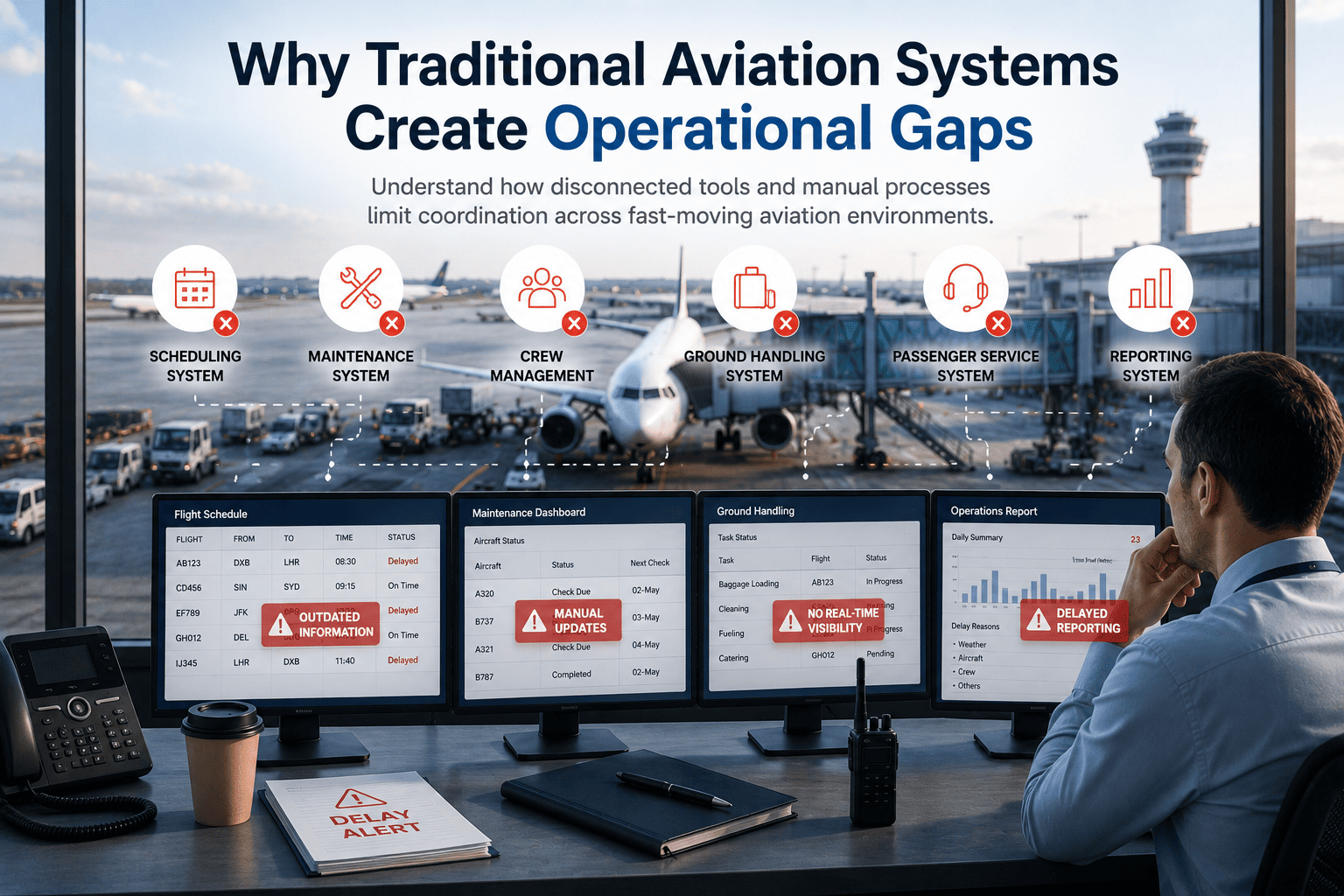
Aviation is one of the most time-sensitive industries in the world. Every movement depends on coordination between people, aircraft, facilities, equipment, schedules, and service teams. A single delay can affect flight departures, gate availability, crew schedules, baggage handling, maintenance planning, and passenger communication. Because of this, aviation businesses need systems that provide clear visibility across the entire operation, not just isolated updates from separate departments.
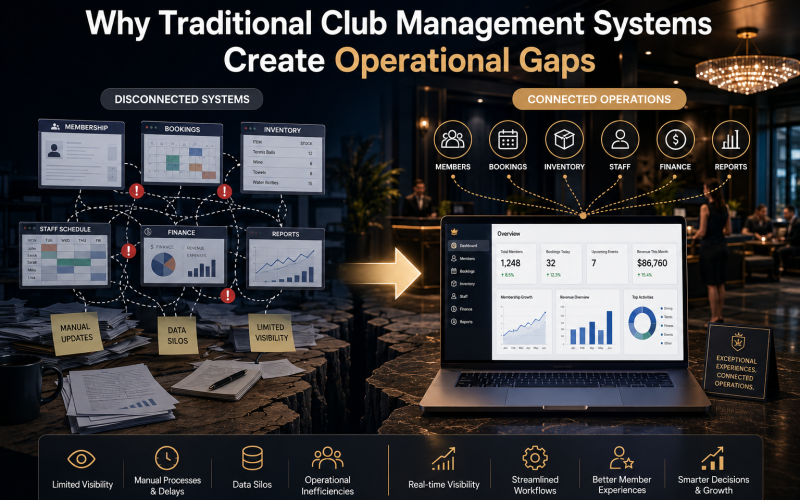
Traditional aviation systems were often built to manage specific functions. One system may support scheduling, another may handle maintenance records, while separate tools manage crew activity, passenger support, cargo coordination, or ground operations. These tools may perform their individual tasks well, but they often fail to provide a complete operational view. As a result, teams work with partial information and spend valuable time reconciling updates across different platforms.
The real issue is not that aviation businesses lack systems. Most aviation environments already have many systems in place. The issue is that these systems do not always work together in a way that supports fast, coordinated decision-making. When information stays trapped in separate tools, operational gaps begin to appear.
Disconnected Tools Limit Real Time Visibility
In aviation, timing matters at every stage. Ground crews need to know when aircraft are ready. Maintenance teams need visibility into service requirements. Passenger service teams need accurate disruption updates. Operations managers need to see how changes in one area affect the rest of the workflow.
When systems are disconnected, this visibility becomes limited. Teams may have access to information, but only within their own department. A change in one workflow may not reach another team quickly enough to support proper coordination. This creates delays that are difficult to detect until they begin affecting the wider operation.
This often leads to:
- Slow response to schedule changes
- Poor visibility into operational dependencies
- Increased manual follow-ups between teams
A connected operational system helps aviation businesses reduce these gaps by bringing updates, workflows, and reporting into one environment. Synclo supports this by helping organizations connect daily operational processes so teams can work from shared information instead of fragmented updates.
Manual Updates Slow Down Fast-Moving Operations
Aviation environments change constantly. Weather conditions shift, aircraft availability changes, passenger loads fluctuate, maintenance needs arise, and ground operations adjust throughout the day. When updates are handled manually, the system cannot keep up with the pace of operations.
Manual updates create lag. A team may record a change in one system, but another department may not see it until later. This delay can affect planning and cause confusion across teams. In fast-moving aviation environments, even a short delay in information flow can create larger operational issues.
Manual processes also increase the risk of errors. Information may be entered incorrectly, duplicated, or missed entirely. Over time, these errors reduce trust in the system and force teams to rely on calls, messages, and informal coordination to confirm what is happening.
Operational Dependencies Are Hard to Track
Aviation workflows are deeply connected. A flight cannot depart on time if ground handling is delayed, maintenance clearance is pending, crew scheduling is incomplete, or gate availability is uncertain. Each process depends on another, which means visibility across dependencies is essential.
Traditional systems often track tasks separately, which makes it difficult to understand how one issue affects the wider operation. A maintenance delay may be visible to the maintenance team but not immediately clear to operations or passenger service teams. A gate change may be recorded, but support teams may still operate with outdated information.
Modern aviation businesses need systems that connect operational dependencies across departments. This includes:
- Flight operations and crew coordination
- Maintenance workflows and aircraft availability
- Ground handling, gate planning, and passenger services
The goal is to ensure that changes in one area are visible across all connected teams before they create larger disruptions.
Reporting Often Reflects the Past, Not the Current Operation
Traditional systems often rely on reporting cycles. Teams review daily reports, shift summaries, incident logs, or performance dashboards after activity has already taken place. While this information is useful, it does not always help teams respond in the moment.
Aviation operations need live visibility because decisions must be made while conditions are changing. If reports are delayed or manually compiled, leaders may only understand problems after they have already affected performance.
Real time reporting helps teams identify issues earlier, monitor current workflows, and respond before small delays spread across the operation. A connected platform makes this possible by updating information continuously instead of relying only on end-of-day or manual reporting.
Passenger Experience Suffers When Internal Systems Are Not Aligned
Passengers may not see the systems behind aviation operations, but they feel the impact when those systems fail to connect. Delayed updates, unclear communication, baggage issues, long waiting times, and inconsistent service all often begin as internal coordination problems.
If passenger service teams do not receive accurate updates from operations, they cannot communicate clearly with travelers. If baggage teams do not have aligned information, handling delays become more likely. If disruption updates are inconsistent, customer trust declines.
A connected system improves passenger experience by ensuring that internal teams work with accurate, current information. This allows staff to respond faster, communicate better, and reduce confusion during operational disruptions.
Traditional Systems Make Scaling More Difficult
As aviation businesses grow, operational complexity increases. More flights, more passengers, more cargo movement, more staff, and more service partners all create additional coordination demands. Traditional disconnected systems become harder to manage at scale because each added process increases the number of handoffs between teams.
A scalable aviation operations platform helps businesses manage growth without losing visibility. Teams need systems that connect workflows, data, communication, and reporting across the full operation. Synclo supports this by providing a unified environment where operational activities can be tracked and managed with greater clarity.
When systems are connected, aviation businesses gain stronger control over daily operations. Teams spend less time chasing updates, leaders gain clearer visibility into performance, and service quality becomes easier to maintain. Traditional systems create gaps not because they are useless, but because they were not designed for the speed and complexity of modern aviation. Organizations that close these gaps are better positioned to reduce delays, improve coordination, and deliver stronger operational performance.
