



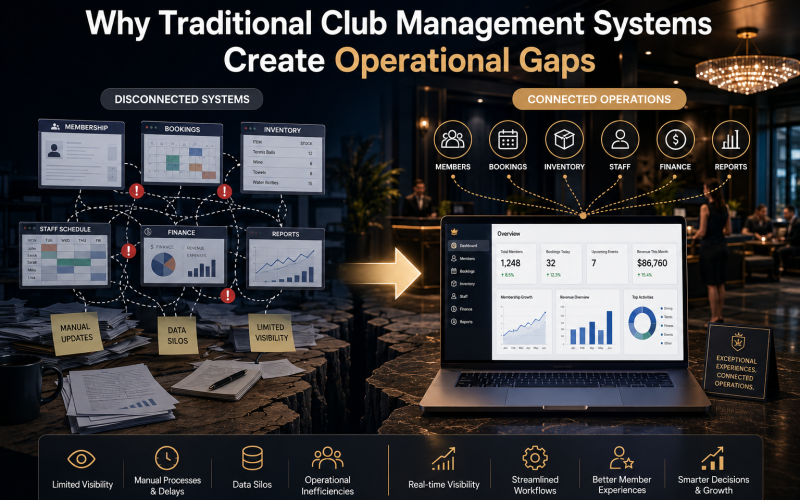


- Automotive businesses often rely on separate systems for inventory, sales, service, and operations
- Disconnected processes reduce visibility and slow coordination between departments
- Unified platforms help manufacturers, dealerships, and service centers operate more efficiently
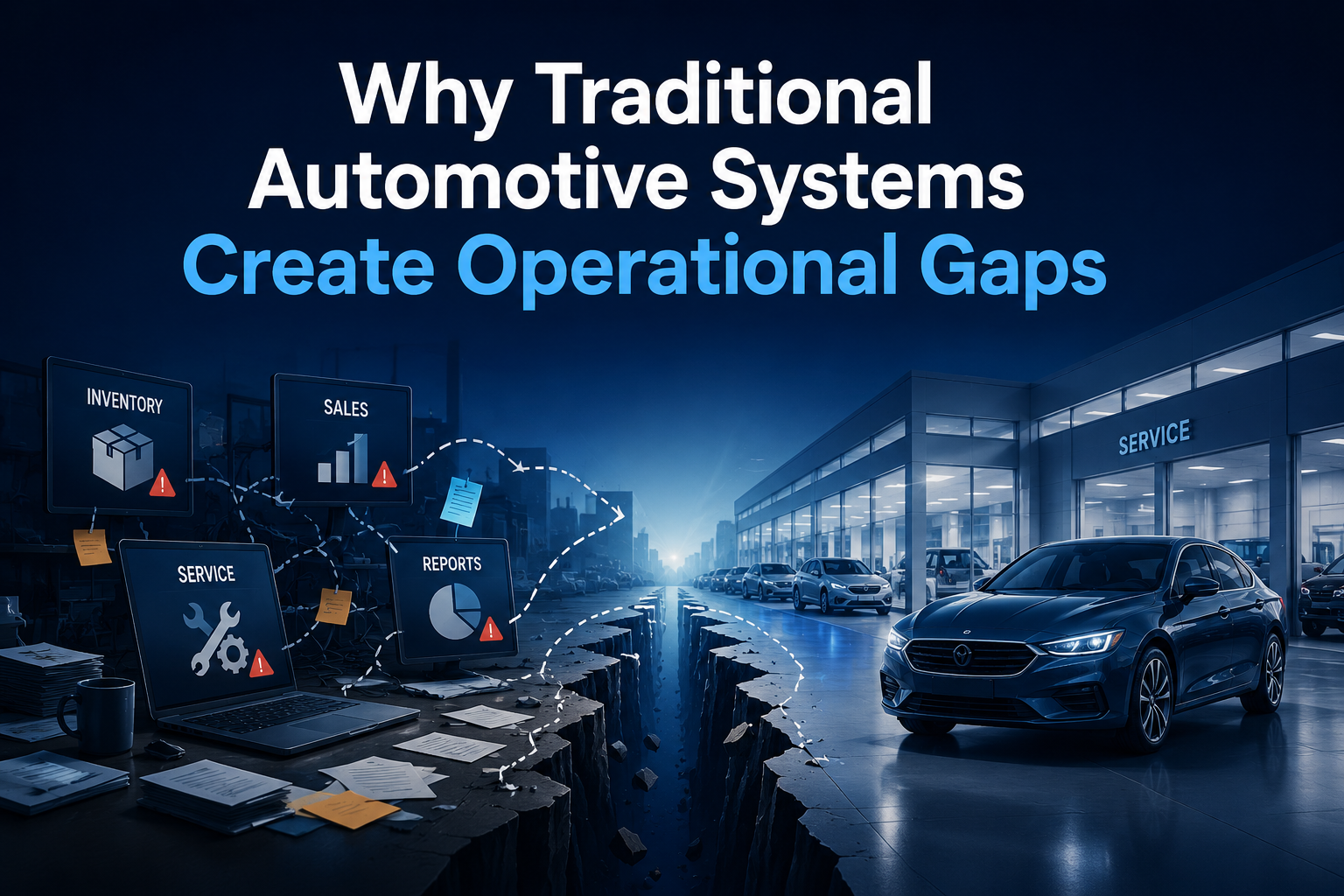
The automotive industry depends on coordination. Manufacturers need visibility into production and distribution. Dealerships need accurate inventory information and customer data. Service centers need access to vehicle history, parts availability, and workshop schedules. When these areas work together, operations run smoothly. When they operate through disconnected systems, operational gaps begin to appear.
Many automotive businesses have invested in technology over the years, but those investments were often made to solve individual problems rather than support the entire operation. One system may manage vehicle inventory, another handles customer information, while separate tools manage service operations, procurement, finance, or reporting. Although each platform performs its own task, they rarely provide a complete picture of business performance.
As automotive businesses expand across locations, brands, and service networks, these disconnected systems become increasingly difficult to manage. Teams spend more time moving information between departments and less time improving customer experience and operational efficiency. The result is slower decision-making, limited visibility, and unnecessary operational complexity.
Information Is Often Trapped Inside Separate Systems
Automotive businesses generate information continuously. Vehicle inventory moves in and out of stock. Customers submit inquiries and schedule appointments. Workshops process repairs and maintenance jobs. Parts departments manage inventory and supplier orders. Every activity produces data that could help improve decision-making.
The challenge is that this information often remains isolated within different systems. Sales teams may not have visibility into service activity. Service advisors may struggle to access inventory information. Leadership teams may rely on manually compiled reports because operational data is spread across multiple platforms.
This often creates:
- Delays in sharing operational updates
- Limited visibility across departments
- Duplicate data entry and reporting effort
A connected platform such as Synclo helps automotive businesses centralize operational information so teams can work from a shared source of truth instead of disconnected systems.
Dealership Operations Depend on Real-Time Visibility
Modern dealerships manage far more than vehicle sales. They coordinate inventory, financing, customer engagement, service bookings, trade-ins, accessories, and after-sales support. Each area affects the customer experience and contributes to overall business performance.
When systems are disconnected, dealership teams struggle to maintain visibility across these activities. A sales representative may not know whether a vehicle is already reserved. Service teams may not have access to recent customer interactions. Managers may need multiple reports to understand overall performance.
Real-time visibility helps dealerships operate more effectively by ensuring that customer information, inventory updates, and operational activity remain connected.
Service Networks Face Coordination Challenges
Service operations are among the most complex areas of the automotive industry. Appointment scheduling, technician allocation, parts availability, vehicle inspections, approvals, and customer communication all need to move together.
Traditional service management often depends on manual coordination between departments. Advisors contact parts teams for availability updates. Technicians wait for approvals. Customers call repeatedly for status information. These activities consume time and create delays that affect productivity.
Modern automotive businesses are investing in:
- Connected service management platforms
- Centralized operational workflows
- Real-time visibility across departments
The goal is to reduce delays and improve coordination throughout the service lifecycle.
Manual Processes Create Operational Friction
Many automotive organizations still rely heavily on spreadsheets, emails, phone calls, and manual reporting processes. While these methods may work for smaller operations, they become difficult to maintain as businesses grow.
Manual processes often create:
- Repeated administrative work
- Slower approvals and updates
- Increased risk of errors
- Delayed reporting and analysis
Employees spend valuable time updating information manually instead of focusing on customers, sales, and operational improvement.
Automation helps reduce these inefficiencies by moving information automatically between workflows. Inventory updates, service notifications, approvals, reporting, and customer communication can all happen through structured processes rather than manual follow-ups.
Manufacturers Need Better Visibility Across Distribution Networks
Manufacturers depend on accurate information from dealerships, distributors, and service networks. Production planning, inventory allocation, forecasting, and supply chain management all require visibility into market activity.
However, traditional systems often limit access to real-time information. By the time reports reach decision-makers, conditions may have already changed.
A connected operational environment helps manufacturers understand vehicle demand, inventory movement, service trends, and dealer performance more effectively. This improves planning accuracy while reducing uncertainty across the distribution network.
Customer Expectations Continue to Increase
Today’s automotive customers expect fast responses, accurate information, and seamless service experiences. They want businesses to remember previous interactions, provide status updates quickly, and deliver consistent service across every touchpoint.
Disconnected systems make this difficult. Customers often need to repeat information because departments cannot access the same records. Delays occur because teams rely on manual coordination to answer simple questions.
A unified platform improves customer experience by ensuring that employees have access to current and accurate information whenever they need it.
The Future of Automotive Operations Is Connected
Automotive businesses are becoming more complex every year. More vehicles, more customers, more service activity, and more operational data require better coordination than traditional systems can provide.
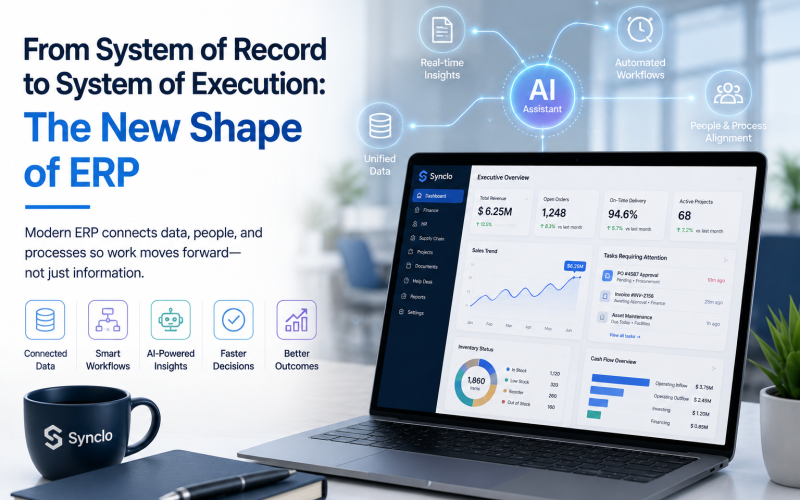
Connected platforms help businesses bring inventory, sales, service, finance, reporting, and operational workflows into one environment. This creates stronger visibility, faster decision-making, and better collaboration across departments.
Synclo supports this approach by helping automotive organizations connect operational workflows into a unified platform where information moves seamlessly between teams. Instead of relying on fragmented systems and manual processes, businesses gain the visibility and control needed to operate more efficiently.
The challenge facing automotive organizations is no longer whether technology exists. The challenge is ensuring that technology works together. Businesses that connect their operations successfully will be better positioned to improve efficiency, support growth, and deliver stronger customer experiences in the years ahead.
