


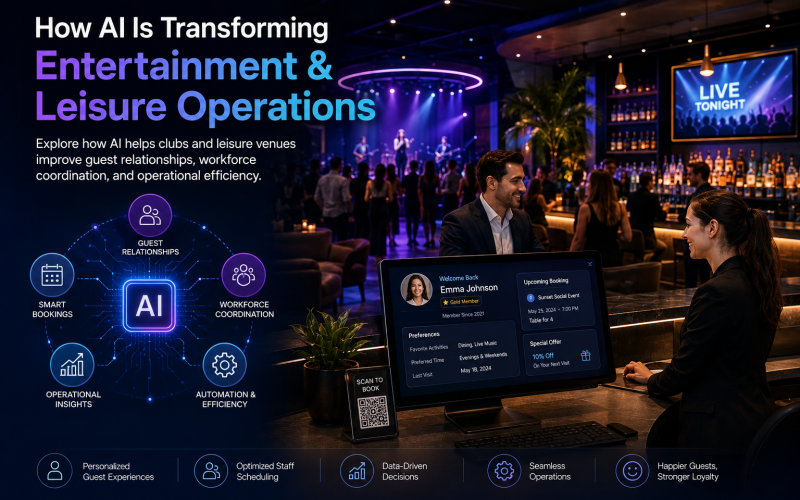
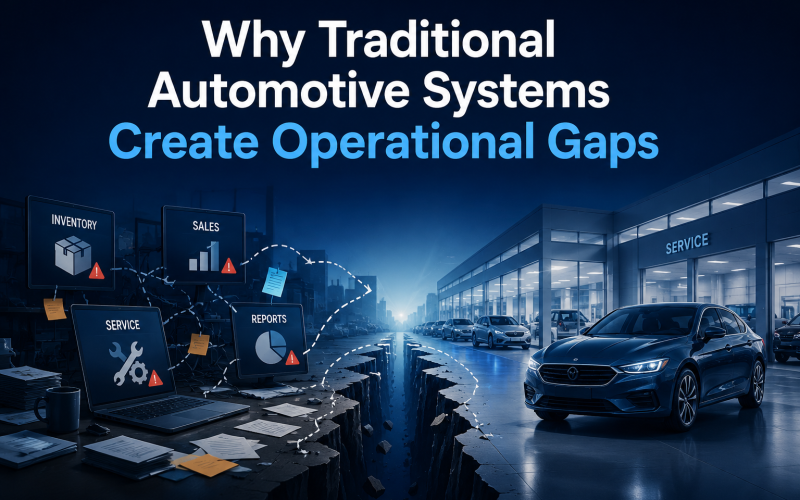

- Many clubs and leisure venues operate through disconnected systems for memberships, bookings, inventory, and finance
- Manual coordination reduces visibility and slows decision-making across departments
- Unified platforms help clubs improve operational control, member experiences, and business performance
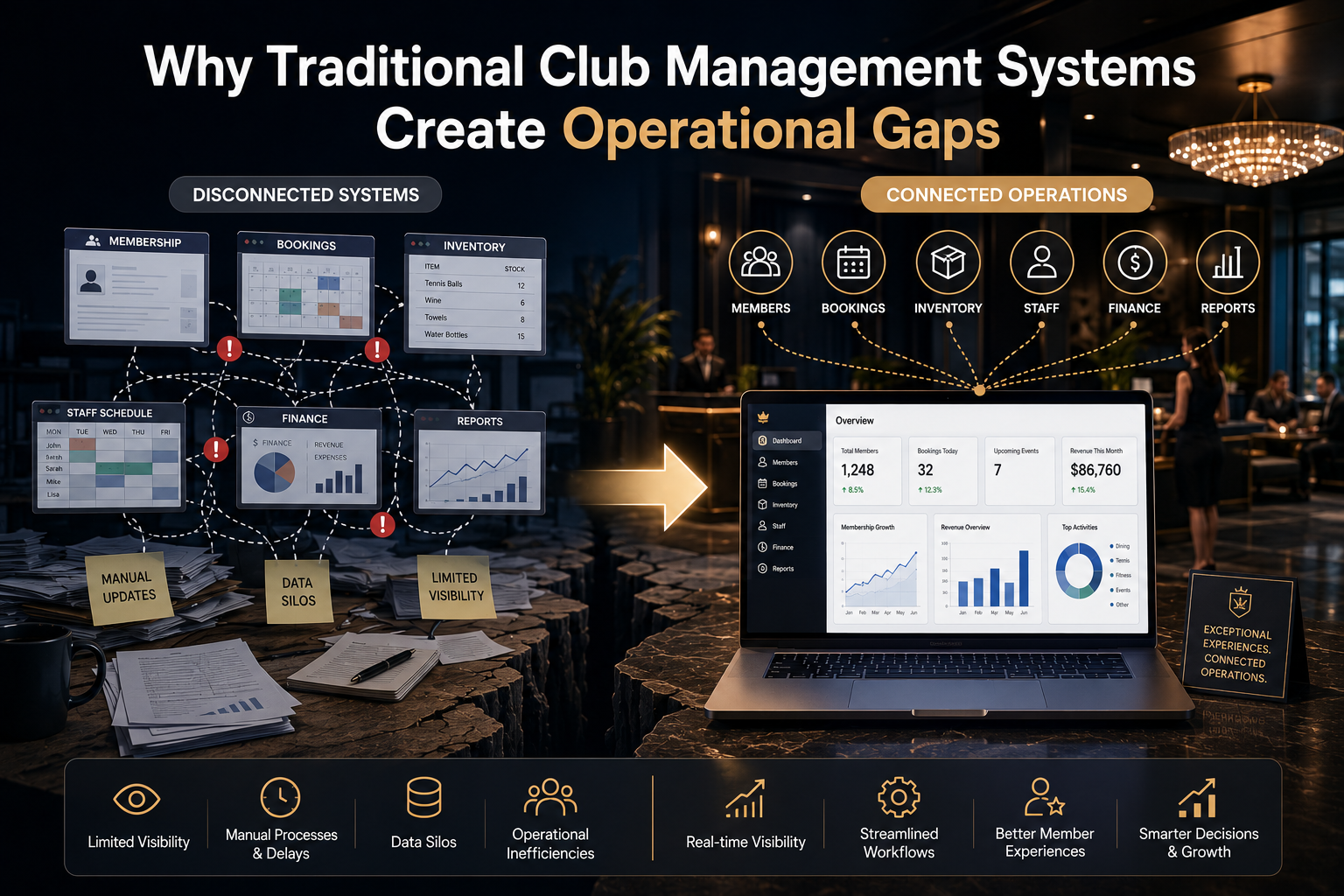
Clubs and leisure venues are designed to deliver exceptional experiences, but delivering those experiences consistently requires strong operational coordination behind the scenes. Membership management, event bookings, guest services, workforce scheduling, inventory tracking, facility operations, and financial management all need to work together every day. When these functions operate through separate systems, maintaining visibility becomes increasingly difficult.
Many clubs have gradually adopted technology over time, often adding systems to solve individual challenges rather than creating a connected operational environment. Membership records may exist in one platform, bookings in another, inventory in spreadsheets, and financial reporting somewhere else entirely. While each system may serve a useful purpose, the lack of integration between them creates operational gaps that affect efficiency and service quality.
The challenge is not a lack of technology. The challenge is that information often remains isolated inside different tools, forcing teams to spend time manually coordinating updates instead of focusing on members and guests. As clubs grow and operations become more complex, these gaps become increasingly visible.
Member Information Is Often Scattered Across Multiple Systems
A club’s most valuable asset is its relationship with members and guests. Understanding preferences, attendance patterns, booking history, spending activity, and engagement levels helps organizations deliver better experiences.
However, many clubs struggle because this information is stored across separate platforms. Membership details may not be connected to event attendance, dining activity, facility usage, or customer service interactions.
This often creates:
- Incomplete visibility into member activity
- Missed opportunities to improve guest experiences
- Difficulty personalizing communication and services
A connected platform such as Synclo helps clubs centralize operational data, allowing teams to build a more complete understanding of members and guests.
Manual Coordination Creates Service Delays
Club operations involve constant coordination between departments. Front desk teams manage member requests. Event coordinators handle bookings. Hospitality teams support dining and activities. Maintenance teams oversee facilities. Finance departments manage billing and reporting.
When departments rely on separate systems, staff often spend time manually confirming information with one another. Booking updates may require phone calls, inventory checks may require emails, and service requests may depend on verbal communication.
These delays affect both operational efficiency and guest satisfaction. What should be a simple process often becomes more complicated because information is not available where it is needed.
Inventory Visibility Is Often Limited
Many leisure venues manage food and beverage inventory, retail merchandise, event supplies, maintenance materials, and operational equipment. Accurate inventory management is essential for controlling costs and maintaining service quality.
Traditional club management environments often rely on manual inventory tracking or systems that are disconnected from purchasing and finance operations. As a result, teams may not have clear visibility into stock levels, usage trends, or purchasing requirements.
Modern clubs are increasingly investing in:
- Connected inventory management systems
- Real-time operational reporting
- Centralized purchasing workflows
The goal is to improve visibility and reduce inefficiencies caused by manual processes.
Financial Reporting Becomes More Complex
Club operations generate revenue from multiple sources. Membership fees, events, dining services, recreational activities, facility rentals, retail sales, and guest services all contribute to overall performance.
When operational systems are disconnected, financial reporting becomes difficult to manage. Data often needs to be gathered from multiple sources before meaningful reports can be produced. This increases administrative effort and reduces reporting accuracy.
A unified operational platform helps clubs connect financial information directly to day-to-day activities. This improves visibility into revenue performance while reducing the effort required to prepare reports.
Workforce Management Requires Better Coordination
Clubs often manage a diverse workforce that includes hospitality teams, event staff, customer service representatives, maintenance personnel, instructors, and administrative employees. Staffing requirements can change significantly depending on seasons, events, occupancy levels, and member activity.
Without connected workforce systems, managers may struggle to align staffing levels with operational demand. Scheduling decisions become reactive rather than proactive, which can affect both employee productivity and guest experiences.
Connected workforce management helps organizations improve planning by providing visibility into staffing requirements alongside operational activity.
Reporting Often Reflects Past Activity Instead of Current Conditions
Traditional reporting methods typically focus on historical performance. Managers review reports after events have taken place or after operational issues have already affected service delivery.
While historical analysis remains important, modern leisure businesses increasingly need visibility into current operations. Leaders need to understand what is happening now so they can make adjustments before problems affect members and guests.
Connected platforms provide real-time visibility across bookings, membership activity, staffing, inventory, events, and financial performance. This helps managers make faster and more informed decisions.
Operational Growth Requires Connected Systems
As clubs expand services, increase memberships, host more events, and operate across multiple facilities, operational complexity grows significantly. Managing these activities through disconnected tools becomes increasingly difficult.
A scalable club management platform helps organizations maintain control as operations grow. Teams need systems that connect memberships, bookings, inventory, workforce management, finance, and reporting into one operational environment.
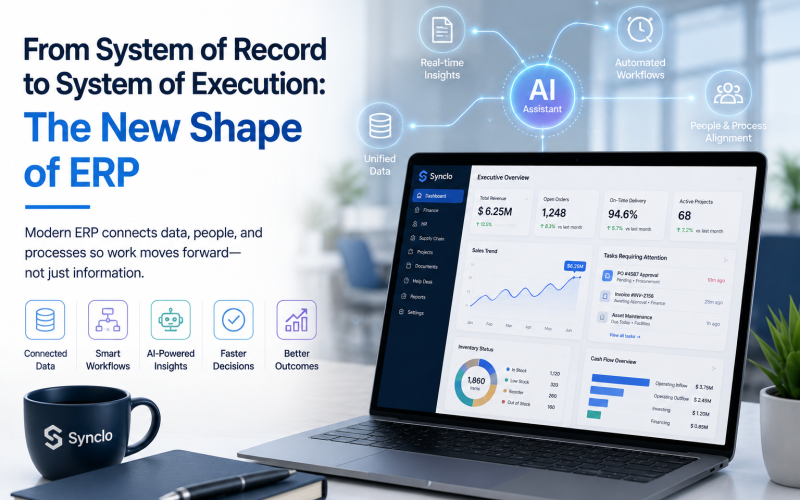
Synclo supports this approach by helping clubs bring operational workflows together into a unified platform where information flows seamlessly between departments. Instead of relying on manual coordination and fragmented systems, teams gain greater visibility into daily operations.
The future of successful club management depends on more than excellent facilities and guest services. It depends on how effectively organizations connect people, processes, and information. Clubs that close operational gaps through connected systems are better positioned to improve member experiences, increase efficiency, and support long-term growth.
