






- AI-generated applications are making résumé volume less useful as a measure of candidate quality.
- Technology employers need stronger signals from assessments, structured interviews, work samples, and verified skills.
- Synclo HireHub helps recruitment teams combine automation with human review across one controlled hiring process.

Technology companies once treated a large applicant pool as a sign of recruitment success. More applications created more choice, expanded access to talent, and increased the chance of finding a strong candidate. That assumption is becoming less reliable.
Modern recruitment tools make it easier for candidates to find vacancies, adjust résumés, prepare cover letters, and submit applications quickly. This improves access, but it also creates a new hiring problem. Recruiters receive more polished applications while gaining less certainty about the actual capability behind them.
A résumé may contain the right keywords, present every required skill, and match the job description closely. However, it may not explain whether the candidate can solve a technical problem, communicate with stakeholders, manage production incidents, or work effectively inside the company’s development process.
The recruitment challenge is changing. Technology employers no longer need only a faster way to process applications. They need a better way to identify reliable hiring signals before interview time is spent on the wrong candidates.
Application Volume Can Create False Confidence
A vacancy that receives hundreds of applications may appear to have a healthy talent pipeline. In reality, the number says little about how many applicants meet the actual requirements.
Many candidates apply broadly because digital platforms reduce the effort required for each submission. Others use the same résumé across several roles. AI tools can make applications appear highly relevant even when the candidate has limited experience with the work described.
Recruiters then face a crowded pipeline that contains several different groups:
- Candidates with strong role-specific capability
- Candidates with related experience who may be trainable
- Applicants who meet only the visible keyword requirements
- People applying to many unrelated roles
- Duplicate or incomplete submissions
- Candidates whose written application does not reflect their practical ability
The problem is not that application volume has no value. It can improve reach and introduce candidates who might otherwise remain unseen. The problem begins when volume is treated as quality.
A large pipeline without clear qualification signals increases screening work and delays contact with the candidates most worth meeting.
Résumés Are Becoming Easier to Optimize
Recruiters have always known that a résumé is a marketing document. Candidates choose what to include, how to describe their work, and which achievements to emphasize. AI has made this optimization faster and more accessible.
A candidate can now compare a résumé with a job description, identify missing terms, rewrite experience statements, and produce a polished application within minutes. This does not automatically make the application dishonest. It may help qualified people describe their experience more clearly.
However, it weakens the résumé as a standalone screening tool.
Two applications can look equally strong while representing very different levels of capability. One candidate may have completed the work independently. Another may have observed the process, contributed to a small part, or used the right language without understanding the underlying decisions.
Recruitment teams therefore need to separate presentation quality from job readiness.
Stronger Signals Come From Job-Relevant Evidence
A hiring signal is useful when it helps the employer predict whether a candidate can perform the work. Strong signals are connected to real responsibilities rather than general impressions.
For a software engineering role, useful evidence may include a practical coding task, code review discussion, architecture exercise, or explanation of a past technical decision. For an IT support position, the candidate may respond to a realistic troubleshooting scenario. A project manager may be asked to identify risks and create a recovery plan for a delayed implementation.
The purpose is not to make candidates complete unpaid project work. Assessments should remain focused, reasonable, and clearly related to the role.
Good evidence may include:
- Structured screening answers
- Role-specific work samples
- Technical assessments
- Portfolio or project reviews
- Scenario-based interviews
- Verified certifications
- Reference checks tied to defined responsibilities
A combination of signals is usually more reliable than one score or one interview.
Skills-Based Screening Needs Clear Definitions
Many organizations say they use skills-based hiring, but the term can remain vague. A job description may include a long list of tools, technologies, and personal qualities without explaining which capabilities are essential.
This creates weak screening because recruiters cannot distinguish between core requirements and preferences.
Technology employers should define skills in operational terms. Instead of asking for “strong cloud experience,” the role may require the ability to deploy applications, manage access, monitor service health, and respond to failures in a named environment.
Clear definitions help recruitment teams decide:
- Which skills are mandatory before hiring
- Which skills can be taught after joining
- What level of proficiency the role requires
- Which evidence can verify each capability
- Which responsibilities need deeper human assessment
This also produces fairer candidate evaluation because every applicant is reviewed against the same job-related standards.
AI Should Organize Evidence Rather Than Make the Final Decision
Artificial intelligence can help recruitment teams process large applicant pools. It can extract qualifications, summarize experience, categorize responses, identify missing information, and prepare structured candidate profiles.
This can reduce repetitive screening work, but the system should not become an unexplained rejection engine.
A candidate may use different terminology from the job description while still having relevant experience. Career changes, employment gaps, nontraditional education, and international backgrounds can also make profiles harder for rigid systems to interpret.
A controlled AI-assisted workflow can:
- Organize application information
- Compare evidence with defined requirements
- Flag incomplete or inconsistent records
- Summarize interview notes
- Recommend questions for human review
- Keep the same evaluation structure across candidates
Recruiters and hiring managers should remain responsible for decisions that affect progression, rejection, offers, and final selection.
The technology should make evidence easier to review, not hide the reasoning behind a score.
Structured Interviews Protect Hiring Quality
Unstructured interviews often depend too heavily on personal chemistry. One interviewer focuses on technical depth, another discusses career history, and a third relies on general impressions.
The company then compares feedback that was produced through different conversations.
Structured interviews improve consistency by giving candidates the same core questions and evaluation areas. Interviewers can still ask relevant follow-up questions, but each candidate is assessed against the same role requirements.
For an IT role, the interview may examine:
- Technical problem solving
- Communication during incidents
- Prioritization under pressure
- Collaboration with nontechnical teams
- Security and data awareness
- Ability to learn unfamiliar systems
Interview feedback should be recorded before panel members influence one another. This creates a clearer record and reduces decisions based on the strongest voice in the meeting.
Candidate Experience Still Matters
Better screening should not create a longer or more exhausting application process. Technology companies can damage their employer reputation by asking every applicant to complete several assessments before a recruiter has reviewed basic eligibility.
The process should match the hiring stage.
Initial applications should remain simple. Short screening questions can confirm essential requirements. Practical assessments should be reserved for candidates with a realistic chance of progressing. Interview stages should have a clear purpose and avoid repeating the same questions.
Candidates should understand:
- What each stage involves
- How long it is expected to take
- What the company is evaluating
- Whether AI is part of the process
- When they should expect an update
- Who makes the final decision
Clear communication improves trust, even when the candidate is not selected.
Hiring Teams Need One Evidence Trail
Recruitment decisions often involve recruiters, technical leads, department managers, executives, and HR. When each person records feedback in a different place, the final decision becomes difficult to review.
A résumé may sit in the applicant tracking system. Assessment results remain in another platform. Interview notes are stored in documents. Approvals move through email, while final offer details are managed separately.
This fragmentation creates delays and weakens accountability.
A connected recruitment system should keep the candidate’s application, screening evidence, assessments, interviews, feedback, approvals, and communication history in one record. Each decision should show who made it, which evidence was reviewed, and what action follows.
This is especially important when the business hires similar technical roles frequently. Past hiring records can show which assessments are useful, where candidates drop out, and which stages consume time without improving selection.
How Synclo HireHub Supports Better Hiring Signals
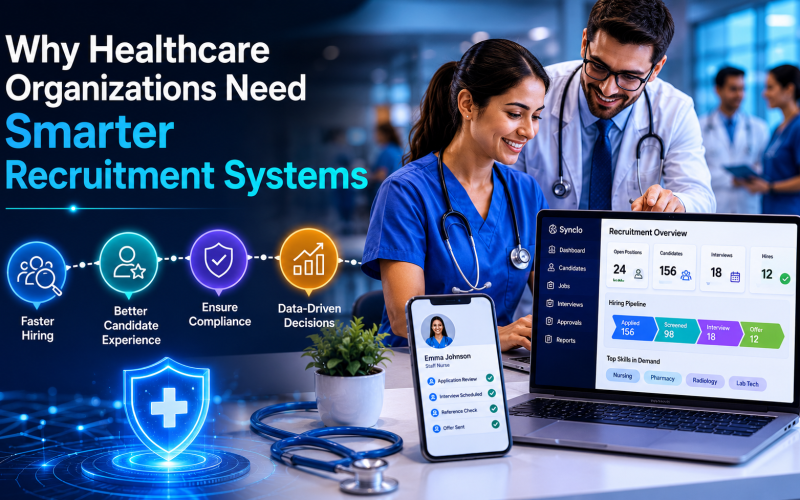
Synclo HireHub helps recruitment teams manage vacancies, candidates, screening, interviews, feedback, approvals, and hiring stages through one connected platform.
Recruiters can define structured requirements for each role and maintain a clear candidate journey from application to final decision. Hiring managers gain access to the relevant evidence without searching across spreadsheets, email threads, and separate assessment records.
The system can support automated screening and workflow movement while keeping human review inside the process. Teams can compare candidates against consistent criteria, record interview feedback, track pending decisions, and identify where qualified applicants are becoming delayed.
Because HireHub connects with broader HR operations, the selected candidate can move into onboarding and employee management without rebuilding the same information in another system.
Recruitment Quality Depends on Better Evidence
Technology companies do not need fewer applicants simply for the sake of reducing workload. They need a recruitment process that can distinguish useful signals from polished noise.
Résumé screening will remain part of hiring, but it cannot carry the full decision. Employers need role-specific evidence, structured evaluation, clear skill definitions, and responsible use of automation.
The strongest recruitment systems will not be the ones that reject candidates fastest. They will be the ones that help hiring teams understand who can perform the work, who can grow into it, and which evidence supports that conclusion.
Application volume may fill the pipeline. Hiring signal determines whether the pipeline produces the right people.
