




- Temperature readings alone cannot explain product condition, shipment history, ownership, or the response to an excursion.
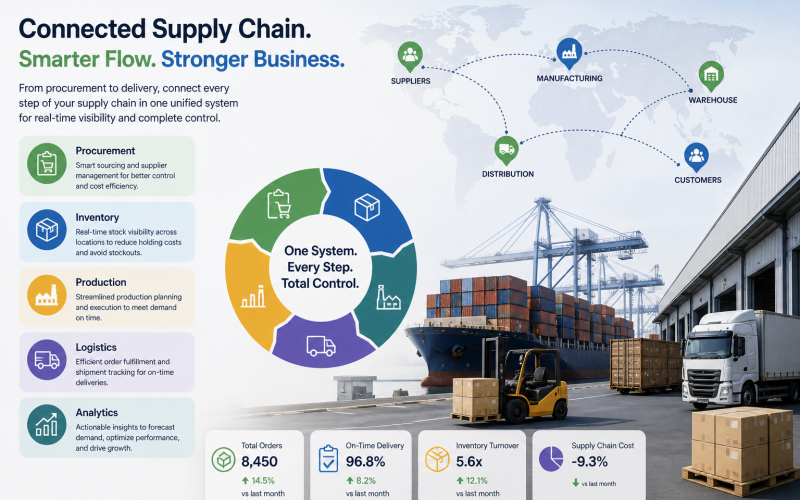
- Connected cold chain management links inventory, transport, quality events, suppliers, and documentation in one operational record.
- Synclo helps pharmaceutical teams detect exceptions earlier and manage each response through controlled workflows.
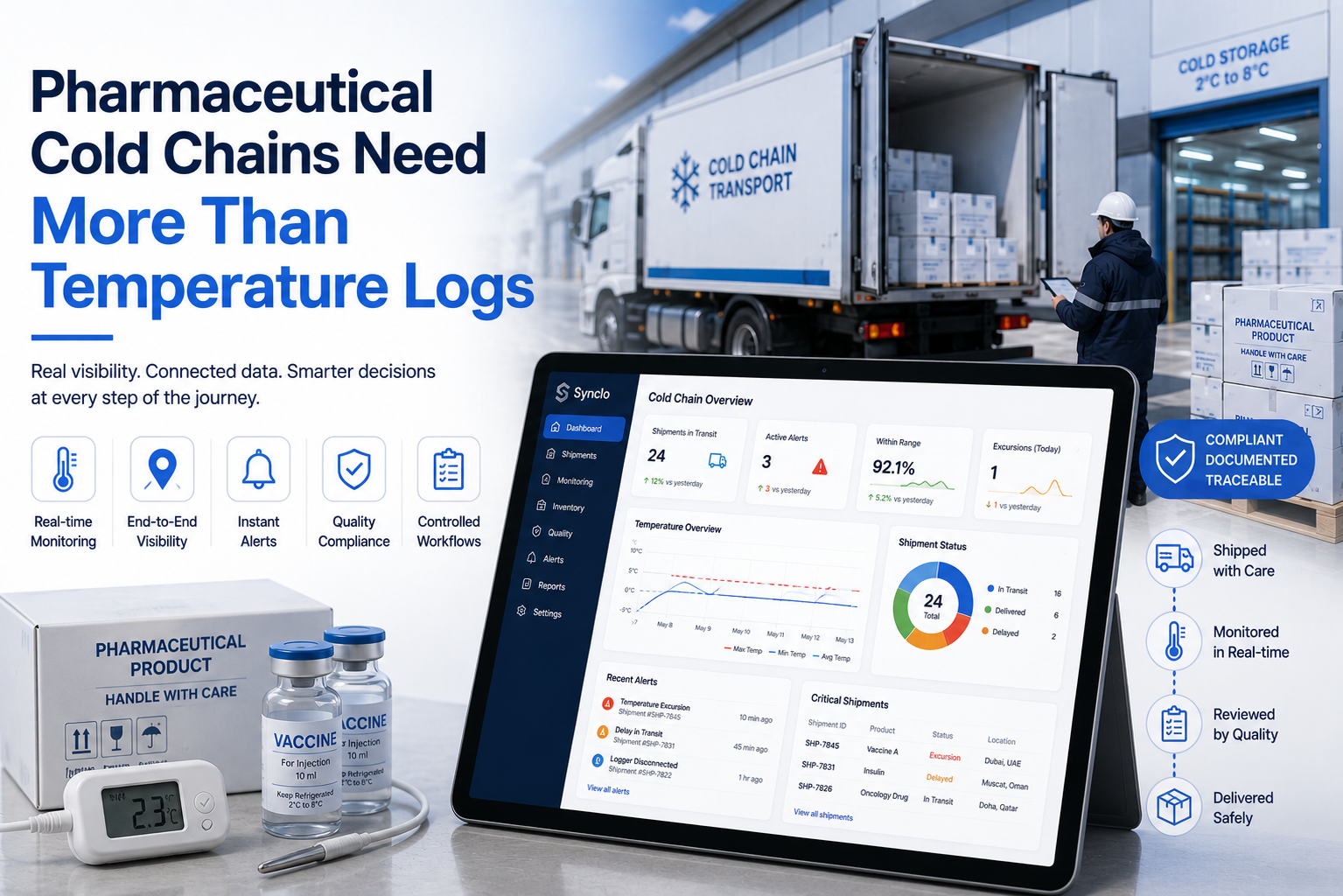
Temperature control is one of the most visible parts of pharmaceutical distribution. Refrigerated vehicles, insulated packaging, data loggers, cold rooms, and monitoring devices all help organizations protect sensitive products during storage and transport. However, a temperature record by itself does not provide complete cold chain visibility.
A shipment can remain within its expected temperature range and still face operational risk. It may arrive late, remain at an uncontrolled handoff point, move through an unapproved carrier, or reach the wrong facility. Conversely, a brief temperature excursion does not automatically explain whether a product must be rejected. Quality teams still need shipment context, product requirements, excursion duration, packaging data, and documented review.
This is why pharmaceutical cold chain management is moving beyond basic temperature logging. Businesses need connected systems that explain what happened, where it happened, who was responsible, which inventory was affected, and what action followed.
A Temperature Reading Is Only One Part of the Record
Traditional cold chain monitoring often produces a chart at the end of a shipment. The receiving team downloads the file, checks the temperature range, and stores the report with the delivery documents. This process creates evidence, but it often happens after the shipment has already reached its destination.
The record may confirm that an excursion occurred, yet it may not answer several operational questions. Teams still need to determine which batch was affected, when the issue began, whether the packaging remained intact, who controlled the shipment at that moment, and whether related deliveries face the same problem.
A complete cold chain record should connect:
- Product, batch, and expiry information
- Origin, destination, and planned route
- Carrier and vehicle details
- Packaging and monitoring-device information
- Handover times and responsible parties
- Temperature events and excursion duration
- Quality review, disposition, and corrective action
When this information remains in separate files, quality teams spend time rebuilding the shipment history before they can make a decision.
Cold Chain Risk Often Appears During Handoffs
Pharmaceutical distribution involves several handoffs. Products may move from a manufacturing facility to a warehouse, from a warehouse to a logistics provider, through an airport or cross-docking facility, and finally to a distributor, hospital, pharmacy, or clinic.
Each handoff creates a period where responsibility can become unclear. A shipment may wait longer than expected at a loading bay. A carrier may change vehicles without updating the record. A delivery may arrive outside receiving hours and remain in a temporary storage area.
Temperature monitoring may capture the environmental change, but it does not automatically explain the operational cause.
Connected supply chain management gives teams a time-based view of each movement and handoff. Therefore, when an issue occurs, the organization can identify the responsible stage instead of relying on calls, emails, and separate carrier reports.
Clear handoff records also make accountability more practical. Businesses can review repeated delays by route, facility, carrier, or supplier and address patterns before they affect more shipments.
Excursion Management Needs a Workflow
A temperature excursion is not simply a notification. It begins a controlled review process.
When monitoring systems operate separately from quality and inventory workflows, alerts may reach the wrong person or remain inside a device portal. Employees then coordinate the response through messages and spreadsheets. One team may quarantine the stock, while another continues to see it as available inventory.
A structured excursion workflow should begin as soon as the event is detected. The system can identify the shipment, affected batch, current location, and responsible team before creating the required quality task.
The response may involve:
- Placing affected inventory on hold
- Notifying quality and supply chain teams
- Collecting logger, route, and packaging data
- Recording the initial investigation
- Requesting information from the carrier
- Approving release, rejection, or further review
- Recording corrective and preventive action
The final product decision must remain with authorized quality personnel. However, automation can ensure that the right information and tasks reach them without delay.
Inventory Status Must Reflect Quality Status
One of the most serious system gaps appears when warehouse inventory and quality records do not update together.
A shipment may physically arrive at a warehouse and immediately increase the available stock quantity. Later, the receiving team may discover a damaged package, missing logger, or temperature deviation. Unless the inventory status changes quickly, another department could allocate the product to an order.
Pharmaceutical inventory needs more detail than received or dispatched. Teams must distinguish between stock that is physically present and stock that is approved for use or distribution.
Useful inventory states may include:
- In transit
- Received and pending inspection
- Quarantined
- Under quality review
- Released
- Rejected
- Returned
- Scheduled for disposal
These statuses help sales, warehouse, procurement, and quality teams work from the same operational position. A product can remain visible in the system without appearing available for fulfillment.
Real-Time Alerts Need Business Context
Real-time monitoring is useful only when alerts lead to the right response. Too many alerts create noise, while vague alerts force employees to investigate every event from the beginning.
A useful notification should provide context. It should identify the product, shipment, location, current custodian, severity, duration, and immediate action required. It should also distinguish between an early warning and a confirmed excursion.
For example, a gradual temperature movement may justify checking a vehicle or refrigeration unit before the limit is crossed. A route delay may raise the risk of packaging performance becoming insufficient later in the journey.
This approach allows teams to respond before a condition becomes a larger quality event. It also reduces unnecessary escalation because employees can see why the alert was created and what the system expects them to review.
Carrier Performance Requires More Than On-Time Delivery
Pharmaceutical logistics providers should not be measured only by delivery time and price. Businesses also need to understand how reliably each provider protects product quality and maintains records.
A carrier may deliver on schedule while producing incomplete handoff documentation. Another may experience repeated short excursions on the same route. A third may respond slowly when quality teams request investigation data.
Connected supply chain records allow organizations to review carrier performance through several measures:
- Excursion frequency by route
- Response time after an incident
- Completeness of delivery records
- Repeated handoff or loading delays
- Packaging or equipment failures
- Corrective action completion
This gives procurement teams better information during contract reviews. It also helps quality teams identify whether an event was isolated or part of a recurring pattern.
Documentation Should Be Created During the Process
Cold chain documentation often becomes difficult because teams prepare it after the work is complete. Employees search for logger reports, delivery receipts, emails, inspection forms, and approval records before an audit or customer review.
A connected system creates the record as the shipment moves. Events, approvals, attachments, status changes, and user actions remain linked to the same transaction.
This supports a clearer audit trail because the organization can show:
- What happened
- When it happened
- Who reviewed it
- Which information supported the decision
- What action was approved
- Whether follow-up work was completed
The purpose is not simply to produce more documents. It is to make each decision traceable without rebuilding the full history later.
How Synclo Supports Connected Cold Chain Operations
Synclo Supply Chain connects inventory, purchasing, suppliers, warehouses, transport activity, documents, approvals, and reporting within one operational environment.
Pharmaceutical teams can maintain shipment and batch context while managing quality-related exceptions through structured tasks and approvals. Inventory status can reflect quarantine or review conditions, while documents and communication remain connected to the relevant shipment record.
Managers can also review open exceptions, delayed deliveries, supplier activity, and affected inventory without collecting information from separate files. Meanwhile, automated notifications help the correct teams respond when a shipment misses a milestone or requires review.
Synclo does not replace qualified quality decisions or validated monitoring equipment. Instead, it connects the operational information surrounding those decisions so teams can respond with better context and stronger control.
Cold Chain Visibility Is an Operational Discipline
Reliable pharmaceutical distribution depends on more than maintaining a temperature range. It depends on controlled handoffs, accurate inventory status, current documentation, clear ownership, and a structured response when conditions change.
Temperature logs remain essential, but they should form part of a wider operational record. When monitoring, inventory, carriers, quality workflows, and documents remain disconnected, teams see only fragments of the shipment journey.
Connected cold chain management turns those fragments into one traceable process. This helps organizations detect risk earlier, investigate incidents faster, protect inventory from incorrect allocation, and maintain stronger records across every distribution stage.
The next step in cold chain management is not simply collecting more sensor data. It is connecting that data to the people, products, decisions, and workflows that determine what happens next.
