






- Nonprofit inventory should be managed according to program demand, funding restrictions, location, condition, and distribution readiness.
- Connected stock records help organizations reduce shortages, avoid unusable donations, and maintain clearer accountability to donors and program teams.
- Synclo connects inventory, procurement, programs, finance, documents, and approvals so every item can be traced from receipt to distribution.
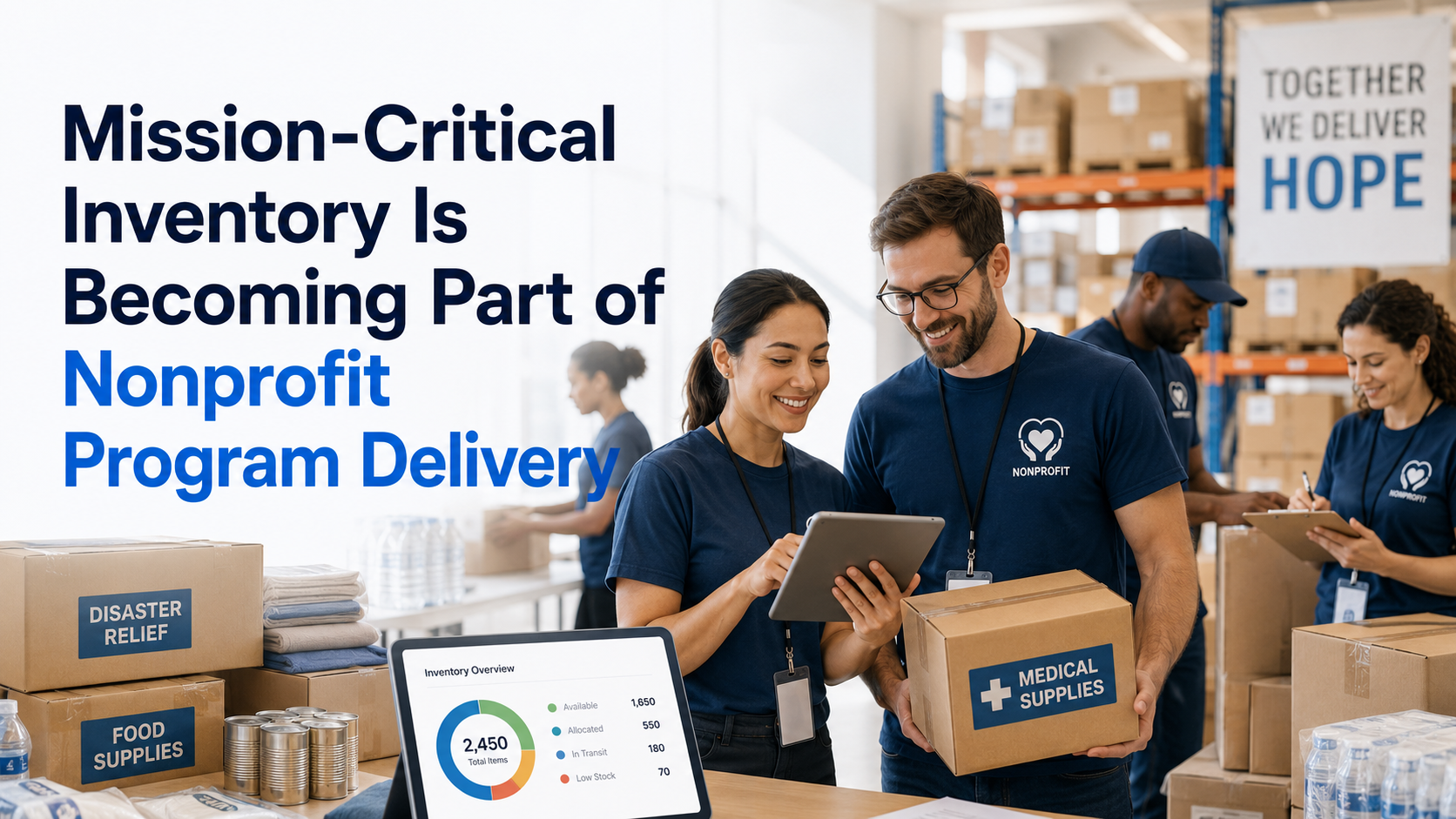
Nonprofit inventory is rarely ordinary stock. A box of food may support a family assistance program. A medical supply may be required by a remote clinic. A laptop may be allocated to a student initiative, while emergency kits may need to reach a disaster-affected area within hours.
The value of these items is not defined only by their purchase price. Their real value depends on whether they are available in the correct location, condition, quantity, and time for the program that needs them.
This makes nonprofit inventory management fundamentally different from simply counting products inside a warehouse. Organizations must connect donations, purchases, funding restrictions, program plans, expiry dates, warehouses, field locations, and distribution records. Humanitarian logistics also depends on the coordinated movement of materials, information, and funding between donors, organizations, governments, logistics providers, and beneficiaries.
When these records remain in spreadsheets, paper forms, and separate departmental systems, teams lose visibility. One location may experience a shortage while another holds unused stock. Donated items may arrive without a clear program requirement. Finance may know how much was spent but not where the goods were distributed.
Inventory then becomes an administrative burden instead of a reliable part of program execution.
Stock Availability Does Not Always Mean Program Readiness
A nonprofit may record thousands of items in stock while still being unable to meet an active program need.
Some products may be reserved for a specific grant. Others may be damaged, expired, awaiting inspection, or stored too far from the required distribution area. A donation may technically be available but unsuitable for the intended beneficiaries.
Therefore, inventory quantity alone is not enough.
Organizations need to understand the operational status of each item, including whether it is:
- Available for general distribution
- Restricted to a named donor or program
- Reserved for an upcoming activity
- Pending quality or condition checks
- In transit between locations
- Damaged, expired, or unsuitable
- Distributed and awaiting confirmation
This distinction prevents teams from promising resources that cannot actually be used.
A connected inventory system makes these conditions visible before program managers submit requests or confirm distribution plans.
In-Kind Donations Need the Same Control as Purchased Goods
Nonprofits frequently receive donated products, equipment, food, clothing, educational material, and medical supplies. These contributions can extend program reach, but they also create operational complexity.
A donation may arrive without advance notice. The quantity may not match current demand. Items may require specialist storage, inspection, transport, or documentation. Some goods may be close to expiry or unsuitable for the region where the organization operates.
Accepting every donation can create additional costs rather than additional value.
Before receiving in-kind contributions, organizations should ideally confirm:
- What is being donated
- The quantity and condition
- Expiry or useful-life information
- Storage requirements
- Intended program or beneficiary group
- Transport responsibility
- Estimated value and supporting documents
- Whether the organization can distribute the items effectively
Once accepted, donated goods should enter the same controlled inventory process as purchased stock. They need item records, locations, movement history, and distribution evidence.
This helps the organization demonstrate that the contribution was handled responsibly rather than disappearing into a general warehouse total.
Program Teams and Warehouse Teams Need One Demand View
Program managers understand beneficiary needs, while warehouse teams understand current availability and physical constraints. Problems begin when these teams plan separately.
A program team may request supplies based on expected participant numbers without checking existing stock. The warehouse may prepare a shipment without knowing that the program schedule has changed. Procurement may place a new order even though another location holds suitable excess inventory.
These gaps increase costs and delay delivery.
A connected demand process should link each stock request to:
- The program or project
- Required delivery date
- Beneficiary or participant volume
- Funding source
- Destination
- Requested items and quantities
- Approval status
- Current warehouse availability
The warehouse can then allocate available stock, recommend transfers, or identify the quantity that procurement must source.
This creates a clearer distinction between demand, allocation, purchasing, and distribution.
Location Visibility Matters as Much as Total Quantity
Nonprofits often operate through central warehouses, regional facilities, field offices, temporary distribution sites, and partner organizations. Humanitarian storage environments can range from long-term central warehouses to quick-rotation sites and temporary collection areas established during emergencies.
A system-wide stock total may show that enough inventory exists, but that information is not useful when the goods are far from the location where they are needed.
Teams need visibility by:
- Warehouse
- Field location
- Program site
- Partner organization
- Vehicle or shipment
- Temporary storage facility
- Reserved distribution batch
Location-level records help organizations decide whether to purchase more goods or transfer existing stock.
They also improve emergency response. Teams can identify which facility holds the required items and estimate how quickly they can reach the affected area.
Expiry and Condition Can Change the Meaning of Inventory
Food, medicine, hygiene products, and some technical materials have limited useful lives. Even durable goods can become unusable because of poor storage, damaged packaging, missing parts, or changing program standards.
A warehouse may appear well stocked while much of the inventory is approaching expiry.
Organizations need early visibility so items can be prioritized, transferred, or distributed before they lose value. Useful controls include:
- Expiry alerts
- First-expiring, first-out allocation
- Batch and lot tracking
- Condition checks at receipt
- Quarantine status for damaged items
- Scheduled inspections
- Disposal or return approvals
The goal is not only to prevent waste. It is to protect beneficiaries from receiving unsuitable goods and ensure that resources funded or donated for a program remain usable.
Distribution Records Complete the Accountability Chain
Inventory control should not stop when goods leave the warehouse.
Nonprofits must often explain where resources were sent, which program received them, who accepted them, and whether the delivery reached the intended location. This may be required for internal oversight, donor reporting, audits, or program evaluation.
A complete distribution record may include:
- Dispatch date
- Origin and destination
- Program and funding reference
- Items and quantities
- Transport details
- Receiving person or organization
- Proof of delivery
- Shortages, damage, or rejected items
- Final distribution confirmation
Traceability becomes particularly important when multiple organizations and transport stages are involved. Supply-chain traceability provides visibility into product location, processing history, and movement across upstream and downstream partners.
Without this record, the organization may know that stock left the warehouse but not whether it completed the intended mission.
Restricted Funding Must Follow the Inventory
Many nonprofit purchases are funded through grants or donations with specific conditions. Funds may be limited to one project, region, period, or category of expense.
The inventory purchased with those funds should retain the same context.
If grant-funded supplies are mixed into general stock without a clear reference, the organization may accidentally distribute them through an unrelated program. Finance then struggles to connect expenditure with actual usage.
Inventory records should identify:
- Funding source
- Grant or donor reference
- Approved program
- Purchase value
- Restricted location or purpose
- Distribution history
- Remaining balance and stock value
Connecting supply-chain and finance data gives both teams a consistent view. Program staff can see which resources are available, while finance can trace spending beyond the purchase order.
Inventory Accuracy Requires More Than an Annual Count
Annual physical counts are important, but they cannot correct months of missing transactions or unclear movements.
Inventory accuracy is built through daily controls. Every receipt, transfer, issue, return, adjustment, and disposal should update the official record when the activity occurs.
Barcodes, QR codes, and RFID-based identification can reduce manual recording and make it easier to track goods in warehouses and field environments. Mobile inventory tools are particularly useful when employees must record movement away from fixed workstations.
Regular cycle counts can also identify differences earlier. Instead of closing an entire warehouse for one large count, teams review selected items throughout the year and investigate discrepancies while the activity remains recent.
The system should treat unusual adjustments as exceptions requiring explanation rather than silent corrections.
Better Inventory Data Improves Program Planning
Inventory data becomes more valuable when organizations use it to improve future programs.
Teams can review:
- Items frequently requested but rarely available
- Donations that remain unused
- Products with repeated expiry losses
- Locations experiencing regular shortages
- Programs with large differences between requested and distributed quantities
- Suppliers associated with delays or quality problems
- Distribution routes with recurring shortages or damage
Humanitarian logistics data can support learning because it reflects supplier performance, transport timeliness, appropriateness of donated goods, and the overall effectiveness of response operations.
This information helps organizations plan better purchasing, donor campaigns, warehouse placement, and emergency stock.
Inventory reporting then becomes part of program improvement rather than a list of warehouse quantities.
How Synclo Supports Nonprofit Inventory Management
Synclo connects supply chain, procurement, finance, projects, documents, approvals, and reporting in one operational environment.
Nonprofit teams can record purchased and donated inventory, maintain location and status visibility, and connect each request or distribution with the relevant program and funding source. Warehouse teams can manage receipts, transfers, reservations, issues, and adjustments without relying on separate spreadsheets.
Program managers gain visibility into what is available before planning distribution. Procurement teams can identify shortages and review existing stock across locations before placing new orders. Finance can connect purchases and inventory value with grants, projects, and actual usage.
Documents such as donation records, delivery notes, inspection forms, and proof of receipt can remain attached to the relevant transaction. Managers can also review expiring stock, pending requests, delayed shipments, and unusual inventory adjustments through current reports.
This creates one traceable path from contribution or purchase to final distribution.
Inventory Becomes Valuable When It Reaches the Mission
Nonprofit organizations do not hold inventory to generate shelf availability or sales. They hold it so programs can support people, communities, and causes.
That purpose makes inventory control more important, not less.
Every unused donation occupies space. Every unrecorded transfer weakens accountability. Every stockout can delay a program, while every expired product represents resources that can no longer serve the mission.
A connected inventory system gives organizations a clearer view of what they have, where it is, what condition it is in, which funding rules apply, and who ultimately received it.
The strongest nonprofit supply chains do not simply move more goods. They move the right goods to the right program with evidence, control, and enough visibility to improve the next response.
