



- Modern ERP is evolving from a passive recordkeeping system into an active operating layer for daily work.
- Connected data, event based workflows, and AI support help teams respond without relying on spreadsheets and manual follow ups.
- Synclo connects business functions so information can move directly from operational activity to informed action.
Enterprise Resource Planning systems were built to create order. They gave businesses a structured place to record transactions, maintain employee information, track inventory, manage suppliers, process finance, and prepare reports. For decades, this was the main value of ERP. It created one reliable record of what had happened across the organization.
That role still matters, but it is no longer enough.
Businesses now operate at a speed that traditional recordkeeping systems were not designed to support. Customer expectations change quickly, teams work across several locations, suppliers update delivery schedules throughout the day, and operational decisions cannot wait for weekly reports. As a result, many companies have a formal system of record but still manage daily execution through spreadsheets, messages, emails, and informal workarounds.
The ERP contains the data, while the real work happens somewhere else.
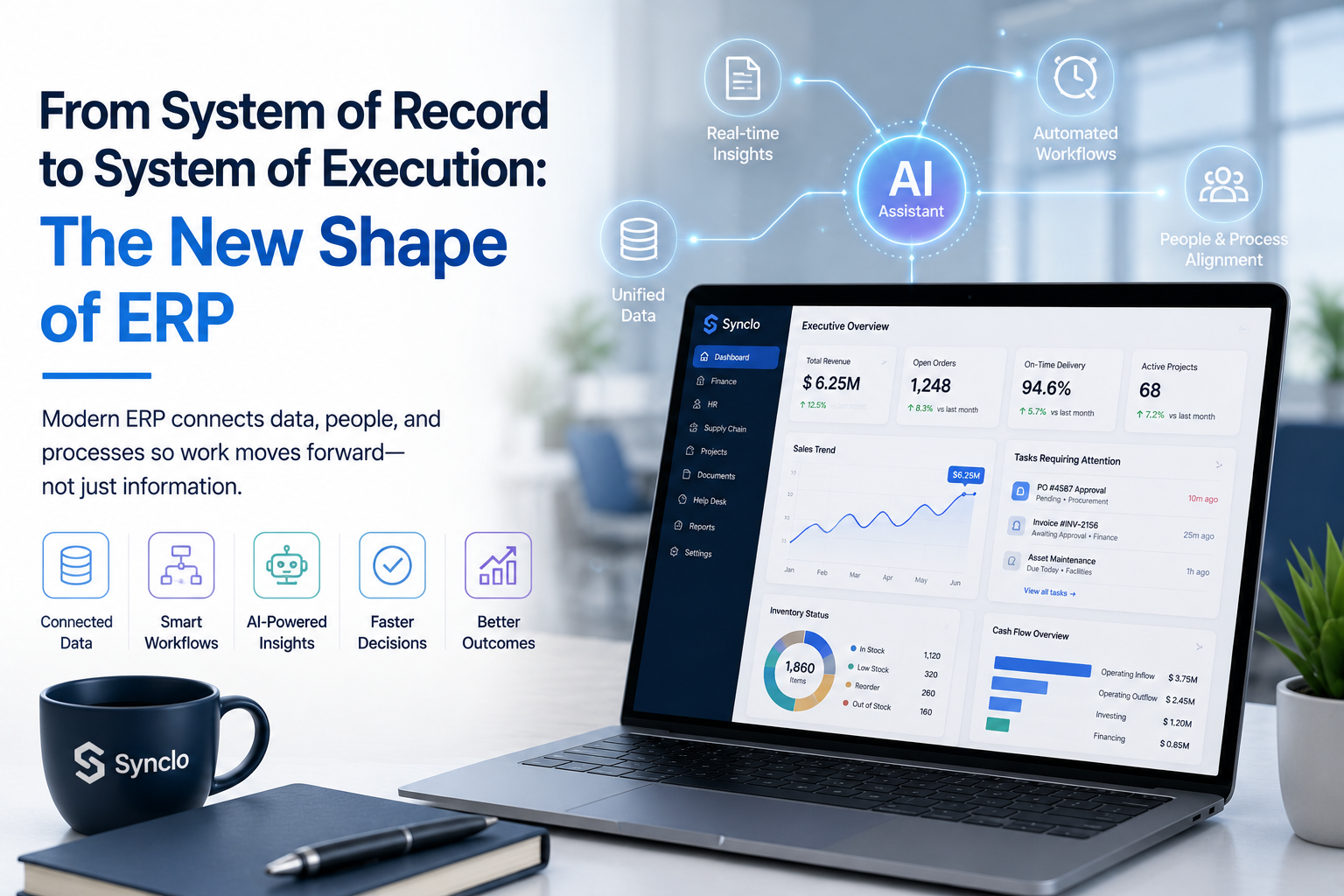
Modern ERP is starting to close this gap. The system is becoming more than a place where business activity is recorded. It is becoming a system of execution that helps people understand what requires attention, move work between departments, and complete actions within one connected environment.
The Gap Between Data and Daily Work
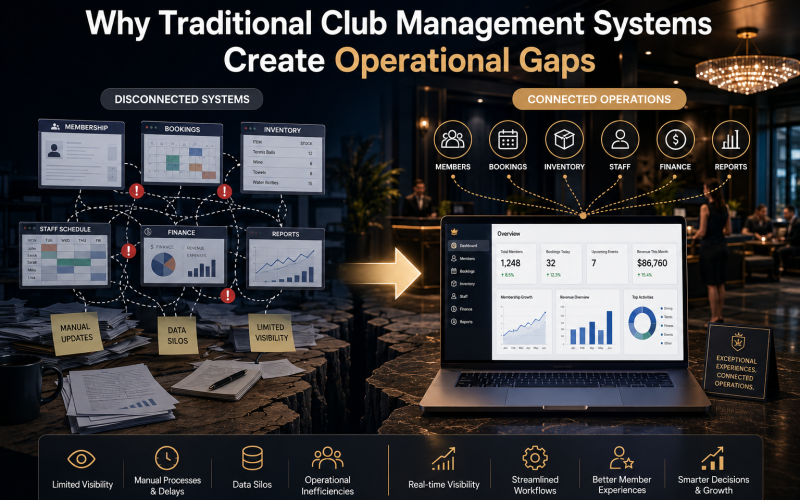
A traditional ERP can tell a procurement manager that a purchase order exists. It may not explain that the order is now likely to delay production. It can show an unpaid invoice, but it may not identify which approval is holding it back. It can record employee attendance, but it may not warn a project manager that tomorrow’s shift lacks a required skill.
This creates a gap between visibility and action.
Employees still need to interpret reports, contact other departments, find supporting documents, confirm responsibility, and decide what happens next. The system may hold accurate information, yet the business depends on human coordination to turn that information into work.
These gaps often produce familiar habits:
- Teams export reports into spreadsheets for further tracking
- Managers request updates through chat or email
- Employees copy the same information between several tools
- Approvals remain pending because ownership is unclear
- Problems are discovered after they affect customers or operations
None of these workarounds appear serious on their own. However, together they create an unofficial operating system outside the ERP.
Dashboards Do Not Complete the Work
Dashboards improved ERP by making data easier to understand. Managers could see current revenue, open orders, inventory levels, employee activity, and project status without reviewing long reports.
However, a dashboard still depends on someone noticing the issue and deciding what to do.
A manager may see that inventory has fallen below the expected level, but the system may not connect that shortage with open sales orders and supplier lead times. A finance dashboard may show overdue payments, but it may not identify the documents missing from each account. A project report may show delayed tasks without explaining which dependency caused the delay.
A system of execution adds the next step. It connects information with workflow.
Instead of only showing that stock is low, the platform can identify affected orders, review pending purchases, notify the responsible manager, and prepare a replenishment request. Instead of displaying an overdue approval, it can route the item to the correct person and record the response.
The purpose is not to remove management decisions. It is to reduce the administrative distance between seeing a problem and responding to it.
Enterprise Software Is Becoming Event Driven
Traditional ERP workflows often begin when a user opens a module and starts a task. Newer systems can begin work when an operational event occurs.
A supplier changes a delivery date. An employee submits a leave request. Inventory reaches a defined level. A project milestone is missed. A support ticket remains open beyond its response target. Each event can trigger a workflow without waiting for someone to search for it.
Event driven operations allow businesses to respond closer to the moment when conditions change.
For example:
- A supplier delay can notify procurement and update expected material availability
- A missed attendance entry can create a review task for HR
- A low stock event can prepare a replenishment request
- An overdue customer payment can trigger a follow up workflow
- A delayed project dependency can alert all affected task owners
This approach turns ERP into an active participant in business operations. Information does not simply remain in a database until the next reporting cycle.
AI Needs Business Context Before It Can Act
Artificial Intelligence can summarize information, identify unusual activity, and recommend actions. However, AI cannot support reliable business execution when the necessary context remains scattered across separate applications.
A useful AI system needs more than access to data. It needs to understand the relationship between that data.
An inventory shortage may be acceptable if no customer orders depend on the item. The same shortage becomes urgent when it affects a confirmed delivery. An expense increase may be normal for a growing department but unusual for a cost center with fixed activity. A project delay may require immediate action if it blocks several teams, while an isolated delay may have little impact.
Business context comes from connected records, permissions, rules, and workflows. This is where ERP remains important in an AI driven operating model. It provides the structure that allows the system to understand what the information means inside the organization.
Without that structure, AI may generate a useful observation but cannot safely support the next action.
SaaS Sprawl Creates Hidden Execution Costs
Cloud software made it easy for departments to adopt tools quickly. Sales selected a CRM, HR added workforce software, finance used accounting applications, and project teams introduced planning platforms. Each tool solved a specific problem, but the combined environment often created another problem: the business became divided across too many systems.
The cost of software sprawl is not limited to subscription fees. It also includes the time employees spend moving information between applications and correcting inconsistencies.
Common execution costs include:
- Duplicate records across departments
- Different approval rules in separate systems
- Manual transfers between finance and operations
- Conflicting reports based on different data
- Weak visibility across the full customer or employee journey
- More accounts, permissions, integrations, and security reviews
Adding an AI assistant to every application does not automatically solve this issue. It may create several intelligent tools that still operate with separate information.
The stronger approach is to connect operational context first, then apply AI across the shared workflows.
Human Oversight Remains Part of Execution
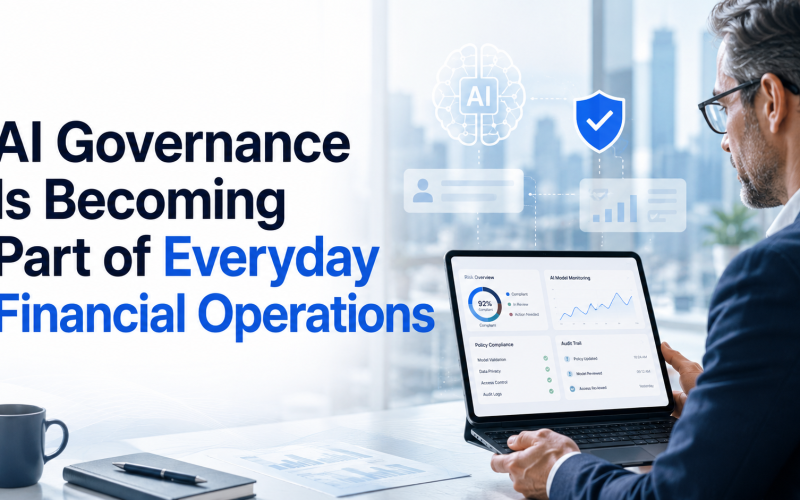
A system of execution should not act without limits. Businesses still need approval levels, access controls, audit histories, and clear responsibility.
Some tasks can move automatically because they follow stable rules. A routine reminder, status update, or low value approval may require little intervention. Other decisions need human judgment because they affect money, employees, customers, compliance, or business risk.
Modern ERP should make this distinction clear.
The system can gather information, identify an exception, recommend an action, and prepare the required workflow. A manager can then review the context and approve, modify, or reject the recommendation.
This creates controlled automation. The technology handles repeated coordination, while employees remain responsible for sensitive decisions.
The New ERP Experience Begins With Outcomes
Traditional software asks users to navigate modules. A manager opens inventory, searches for an item, checks open orders, reviews supplier records, and then creates a request.
A system of execution begins with the outcome.
The manager may ask which materials could delay production next week. The platform can review stock, planned usage, purchase orders, and supplier dates before presenting the relevant exceptions. From there, the manager can start the required action without repeating the search across several screens.
This does not mean menus and dashboards will disappear. They remain useful for detailed work. However, natural language requests, smart notifications, and guided workflows provide a faster path for employees who need an answer or action rather than a report.
The interface becomes less about where information is stored and more about what the user needs to accomplish.
How Synclo Supports the System of Execution
Synclo connects HR, finance, supply chain, projects, recruitment, learning, help desk, documents, and customer operations within one platform. This creates a shared operational environment where actions in one area can provide context to another.
An inventory update can inform procurement. A project delay can affect resource planning. An employee request can move through HR approval. A service issue can be assigned and tracked. Finance teams can review the operational activity behind each transaction.
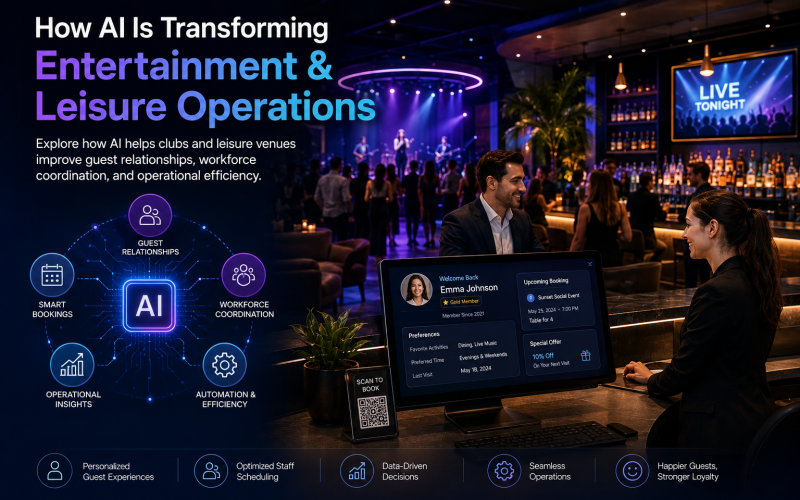
Alci adds an intelligent interaction layer across these connected workflows. Users can request information, review summaries, identify exceptions, and move routine tasks forward without navigating between disconnected applications.
The value comes from the connection between AI and operational data. Alci is not working beside the business system. It works within the structure of the business system, where permissions, records, and workflow history are already available.
ERP Is Becoming the Place Where Work Moves
The next phase of ERP will not be defined by larger dashboards or longer feature lists. It will be defined by how effectively the system turns business activity into coordinated action.
A modern ERP must still protect records, maintain controls, and support reporting. At the same time, it must help teams respond to change while the work is still happening.
Businesses should not need one platform to store information, another to discuss it, a spreadsheet to track it, and a series of emails to complete the process. The system should support the movement from event to decision and from decision to action.
That is the difference between a system of record and a system of execution.
The first explains what happened. The second helps the business decide what happens next.
