






- Aviation businesses generate massive amounts of operational data but often struggle to use it effectively
- Delays, scheduling conflicts, and communication gaps affect efficiency across daily operations
- AI helps aviation organizations improve coordination, visibility, and decision-making across the business
The aviation industry depends on precision. Every flight, crew assignment, maintenance schedule, passenger movement, and operational decision must happen at the right time and in the right sequence. Even small disruptions can create a chain reaction that affects schedules, resources, and customer experience across multiple locations.
As aviation operations become more complex, traditional management methods are finding it harder to keep pace. Airlines, airports, ground handling providers, cargo operators, and aviation service companies generate enormous amounts of operational data every day. However, much of that information remains spread across separate systems, making it difficult to gain a complete view of what is happening in real time.
Artificial Intelligence is changing that. Rather than replacing people, AI is helping aviation teams make faster decisions, identify operational risks earlier, and improve coordination across departments. The result is greater visibility, fewer delays, and more efficient daily operations.
Aviation Produces More Data Than Ever Before
Every aircraft movement generates information. Flight schedules, weather conditions, maintenance records, fuel consumption, baggage handling, passenger flow, cargo activity, crew schedules, and operational communications all contribute to a growing volume of data.
The challenge is not collecting this information. Most aviation businesses already have access to extensive operational data. The challenge is transforming that data into insights that teams can use while operations are still active.
Without intelligent analysis, valuable information often remains hidden inside reports, spreadsheets, and disconnected systems. Managers spend time gathering updates instead of focusing on decisions that improve performance.
This often leads to:
- Delayed responses to operational disruptions
- Limited visibility across departments
- Reactive decision-making instead of proactive planning
AI helps organizations process information faster and identify patterns that would be difficult to detect manually.
Predicting Delays Before They Affect Operations
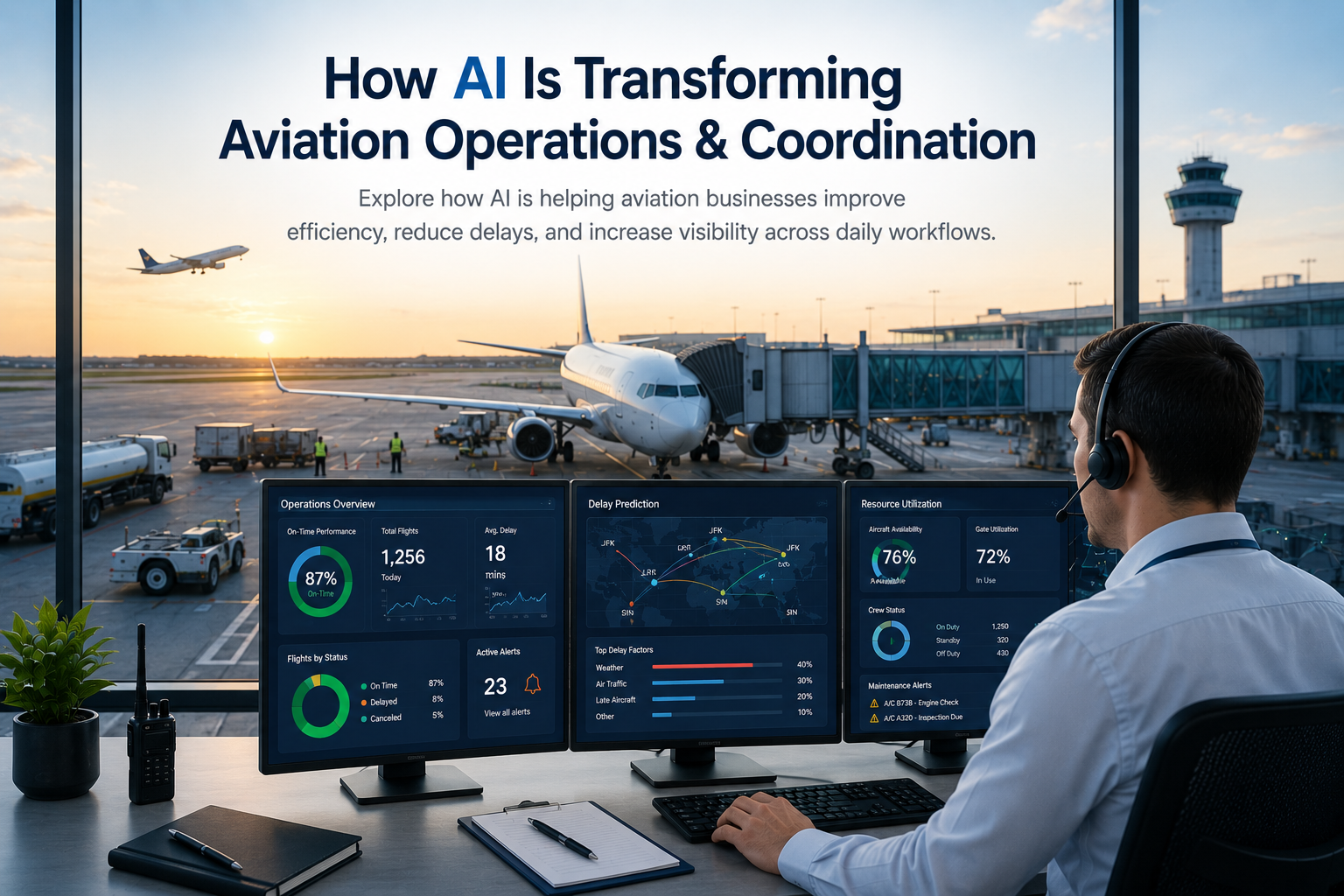
Flight delays rarely occur because of a single issue. They are usually the result of multiple operational factors working together. Weather conditions, aircraft availability, maintenance requirements, crew scheduling, gate allocation, and ground handling performance can all influence departure times.
Traditional monitoring systems often identify problems after delays have already begun affecting operations. AI changes this by analyzing multiple variables simultaneously and identifying potential disruptions earlier.
This allows operations teams to:
- Adjust schedules proactively
- Allocate resources more effectively
- Reduce disruption across connected workflows
The ability to anticipate problems before they escalate creates significant operational advantages, especially in busy aviation environments where timing is critical.
Improving Coordination Across Multiple Teams
Aviation operations depend on collaboration. Pilots, ground crews, maintenance teams, operations managers, security personnel, customer service teams, and airport staff all contribute to successful flight operations.
However, these teams often rely on different systems and communication channels. Information may move slowly between departments, creating visibility gaps that affect decision-making.
AI-supported operational platforms help improve coordination by bringing information together into a unified environment. Instead of searching across multiple systems, teams gain access to relevant insights from a central source.
Modern aviation businesses are increasingly investing in:
- AI-powered operational monitoring
- Intelligent workflow management
- Real-time coordination platforms
The goal is to create a connected operational environment where teams can respond faster and work from the same information.
Smarter Resource Allocation Creates Better Efficiency
Aircraft, gates, crews, vehicles, equipment, and facilities all represent valuable operational resources. Managing these assets efficiently is one of the biggest challenges in aviation.
When resource allocation depends heavily on manual planning, inefficiencies become difficult to avoid. Equipment may sit unused while other areas experience shortages. Staffing levels may not align with operational demand.
AI helps organizations analyze historical trends and current conditions to improve planning decisions. This allows aviation businesses to use resources more effectively while reducing operational waste.
A connected AI platform such as Synclo helps organizations bring operational workflows together, providing greater visibility into resource usage and operational performance.
Maintenance Planning Becomes More Predictable
Aircraft maintenance is one of the most important areas where AI is creating value. Maintenance schedules traditionally follow predefined intervals and inspection procedures. While these methods remain essential, AI introduces an additional layer of intelligence by analyzing operational data and identifying patterns that may indicate future issues.
This approach helps maintenance teams prioritize work more effectively and reduce unexpected disruptions.
Benefits often include:
- Better maintenance planning
- Improved aircraft availability
- Reduced operational interruptions
Rather than responding only when issues appear, teams gain the ability to plan maintenance activities with greater confidence.
Passenger Expectations Continue to Rise
Passengers expect reliable schedules, accurate information, and smooth travel experiences. Meeting these expectations requires more than efficient flight operations. It requires visibility across the entire customer journey.
AI helps aviation businesses improve passenger experience by supporting faster communication, more accurate forecasting, and better operational responsiveness. When disruptions occur, teams can respond more quickly because they have better access to information.
This improves customer confidence while helping organizations maintain service quality during periods of operational pressure.
The Future of Aviation Will Depend on Intelligent Operations
The aviation industry is becoming more connected, more data-driven, and more operationally complex. Organizations that rely solely on traditional management methods will find it increasingly difficult to maintain visibility across growing operations.
Artificial Intelligence provides a practical solution by helping teams analyze information faster, identify risks earlier, and improve coordination across departments. It supports better decisions without adding unnecessary complexity to daily operations.
Businesses that successfully combine aviation expertise with intelligent technology gain stronger operational control, better resource utilization, and greater visibility across the organization. As aviation continues to evolve, the ability to make faster and more informed decisions will become one of the industry’s most valuable advantages.
