





Improve efficiency, reduce delays, and enhance visibility across healthcare workflows
Healthcare systems today are under increasing pressure to deliver faster, more accurate, and more coordinated care. From patient admissions and diagnostics to treatment planning and administrative workflows, every step in the healthcare journey depends on efficient operations.
However, many healthcare organizations still rely on fragmented systems, manual processes, and delayed communication. This leads to inefficiencies, longer wait times, and limited visibility across workflows.
Artificial intelligence (AI) is changing this landscape.
By enabling smarter coordination, real-time insights, and automation, AI is transforming how healthcare operations are managed — improving both patient outcomes and operational efficiency.
The Complexity of Healthcare Operations
Healthcare is one of the most complex operational environments.
It involves coordination across:
- Clinical teams
- Administrative staff
- Laboratories and diagnostics
- Billing and finance
- Supply and inventory management
Each function generates data, and each depends on accurate, timely information.
When systems are disconnected, this complexity increases. Information gaps lead to delays, miscommunication, and inefficiencies that directly impact patient care.
This is why improving coordination is not just an operational priority — it is a clinical necessity.
Breaking Down Silos in Healthcare Systems
One of the biggest challenges in healthcare operations is fragmentation.
Different departments often use separate systems that do not communicate effectively. For example:
- Patient records in one system
- Scheduling in another
- Billing and insurance in a third
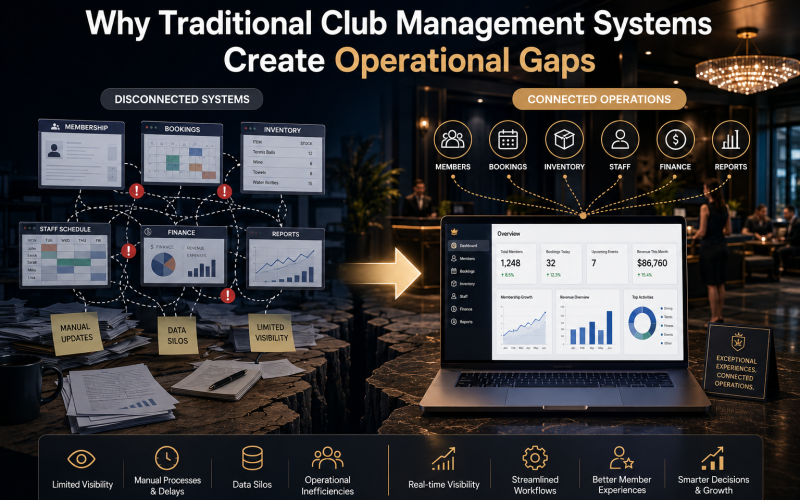
This lack of integration creates silos that slow down workflows and reduce visibility.
AI-driven systems are helping break down these silos by connecting data across departments and enabling seamless information flow.
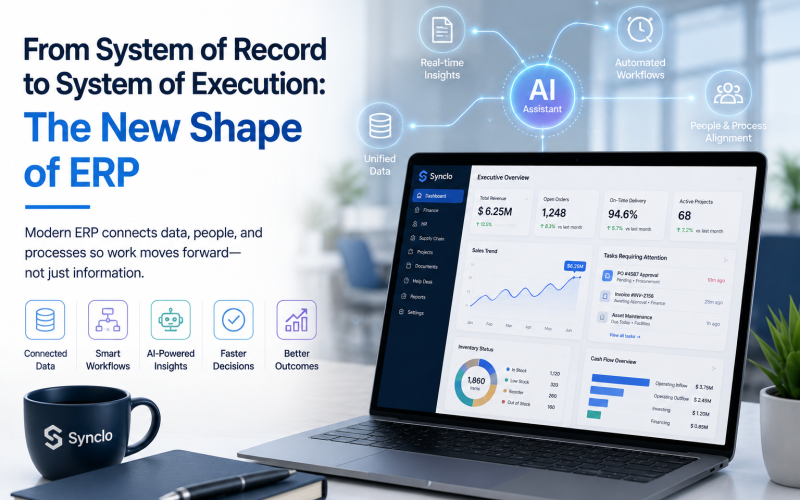
Modern platforms like Synclo are designed to support this level of integration, bringing operational workflows, data, and coordination into a unified environment where teams can work with the same information in real time.
Real-Time Visibility Across Workflows
In healthcare, timing is critical.
Delays in accessing information can affect diagnoses, treatment decisions, and patient outcomes.
AI enables real-time visibility by continuously processing and updating data across systems. This allows healthcare providers to:
- Track patient journeys in real time
- Monitor workflow progress across departments
- Identify bottlenecks quickly
- Make faster, informed decisions
Systems such as Synclo help centralize this visibility, ensuring that all stakeholders have access to accurate and up-to-date information without relying on multiple disconnected tools.
Reducing Administrative Burden Through Automation
Administrative tasks consume a significant portion of healthcare resources.
From appointment scheduling and patient registration to billing and documentation, these processes are often repetitive and time-consuming.
AI can automate many of these tasks, including:
- Appointment scheduling and reminders
- Data entry and record management
- Billing and claims processing
- Workflow approvals
This reduces manual effort and allows healthcare professionals to focus more on patient care.
Platforms like Synclo support this by streamlining administrative workflows and reducing the need for manual coordination across systems.
Enhancing Coordination Between Teams
Effective healthcare delivery requires seamless collaboration between multiple teams.
AI improves coordination by:
- Sharing information across departments in real time
- Providing alerts and notifications for critical updates
- Aligning workflows between clinical and administrative functions
For example, when a patient is admitted, AI-driven systems can automatically notify relevant departments, update schedules, and ensure that all necessary resources are prepared.
In integrated environments like Synclo, this coordination becomes more structured and reliable, reducing delays and improving overall efficiency.
Predictive Insights for Better Decision-Making
AI does not just process data — it analyzes it.
By identifying patterns and trends, AI can provide predictive insights that help healthcare organizations:
- Anticipate patient demand
- Optimize resource allocation
- Identify potential risks
- Improve operational planning
This allows healthcare providers to move from reactive to proactive management.
With centralized data systems such as Synclo, these insights become more actionable, as all relevant information is available within a single platform.
Improving Patient Experience
Operational efficiency directly impacts patient experience.
Delays, miscommunication, and lack of coordination can lead to frustration and reduced trust.
AI helps improve patient experience by:
- Reducing wait times
- Ensuring smoother transitions between departments
- Providing timely updates and communication
- Improving accuracy in records and billing
When workflows are streamlined and information is accessible, patients receive faster and more reliable care.
Systems like Synclo contribute to this by ensuring that operational processes support, rather than hinder, patient interactions.
Managing Resources More Effectively
Healthcare organizations must manage resources carefully, including:
- Staff availability
- Equipment usage
- Inventory and supplies
AI enables better resource management by:
- Tracking usage patterns
- Predicting demand
- Optimizing scheduling
- Reducing waste
This ensures that resources are used efficiently without compromising care quality.
Integrated platforms such as Synclo support this by aligning operational data with resource management, providing a clearer picture of how resources are utilized.
Challenges in Implementing AI in Healthcare
While AI offers significant benefits, its implementation comes with challenges:
- Ensuring data privacy and security
- Integrating with legacy systems
- Training staff to use new technologies
- Maintaining accuracy and reliability
Healthcare organizations must adopt AI carefully, ensuring that systems are secure, compliant, and user-friendly.
Human oversight remains essential to ensure that AI supports, rather than replaces, clinical judgment.
The Future of Healthcare Operations
The future of healthcare operations will be:
- Connected — systems working together seamlessly
- Intelligent — powered by AI-driven insights
- Efficient — reduced manual effort and delays
- Patient-centered — focused on improving outcomes and experience
AI will continue to play a central role in enabling this transformation.
As platforms evolve, healthcare operations will become more streamlined, predictable, and scalable.
Solutions like Synclo reflect this direction by bringing operational workflows, data, and coordination into one unified system, supporting a more connected approach to healthcare management.
Conclusion
Healthcare is undergoing a significant transformation.
AI is not just improving operations — it is redefining how healthcare systems function.
By breaking down silos, automating workflows, and providing real-time insights, AI is helping healthcare organizations improve efficiency, reduce delays, and enhance coordination across every stage of care.
Platforms like Synclo support this transformation by enabling a unified, structured approach to managing healthcare operations.
The result is not just better efficiency, but better care.
And in healthcare, that makes all the difference.
