



Efficient management keeps operations smooth, data accurate, and employee experiences aligned
Retail is evolving rapidly. Customer expectations are higher, competition is more intense, and operations are more complex than ever before. Today’s retailers must manage inventory efficiently, deliver seamless customer experiences, and ensure their teams have the tools they need to perform effectively.
However, traditional retail systems often struggle to keep up with these demands. Fragmented tools, manual processes, and limited visibility create inefficiencies that affect both operations and customer satisfaction.
Artificial intelligence (AI) is changing this landscape.
By enabling smarter inventory management and more personalized customer experiences, AI is helping retailers operate with greater efficiency, accuracy, and responsiveness.
The Complexity of Modern Retail Operations
Retail operations involve multiple interconnected functions, including:
- Inventory management
- Supply chain coordination
- Sales and customer interactions
- Workforce management
- Data analysis and reporting
Each of these functions generates data and depends on accurate, real-time information.
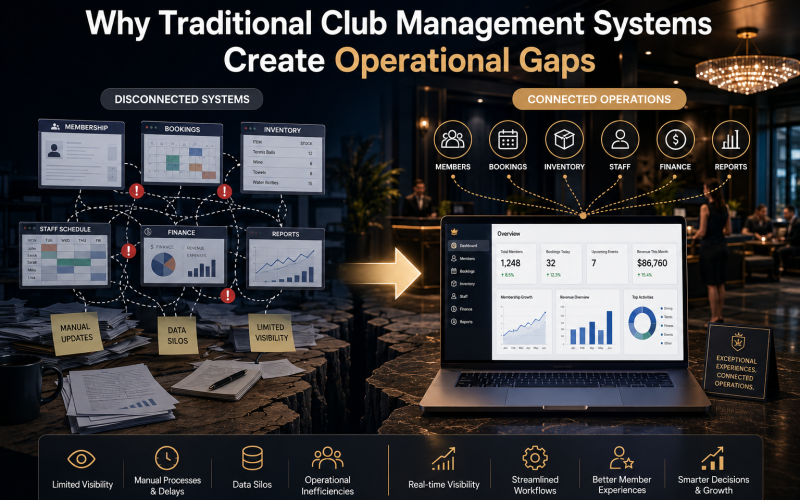
When systems are disconnected, this complexity increases. Retailers may face issues such as:
- Overstocking or stockouts
- Delayed inventory updates
- Inconsistent customer data
- Inefficient workflows
Efficient management is essential to keep operations smooth, data accurate, and employee experiences aligned.
The Role of AI in Inventory Management
Inventory management is one of the most critical aspects of retail operations.
Traditional methods often rely on historical data and manual processes, which can lead to inaccuracies and inefficiencies.
AI transforms inventory management by enabling:
- Demand forecasting based on real-time data and trends
- Automated stock replenishment
- Inventory optimization across locations
- Early detection of supply chain disruptions
This allows retailers to maintain the right stock levels, reduce waste, and respond quickly to changes in demand.
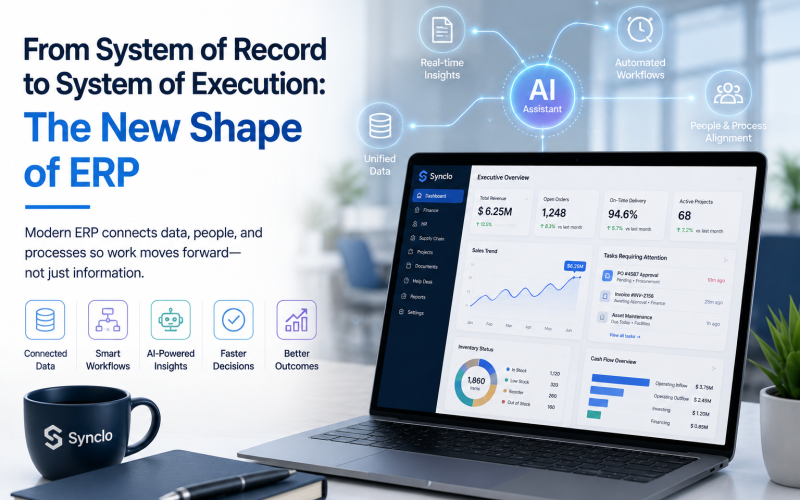
Platforms like Synclo support this approach by centralizing inventory data and enabling more structured and responsive management of stock and supply workflows.
Real-Time Visibility Across Inventory
One of the biggest challenges in retail is the lack of real-time visibility.
Without accurate, up-to-date information, retailers struggle to make informed decisions about stock levels, pricing, and promotions.
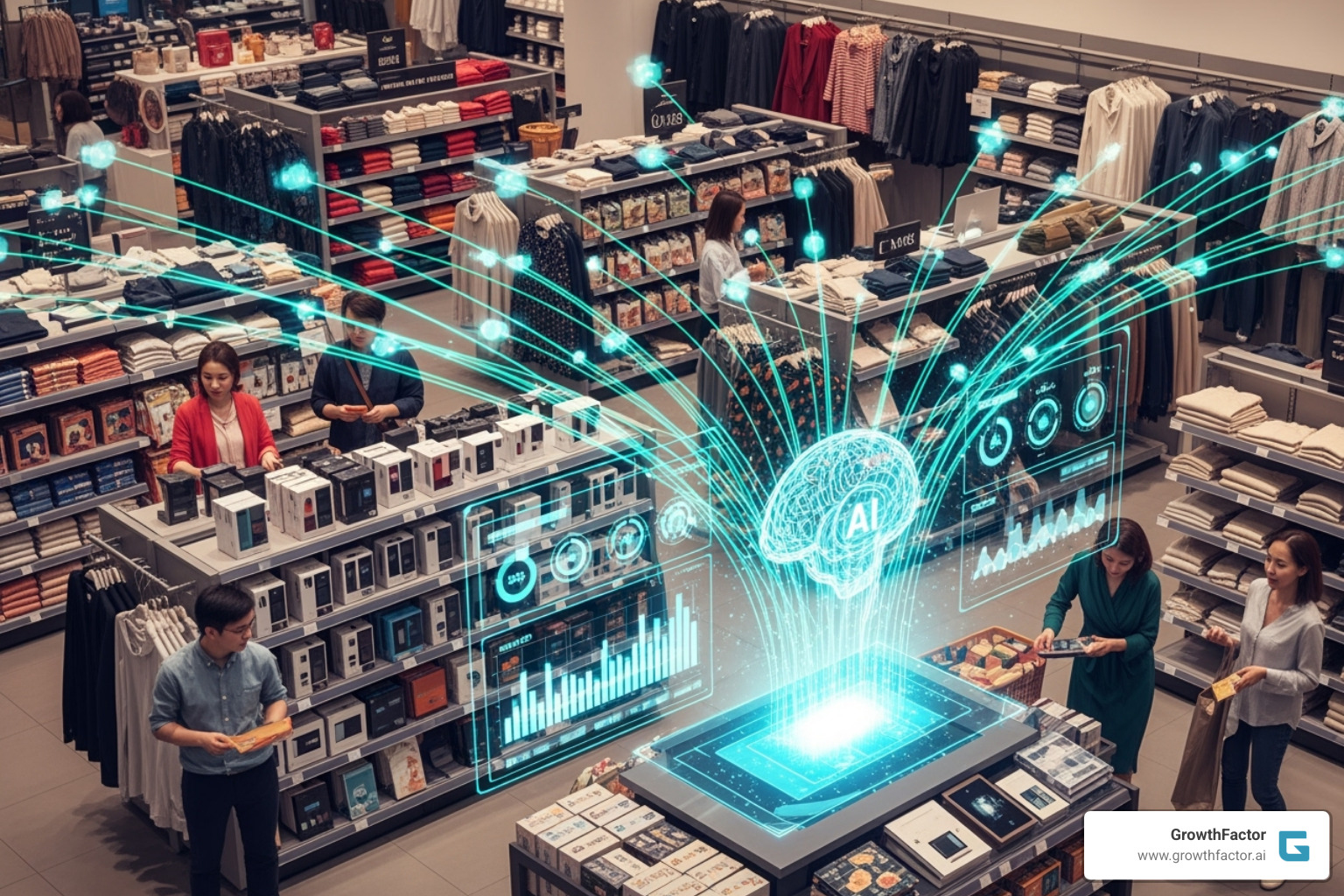
AI-powered systems provide real-time visibility by continuously tracking inventory across locations.
This enables retailers to:
- Monitor stock levels instantly
- Identify shortages or excess inventory
- Optimize distribution across stores and warehouses
With unified systems such as Synclo, inventory data is accessible in one place, allowing teams to operate with clarity and confidence.
Enhancing Customer Experience Through Personalization
Customer experience has become a key differentiator in retail.
Today’s customers expect:
- Personalized recommendations
- Seamless shopping experiences
- Fast and accurate service
AI enables retailers to meet these expectations by analyzing customer behavior and preferences.
This allows for:
- Personalized product recommendations
- Targeted promotions
- Improved customer engagement
By understanding customer needs in real time, retailers can create more meaningful interactions and build stronger relationships.
Systems like Synclo support this by connecting customer data with operational workflows, ensuring that insights translate into action.
Reducing Operational Inefficiencies
Retail operations often involve repetitive and manual tasks, such as:
- Stock updates
- Order processing
- Data entry
- Reporting
These tasks consume time and increase the risk of errors.
AI-driven automation reduces these inefficiencies by:
- Automating routine processes
- Ensuring data consistency
- Streamlining workflows
This allows employees to focus on higher-value tasks, such as customer service and strategic planning.
Platforms like Synclo integrate automation into daily operations, helping retailers reduce manual work and improve overall efficiency.
Aligning Inventory with Customer Demand
A major challenge in retail is aligning inventory with actual customer demand.
Overstocking leads to increased costs, while stockouts result in lost sales and dissatisfied customers.
AI helps address this challenge by:
- Predicting demand based on trends and patterns
- Adjusting inventory levels dynamically
- Identifying fast-moving and slow-moving products
This ensures that the right products are available at the right time.
With systems like Synclo, inventory management becomes more data-driven and aligned with customer behavior, improving both efficiency and customer satisfaction.
Improving Workforce Productivity
Retail employees play a crucial role in delivering customer experiences.
However, inefficient systems can hinder their productivity.
Common challenges include:
- Lack of access to real-time information
- Manual processes
- Disconnected tools
AI-enabled systems improve workforce productivity by:
- Providing real-time data access
- Automating routine tasks
- Streamlining communication
This allows employees to work more efficiently and focus on delivering better service.
Platforms like Synclo support this by creating a unified environment where employees can access the information and tools they need in one place.
Data-Driven Decision Making in Retail
Retail generates vast amounts of data, but traditional systems often fail to utilize it effectively.
AI enables retailers to turn data into actionable insights by:
- Identifying trends and patterns
- Forecasting demand
- Measuring performance
- Optimizing operations
This allows retailers to make informed decisions that improve both efficiency and profitability.
With centralized platforms such as Synclo, data from different functions is brought together, making it easier to analyze and act upon.
Challenges in Adopting AI in Retail
While AI offers significant benefits, retailers must address certain challenges:
- Ensuring data accuracy and quality
- Integrating with existing systems
- Training employees to use new technologies
- Maintaining data privacy and security
A thoughtful implementation strategy is essential to maximize the benefits of AI.
The Future of Retail Operations
The future of retail operations is defined by systems that are:
- Connected — integrating inventory, sales, and customer data
- Intelligent — powered by AI insights
- Efficient — minimizing manual effort and delays
- Customer-focused — delivering personalized experiences
AI will continue to play a central role in enabling this transformation.
Platforms like Synclo reflect this shift by bringing inventory management, customer insights, and operational workflows into one unified system.
Conclusion
AI is transforming retail by improving how inventory is managed and how customer experiences are delivered.
By enabling real-time visibility, automation, and data-driven decision-making, AI helps retailers operate more efficiently and respond more effectively to customer needs.
Efficient management ensures that operations remain smooth, data stays accurate, and employees are empowered to deliver better experiences.
Platforms like Synclo support this transformation by providing a connected and structured environment where retail operations can be managed with clarity and control.
The future of retail is not just about selling products — it is about creating intelligent, connected systems that deliver value at every step.
