




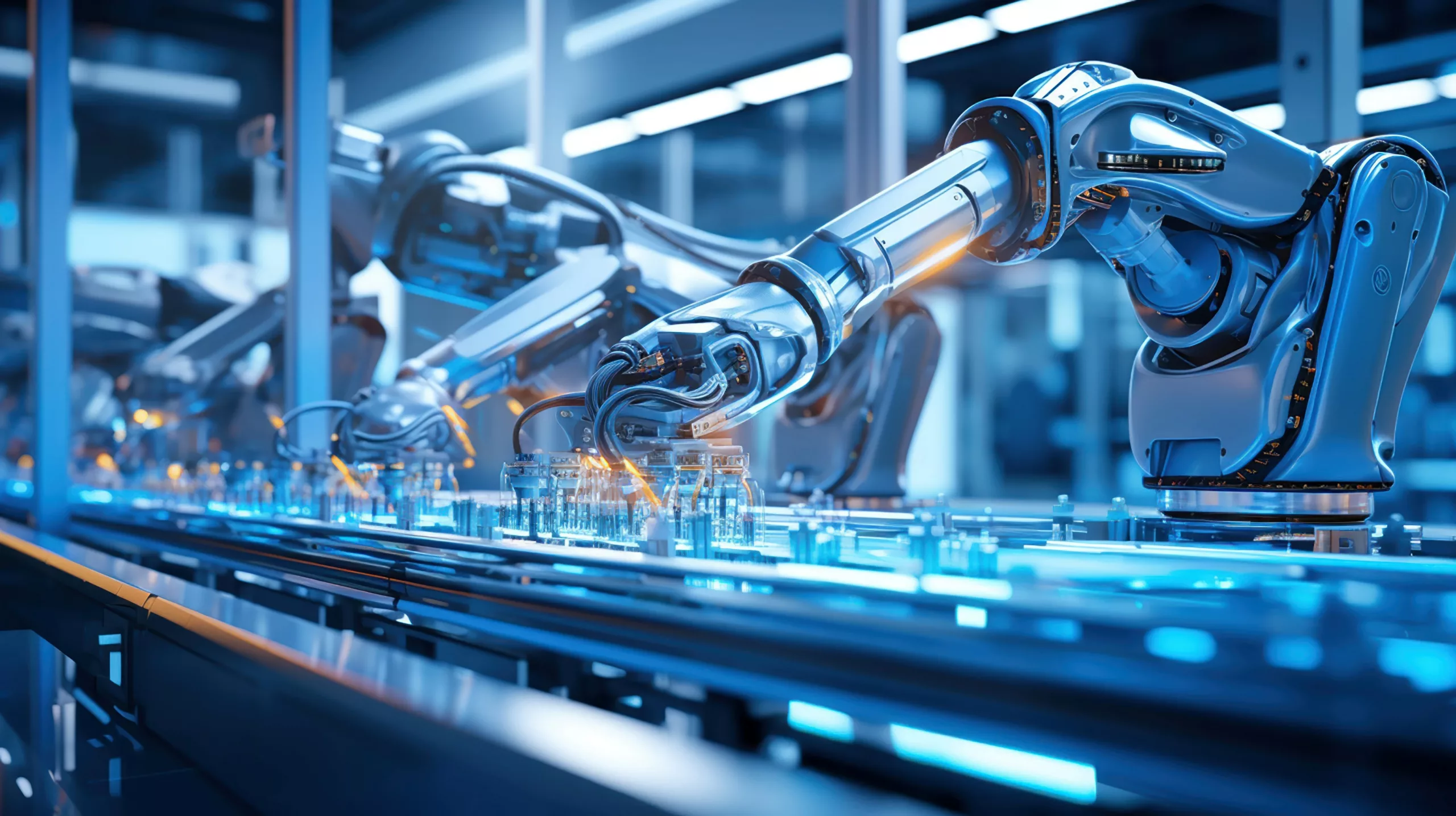
Improve production efficiency, reduce downtime, and enhance visibility across manufacturing workflows
Manufacturing has always been driven by precision, efficiency, and coordination. But as global supply chains become more complex and customer expectations continue to rise, traditional manufacturing systems are struggling to keep up.
Production delays, unplanned downtime, fragmented data, and lack of real-time visibility are common challenges across the industry. These inefficiencies not only impact operational performance but also affect profitability and competitiveness.
Artificial intelligence (AI) is reshaping modern manufacturing by addressing these challenges head-on.
By enabling smarter operations, predictive insights, and seamless coordination, AI is transforming how manufacturers plan, produce, and deliver.
The Complexity of Modern Manufacturing Operations
Manufacturing operations involve multiple interconnected processes, including:
- Production planning
- Inventory and supply management
- Machine operations and maintenance
- Workforce coordination
- Quality control and compliance
Each of these functions generates data and depends on accurate, timely information.
When systems are disconnected, this complexity increases. Manufacturers often face:
- Delays in production planning
- Inefficient resource utilization
- Lack of coordination across teams
- Limited visibility into workflows
Efficient management is essential to keep production running smoothly, data accurate, and teams aligned.
The Shift Toward Intelligent Manufacturing Systems
Traditional manufacturing systems are largely reactive.
Issues such as machine failures, supply shortages, or production bottlenecks are often addressed only after they occur.
AI enables a shift toward proactive and predictive operations.
With AI-driven systems, manufacturers can:
- Anticipate equipment failures
- Optimize production schedules
- Predict demand and adjust output
- Identify inefficiencies in real time
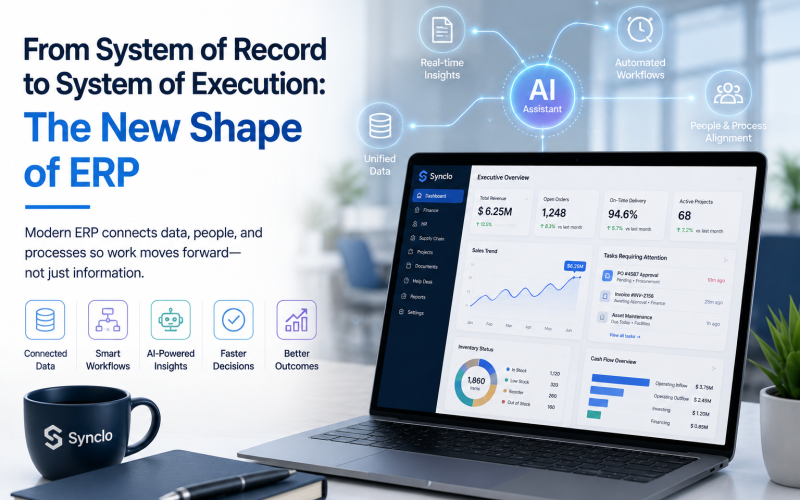
Platforms like Synclo are increasingly designed to support this transition by integrating operational data and workflows into a single system, enabling more intelligent and responsive manufacturing processes.
Reducing Downtime Through Predictive Maintenance
Unplanned downtime is one of the most costly challenges in manufacturing.
Equipment failures can halt production, delay deliveries, and increase maintenance costs.
AI addresses this through predictive maintenance.
By analyzing machine data and identifying patterns, AI can:
- Detect early signs of equipment failure
- Schedule maintenance before breakdowns occur
- Reduce unexpected downtime
- Extend the lifespan of machinery
This allows manufacturers to maintain consistent production and avoid costly disruptions.
Systems such as Synclo support this by providing centralized visibility into operations, making it easier to monitor performance and plan maintenance activities effectively.
Enhancing Production Efficiency
Efficiency is at the core of manufacturing success.
AI improves production efficiency by:
- Optimizing production schedules
- Reducing idle time
- Balancing workloads across machines and teams
- Identifying process bottlenecks
With real-time insights, manufacturers can adjust operations dynamically to maintain optimal performance.
Platforms like Synclo help streamline these processes by aligning production workflows with real-time data, ensuring that operations remain efficient and coordinated.
Real-Time Visibility Across Workflows
Visibility is critical in manufacturing.
Without accurate, real-time information, it becomes difficult to manage production, track progress, and respond to issues.
AI enables real-time visibility by continuously processing data from across the production environment.
This allows manufacturers to:
- Monitor production status in real time
- Track inventory and supply levels
- Identify delays and bottlenecks
- Make faster, informed decisions
With centralized platforms such as Synclo, all operational data is accessible in one place, providing a clear and unified view of manufacturing workflows.
Improving Supply Chain Coordination
Manufacturing operations are closely tied to supply chains.
Delays in raw materials or misalignment in supply can disrupt production schedules.
AI enhances supply chain coordination by:
- Predicting demand and supply requirements
- Optimizing inventory levels
- Identifying potential disruptions
- Improving communication with suppliers
This ensures that production remains aligned with supply availability.
Systems like Synclo support this by integrating supply chain data with production workflows, improving coordination and reducing delays.
Automating Repetitive Processes
Manufacturing involves numerous repetitive tasks, including:
- Data entry
- Production tracking
- Reporting
- Workflow approvals
AI-driven automation reduces the need for manual intervention in these processes.
This leads to:
- Faster execution of tasks
- Reduced errors
- Improved consistency
Platforms like Synclo integrate automation into operational workflows, enabling manufacturers to operate more efficiently without increasing complexity.
Enhancing Quality Control
Maintaining product quality is essential in manufacturing.
Traditional quality control processes often rely on manual inspections and reactive measures.
AI improves quality control by:
- Monitoring production processes in real time
- Detecting defects early
- Analyzing patterns to identify root causes
- Ensuring consistent product standards
This reduces waste and improves overall product quality.
Data-Driven Decision Making
Manufacturing generates vast amounts of data, but traditional systems often fail to utilize it effectively.
AI transforms this data into actionable insights by:
- Identifying trends and patterns
- Forecasting demand
- Optimizing resource allocation
- Improving operational planning
This enables manufacturers to make informed decisions that enhance efficiency and profitability.
With platforms like Synclo centralizing data across operations, these insights become more accessible and actionable.
Workforce Productivity and Coordination
Manufacturing teams need access to accurate information and efficient workflows to perform effectively.
AI supports workforce productivity by:
- Providing real-time data access
- Streamlining communication
- Automating routine tasks
- Aligning workflows across teams
This ensures that employees can focus on high-value activities rather than administrative work.
Platforms like Synclo provide a unified environment where teams can access the tools and information they need, improving coordination and productivity.
Challenges in Adopting AI in Manufacturing
While AI offers significant benefits, manufacturers must address certain challenges:
- Integrating AI with legacy systems
- Ensuring data accuracy and quality
- Training employees to use new technologies
- Managing implementation costs
A strategic approach is essential to ensure successful adoption.
The Future of Manufacturing Operations
The future of manufacturing is defined by systems that are:
- Connected — integrating all operational functions
- Intelligent — powered by AI-driven insights
- Efficient — minimizing downtime and delays
- Scalable — supporting growth without complexity
AI will continue to drive this transformation, enabling manufacturers to operate more effectively in an increasingly competitive environment.
Platforms like Synclo reflect this shift by bringing production workflows, data, and coordination into one unified system.
Conclusion
AI is transforming modern manufacturing by improving efficiency, reducing downtime, and enhancing visibility across workflows.
By enabling predictive maintenance, real-time insights, and automation, AI helps manufacturers move from reactive operations to proactive management.
Efficient management ensures that production runs smoothly, data remains accurate, and teams stay aligned.
Platforms like Synclo support this transformation by providing a connected and structured environment for managing manufacturing operations.
The future of manufacturing is not just automated — it is intelligent, connected, and built for continuous improvement.
